
Your Store Is Not Understaffed All Day: How POS Data Helps Schedule the Right People at the Right Time
Retail staffing problems are often timing problems. Learn how POS sales patterns, transaction volume, basket complexity, returns, receiving, and service demand can improve schedules without cutting service or exhausting employees.
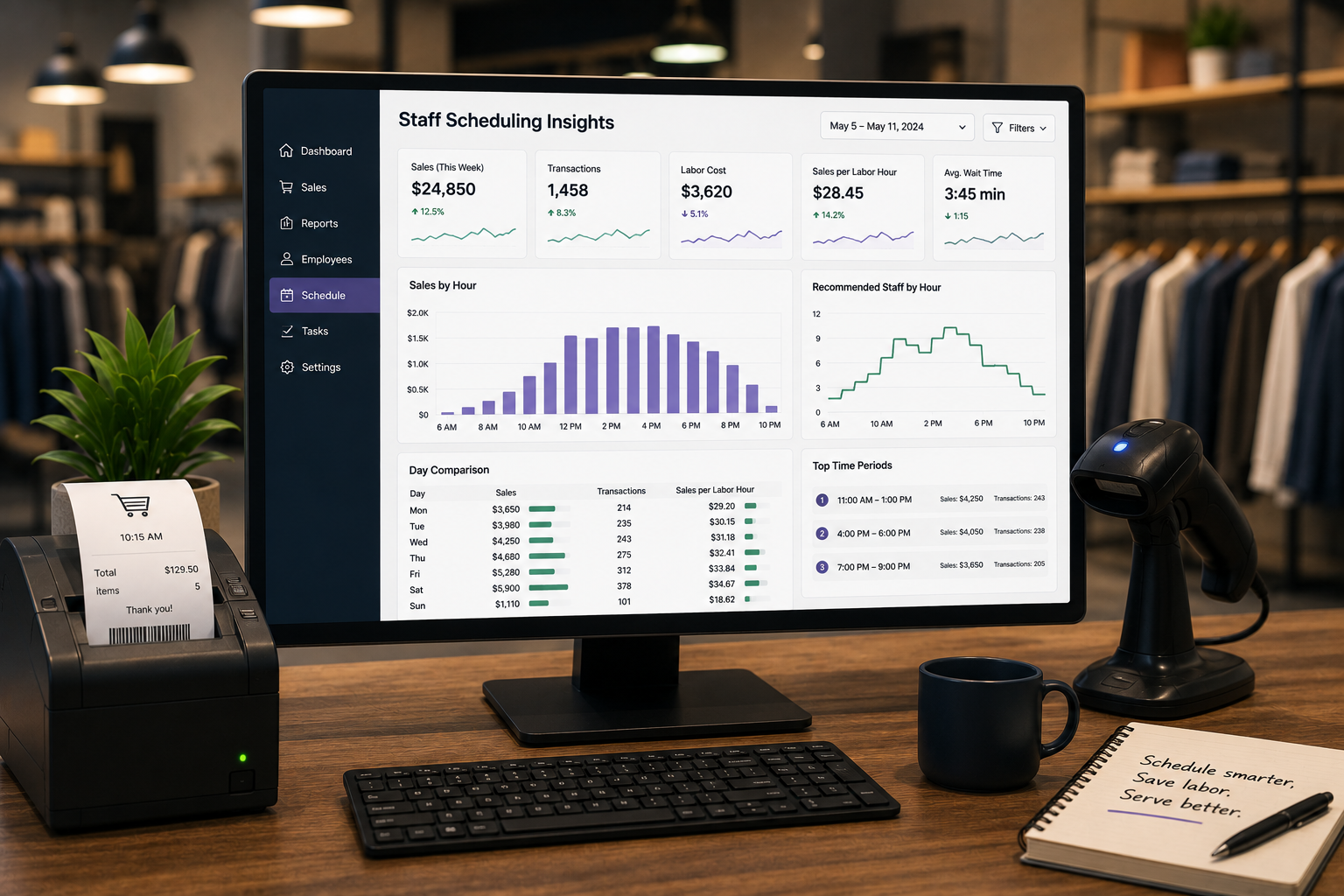
Your Store Is Not Understaffed All Day: How POS Data Helps Schedule the Right People at the Right Time
Retail staffing problems are often timing problems. Learn how POS sales patterns, transaction volume, basket complexity, returns, receiving, and service demand can improve schedules without cutting service or exhausting employees.
A Busy Store Can Still Have the Wrong Schedule
A store manager may say, “We need more people,” while payroll says the branch already has enough labor hours. Both can be correct. The branch may be overstaffed during quiet periods and understaffed during the thirty minutes when customers arrive after work.
A weekly schedule built from habit—two cashiers in the morning, three in the afternoon, one stock person all day—cannot respond to changing traffic, promotions, deliveries, school holidays, weather, local events, or payday patterns.
For example, A store manager may say, “We need more people,” while payroll says the branch already has enough labor hours. Both can be correct. The branch may be overstaffed during quiet periods and understaffed during the thirty minutes when customers arrive after work. POS planning should include transaction count, units per basket, product mix, payment type, returns, voids, discounts requiring approval, queue length, delivery receiving, shelf replenishment, click-and-collect orders, and service tasks. The manager should compare the result with customer wait time and unfinished tasks before deciding that fewer labor hours are better.
For example, Sales per labor hour is useful, but dangerous when used alone. A high number may mean excellent productivity, or it may mean long queues, missed replenishment, poor cleaning, ignored customers, rushed returns, and exhausted staff. Create a weekly review that combines POS demand by time block with planned labor, actual clock-in data, task requirements, absences, and upcoming events. Managers should adjust the next schedule, not merely explain the previous one. The manager should compare the result with customer wait time and unfinished tasks before deciding that fewer labor hours are better.
Sales Alone Do Not Explain Workload
Sales are important, but £1,000 from ten simple transactions creates less workload than £1,000 from eighty small baskets, returns, age approvals, gift wrapping, product questions, and split payments.
POS planning should include transaction count, units per basket, product mix, payment type, returns, voids, discounts requiring approval, queue length, delivery receiving, shelf replenishment, click-and-collect orders, and service tasks.
For example, POS planning should include transaction count, units per basket, product mix, payment type, returns, voids, discounts requiring approval, queue length, delivery receiving, shelf replenishment, click-and-collect orders, and service tasks. Sales per labor hour is useful, but dangerous when used alone. A high number may mean excellent productivity, or it may mean long queues, missed replenishment, poor cleaning, ignored customers, rushed returns, and exhausted staff. The manager should compare the result with customer wait time and unfinished tasks before deciding that fewer labor hours are better.
Use Patterns, Not One Exceptional Week
One unusual promotion or public holiday should not rewrite the entire schedule. Use several comparable weeks, separate regular patterns from events, and label known causes such as campaigns, weather, school terms, and supplier delivery days.
Forecast by fifteen-, thirty-, or sixty-minute blocks depending on the store. Then compare forecast demand with actual demand and record why the difference occurred. Accuracy improves when teams explain exceptions instead of silently replacing the model.
For example, A weekly schedule built from habit—two cashiers in the morning, three in the afternoon, one stock person all day—cannot respond to changing traffic, promotions, deliveries, school holidays, weather, local events, or payday patterns. The goal is not to remove every quiet minute. Retail needs recovery time for restocking, cleaning, cash checks, training, product knowledge, and solving issues before the next rush. The manager should compare the result with customer wait time and unfinished tasks before deciding that fewer labor hours are better.
Productivity Must Include Service Quality
Sales per labor hour is useful, but dangerous when used alone. A high number may mean excellent productivity, or it may mean long queues, missed replenishment, poor cleaning, ignored customers, rushed returns, and exhausted staff.
Balance labor metrics with wait time, transaction time, abandonment, customer complaints, stockout recovery, task completion, error rate, return handling, employee breaks, overtime, and schedule stability.
The goal is not to remove every quiet minute. Retail needs recovery time for restocking, cleaning, cash checks, training, product knowledge, and solving issues before the next rush.
For example, One unusual promotion or public holiday should not rewrite the entire schedule. Use several comparable weeks, separate regular patterns from events, and label known causes such as campaigns, weather, school terms, and supplier delivery days. The best schedule is not the cheapest possible schedule. It is the schedule that serves customers, completes operational work, protects employees from constant overload, and uses labor hours where they create the most value. The manager should compare the result with customer wait time and unfinished tasks before deciding that fewer labor hours are better.
Build a Weekly Staffing Rhythm
Create a weekly review that combines POS demand by time block with planned labor, actual clock-in data, task requirements, absences, and upcoming events. Managers should adjust the next schedule, not merely explain the previous one.
Dashierly or any POS should help operators understand when sales happen, what type of work those sales create, which branches need different staffing patterns, and whether service quality stays healthy.
The best schedule is not the cheapest possible schedule. It is the schedule that serves customers, completes operational work, protects employees from constant overload, and uses labor hours where they create the most value.
For example, Sales are important, but £1,000 from ten simple transactions creates less workload than £1,000 from eighty small baskets, returns, age approvals, gift wrapping, product questions, and split payments. A weekly schedule built from habit—two cashiers in the morning, three in the afternoon, one stock person all day—cannot respond to changing traffic, promotions, deliveries, school holidays, weather, local events, or payday patterns. The manager should compare the result with customer wait time and unfinished tasks before deciding that fewer labor hours are better.
For example, Forecast by fifteen-, thirty-, or sixty-minute blocks depending on the store. Then compare forecast demand with actual demand and record why the difference occurred. Accuracy improves when teams explain exceptions instead of silently replacing the model. One unusual promotion or public holiday should not rewrite the entire schedule. Use several comparable weeks, separate regular patterns from events, and label known causes such as campaigns, weather, school terms, and supplier delivery days. The manager should compare the result with customer wait time and unfinished tasks before deciding that fewer labor hours are better.
Keep reading
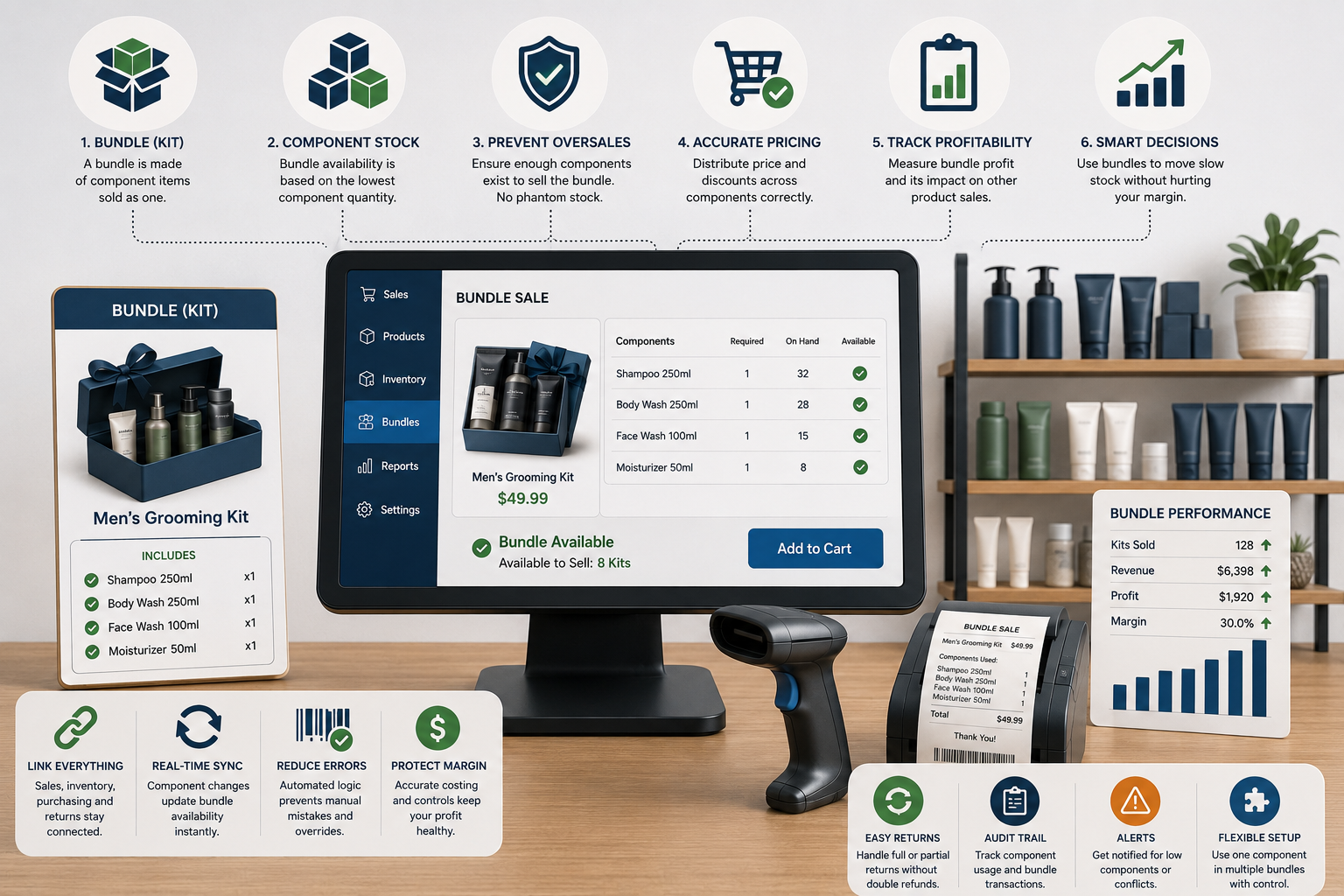
The Bundle Sold Out, but Every Item Is Still on the Shelf: How POS Systems Should Manage Kits, Multipacks, and Component Stock
Bundles can raise basket value, simplify buying, and move slow stock—but poor setup creates phantom availability, overselling, wrong costs, and confusing returns. Learn how POS systems should manage components, pricing, inventory, purchasing, and profitability.
Read article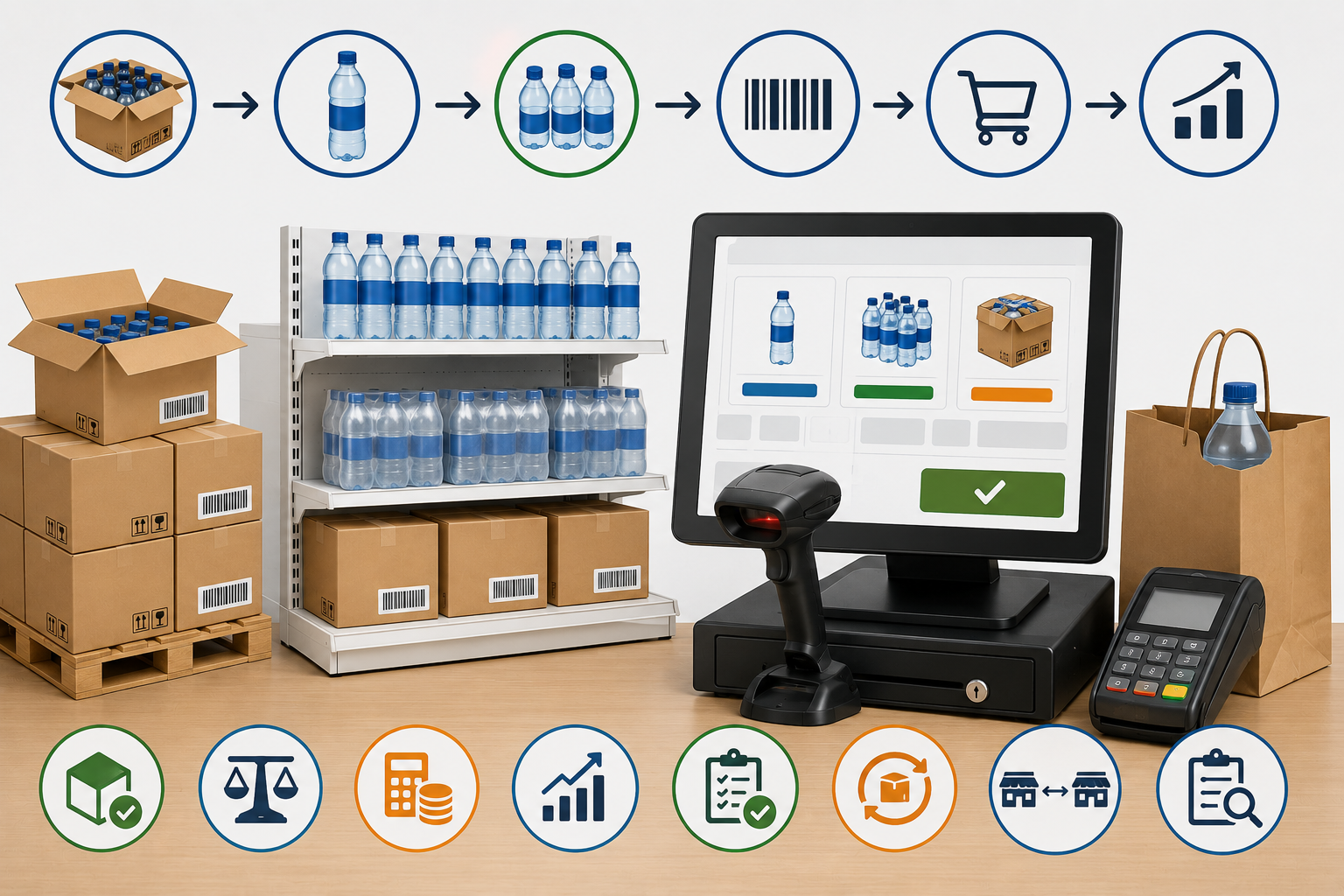
You Bought a Case of 24 but Sold One Bottle: How POS Units of Measure Prevent Inventory and Pricing Errors
Retailers often buy products by case, receive them by pack, and sell them individually. Learn how POS unit-of-measure rules, barcode mapping, cost conversion, stock counts, returns, and purchasing controls prevent quantity and margin errors.
Read article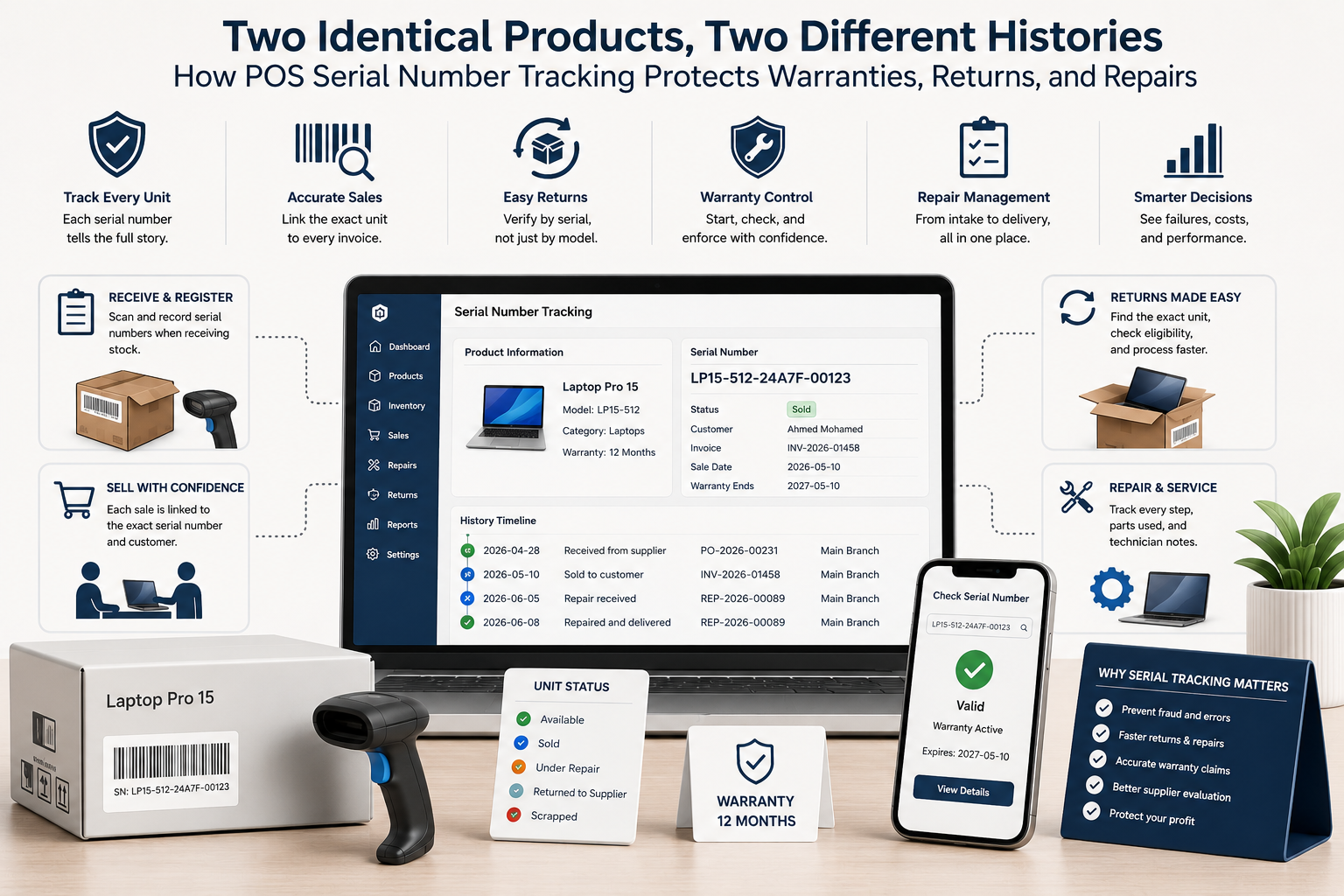
Two Identical Products, Two Different Histories: How POS Serial Number Tracking Protects Warranties, Returns, and Repairs
Quantity tracking tells you how many units exist. Serial tracking tells you exactly which unit was received, sold, returned, repaired, replaced, or still covered by warranty. Learn how a modern POS should manage serialized inventory from supplier receipt to after-sales service.
Read article