
The Customer Is Coming in 20 Minutes—Is the Order Really Ready? How POS Systems Should Manage Click and Collect
Click and collect promises convenience, but it can fail when inventory is not reserved, picking is delayed, substitutions are unclear, or orders are marked ready too early. Learn how a modern POS should coordinate online orders, store stock, picking, customer notifications, pickup verification, and returns.
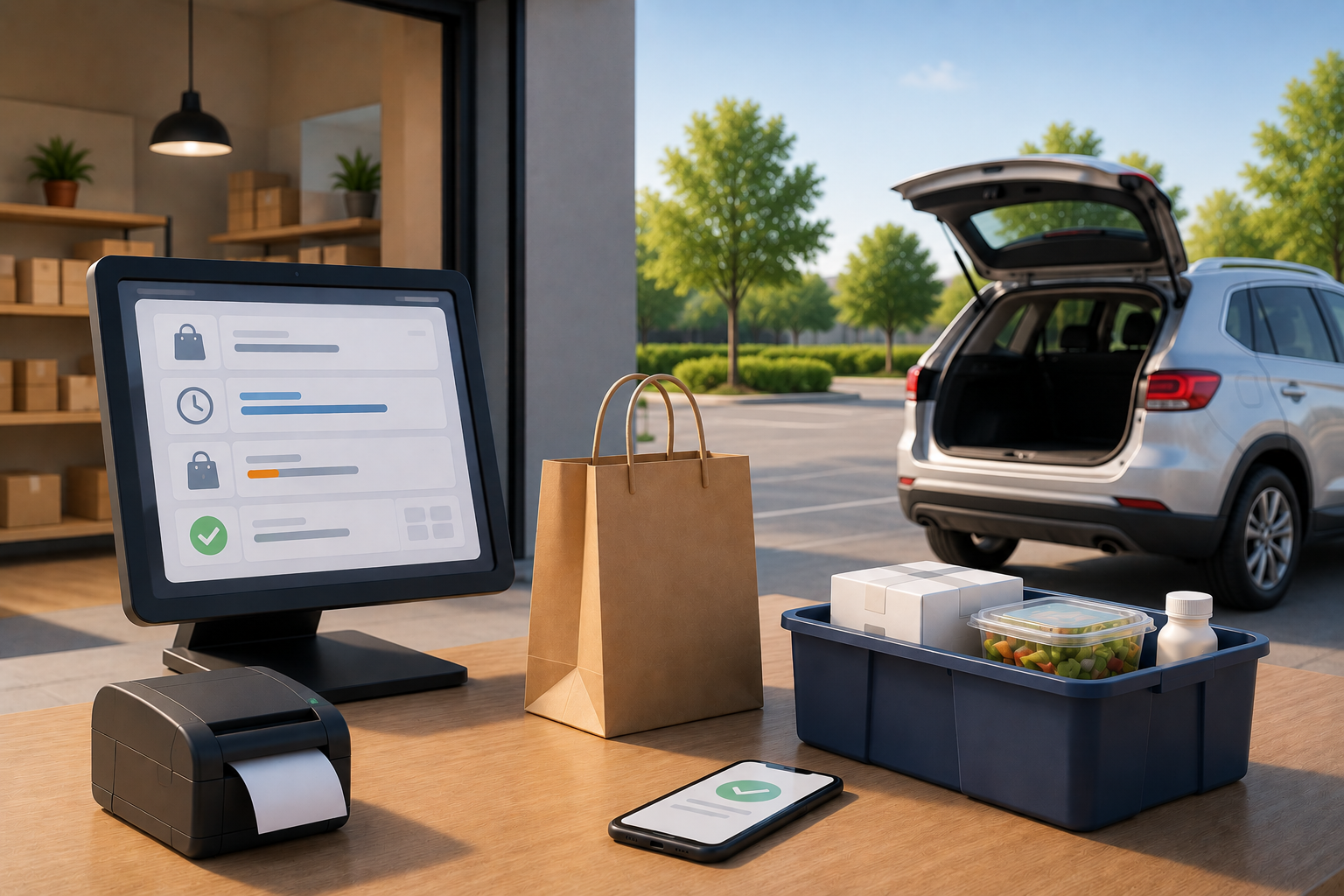
The Customer Is Coming in 20 Minutes—Is the Order Really Ready? How POS Systems Should Manage Click and Collect
Click and collect promises convenience, but it can fail when inventory is not reserved, picking is delayed, substitutions are unclear, or orders are marked ready too early. Learn how a modern POS should coordinate online orders, store stock, picking, customer notifications, pickup verification, and returns.
The Promise Starts with Accurate Available-to-Promise Inventory
Click and collect looks simple to the customer: choose a store, pay online, wait for a message, and pick up the bag. Behind that promise, the POS must coordinate e-commerce, store inventory, payment status, picking capacity, customer communication, identity checks, and final handover.
The first failure happens when the website shows stock that is technically on hand but not truly available. Damaged units, open transfers, display stock, reserved items, pending returns, and safety buffers should all be considered before a product is promised.
Consider a real pickup order: Click and collect looks simple to the customer: choose a store, pay online, wait for a message, and pick up the bag. Behind that promise, the POS must coordinate e-commerce, store inventory, payment status, picking capacity, customer communication, identity checks, and final handover. The reservation should carry order number, channel, customer, pickup location, quantity, time created, promised window, and expiry. If payment fails or the order is cancelled, the reservation must release cleanly. The picker should scan products, confirm quantity and condition, record missing items, propose allowed substitutions, and escalate exceptions. A substitution should never be silently placed in the bag when price, brand, size, allergy, or customer preference matters. The workflow should be tested with low stock, a missing item, an approved substitution, a late picker, an early customer arrival, a delegated collector, and an uncollected order.
Consider a real pickup order: At pickup, staff should verify the order using a code, QR, customer name plus another identifier, or an authorised alternate collector. The process must be fast enough for peak periods but strong enough to prevent handing an order to the wrong person. Notifications should be sent from verified status changes. The message can include location, opening hours, pickup instructions, collection deadline, identification requirements, and a safe order reference without exposing unnecessary personal data. The first failure happens when the website shows stock that is technically on hand but not truly available. Damaged units, open transfers, display stock, reserved items, pending returns, and safety buffers should all be considered before a product is promised. The workflow should be tested with low stock, a missing item, an approved substitution, a late picker, an early customer arrival, a delegated collector, and an uncollected order.
An Online Order Must Reserve Stock Immediately
Once the order is placed, the selected location must reserve the quantity immediately. If the same unit remains sellable at the counter, another customer can buy it before staff begin picking.
The reservation should carry order number, channel, customer, pickup location, quantity, time created, promised window, and expiry. If payment fails or the order is cancelled, the reservation must release cleanly.
Consider a real pickup order: The reservation should carry order number, channel, customer, pickup location, quantity, time created, promised window, and expiry. If payment fails or the order is cancelled, the reservation must release cleanly. Marking an order ready should require all physical items to be present, checked, packed, labelled, and placed in a known pickup location. A status change based only on expected stock creates frustrating customer arrivals. Once the order is placed, the selected location must reserve the quantity immediately. If the same unit remains sellable at the counter, another customer can buy it before staff begin picking. The workflow should be tested with low stock, a missing item, an approved substitution, a late picker, an early customer arrival, a delegated collector, and an uncollected order.
Picking Needs Ownership, Priorities, and Exception Handling
Picking is operational work and needs a queue. Orders should be prioritised by promised pickup time, product handling requirements, customer arrival signals, and staff capacity rather than by whichever notification is noticed first.
The picker should scan products, confirm quantity and condition, record missing items, propose allowed substitutions, and escalate exceptions. A substitution should never be silently placed in the bag when price, brand, size, allergy, or customer preference matters.
Consider a real pickup order: The first failure happens when the website shows stock that is technically on hand but not truly available. Damaged units, open transfers, display stock, reserved items, pending returns, and safety buffers should all be considered before a product is promised. At pickup, staff should verify the order using a code, QR, customer name plus another identifier, or an authorised alternate collector. The process must be fast enough for peak periods but strong enough to prevent handing an order to the wrong person. Click and collect looks simple to the customer: choose a store, pay online, wait for a message, and pick up the bag. Behind that promise, the POS must coordinate e-commerce, store inventory, payment status, picking capacity, customer communication, identity checks, and final handover. The workflow should be tested with low stock, a missing item, an approved substitution, a late picker, an early customer arrival, a delegated collector, and an uncollected order.
Consider a real pickup order: Notifications should be sent from verified status changes. The message can include location, opening hours, pickup instructions, collection deadline, identification requirements, and a safe order reference without exposing unnecessary personal data. Once the order is placed, the selected location must reserve the quantity immediately. If the same unit remains sellable at the counter, another customer can buy it before staff begin picking. Marking an order ready should require all physical items to be present, checked, packed, labelled, and placed in a known pickup location. A status change based only on expected stock creates frustrating customer arrivals. The workflow should be tested with low stock, a missing item, an approved substitution, a late picker, an early customer arrival, a delegated collector, and an uncollected order.
Consider a real pickup order: The handover should record employee, time, pickup method, proof where needed, and any final payment. Orders collected curbside may also need vehicle details, arrival status, parking bay, and contactless confirmation. Click and collect looks simple to the customer: choose a store, pay online, wait for a message, and pick up the bag. Behind that promise, the POS must coordinate e-commerce, store inventory, payment status, picking capacity, customer communication, identity checks, and final handover. At pickup, staff should verify the order using a code, QR, customer name plus another identifier, or an authorised alternate collector. The process must be fast enough for peak periods but strong enough to prevent handing an order to the wrong person. The workflow should be tested with low stock, a missing item, an approved substitution, a late picker, an early customer arrival, a delegated collector, and an uncollected order.
Ready for Pickup Should Mean Physically Verified
Marking an order ready should require all physical items to be present, checked, packed, labelled, and placed in a known pickup location. A status change based only on expected stock creates frustrating customer arrivals.
Notifications should be sent from verified status changes. The message can include location, opening hours, pickup instructions, collection deadline, identification requirements, and a safe order reference without exposing unnecessary personal data.
Consider a real pickup order: Picking is operational work and needs a queue. Orders should be prioritised by promised pickup time, product handling requirements, customer arrival signals, and staff capacity rather than by whichever notification is noticed first. Dashierly or any POS should treat click and collect as one traceable order journey from online promise to physical handover. The best system protects inventory accuracy, keeps staff organised, and ensures the customer never travels to the store for an order that is not truly ready. The handover should record employee, time, pickup method, proof where needed, and any final payment. Orders collected curbside may also need vehicle details, arrival status, parking bay, and contactless confirmation. The workflow should be tested with low stock, a missing item, an approved substitution, a late picker, an early customer arrival, a delegated collector, and an uncollected order.
Pickup Verification Must Be Fast and Secure
At pickup, staff should verify the order using a code, QR, customer name plus another identifier, or an authorised alternate collector. The process must be fast enough for peak periods but strong enough to prevent handing an order to the wrong person.
The handover should record employee, time, pickup method, proof where needed, and any final payment. Orders collected curbside may also need vehicle details, arrival status, parking bay, and contactless confirmation.
Consider a real pickup order: Once the order is placed, the selected location must reserve the quantity immediately. If the same unit remains sellable at the counter, another customer can buy it before staff begin picking. The first failure happens when the website shows stock that is technically on hand but not truly available. Damaged units, open transfers, display stock, reserved items, pending returns, and safety buffers should all be considered before a product is promised. Notifications should be sent from verified status changes. The message can include location, opening hours, pickup instructions, collection deadline, identification requirements, and a safe order reference without exposing unnecessary personal data. The workflow should be tested with low stock, a missing item, an approved substitution, a late picker, an early customer arrival, a delegated collector, and an uncollected order.
Consider a real pickup order: Marking an order ready should require all physical items to be present, checked, packed, labelled, and placed in a known pickup location. A status change based only on expected stock creates frustrating customer arrivals. The handover should record employee, time, pickup method, proof where needed, and any final payment. Orders collected curbside may also need vehicle details, arrival status, parking bay, and contactless confirmation. Dashierly or any POS should treat click and collect as one traceable order journey from online promise to physical handover. The best system protects inventory accuracy, keeps staff organised, and ensures the customer never travels to the store for an order that is not truly ready. The workflow should be tested with low stock, a missing item, an approved substitution, a late picker, an early customer arrival, a delegated collector, and an uncollected order.
Consider a real pickup order: If an order is not collected, the POS should follow a defined timeline: reminder, final notice, cancellation review, refund or store credit, and inventory release. Stock should not remain reserved indefinitely. The picker should scan products, confirm quantity and condition, record missing items, propose allowed substitutions, and escalate exceptions. A substitution should never be silently placed in the bag when price, brand, size, allergy, or customer preference matters. The reservation should carry order number, channel, customer, pickup location, quantity, time created, promised window, and expiry. If payment fails or the order is cancelled, the reservation must release cleanly. The workflow should be tested with low stock, a missing item, an approved substitution, a late picker, an early customer arrival, a delegated collector, and an uncollected order.
Returns and Uncollected Orders Must Close the Inventory Loop
If an order is not collected, the POS should follow a defined timeline: reminder, final notice, cancellation review, refund or store credit, and inventory release. Stock should not remain reserved indefinitely.
Dashierly or any POS should treat click and collect as one traceable order journey from online promise to physical handover. The best system protects inventory accuracy, keeps staff organised, and ensures the customer never travels to the store for an order that is not truly ready.
Consider a real pickup order: The picker should scan products, confirm quantity and condition, record missing items, propose allowed substitutions, and escalate exceptions. A substitution should never be silently placed in the bag when price, brand, size, allergy, or customer preference matters. Picking is operational work and needs a queue. Orders should be prioritised by promised pickup time, product handling requirements, customer arrival signals, and staff capacity rather than by whichever notification is noticed first. Picking is operational work and needs a queue. Orders should be prioritised by promised pickup time, product handling requirements, customer arrival signals, and staff capacity rather than by whichever notification is noticed first. The workflow should be tested with low stock, a missing item, an approved substitution, a late picker, an early customer arrival, a delegated collector, and an uncollected order.
Keep reading
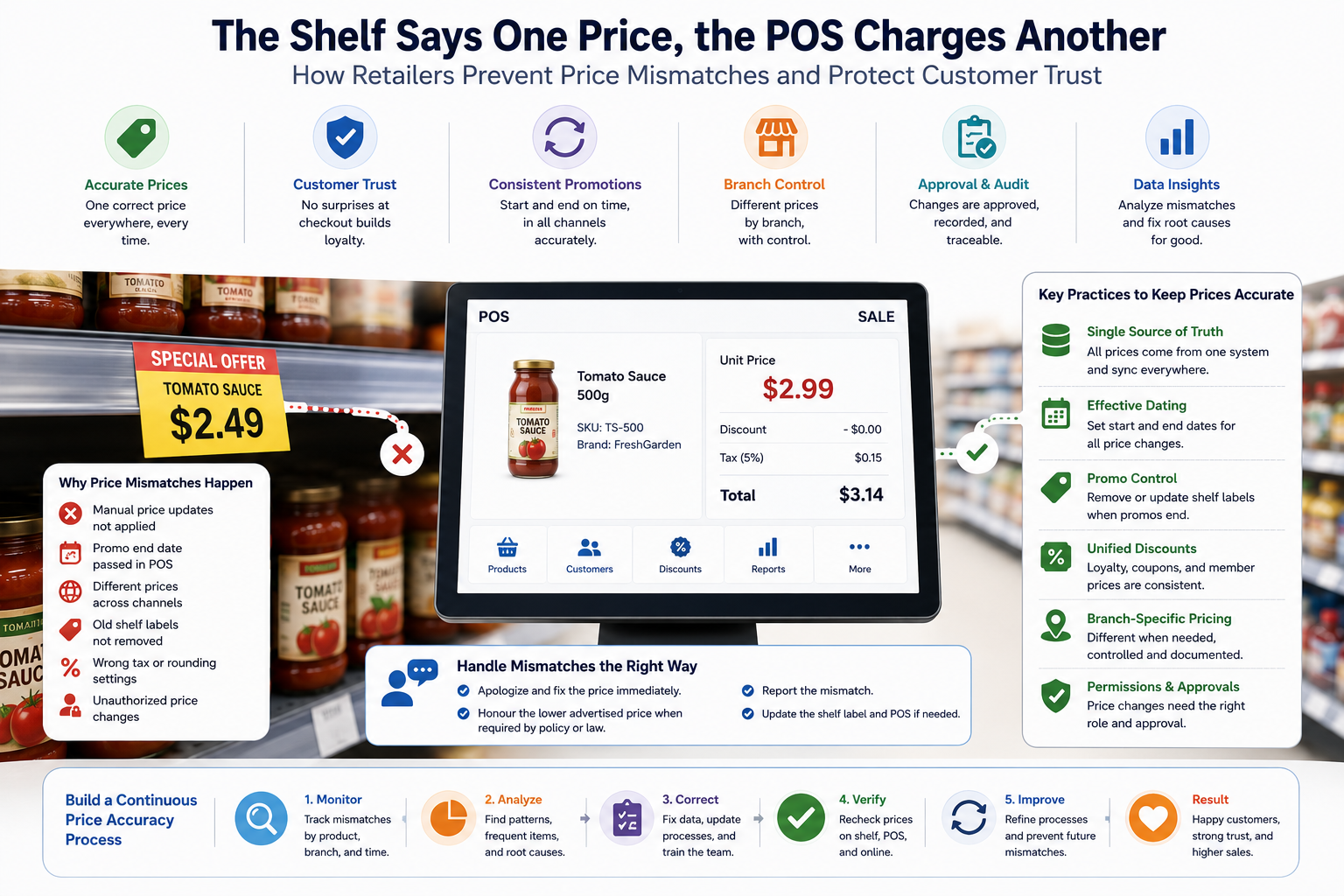
The Shelf Says One Price, the POS Charges Another: How Retailers Prevent Price Mismatches and Protect Customer Trust
Price mismatches are more than an awkward checkout moment. They create refunds, complaints, margin leakage, regulatory risk, and lost trust. Learn how a modern POS should synchronize price lists, shelf labels, promotions, branches, taxes, and approvals.
Read article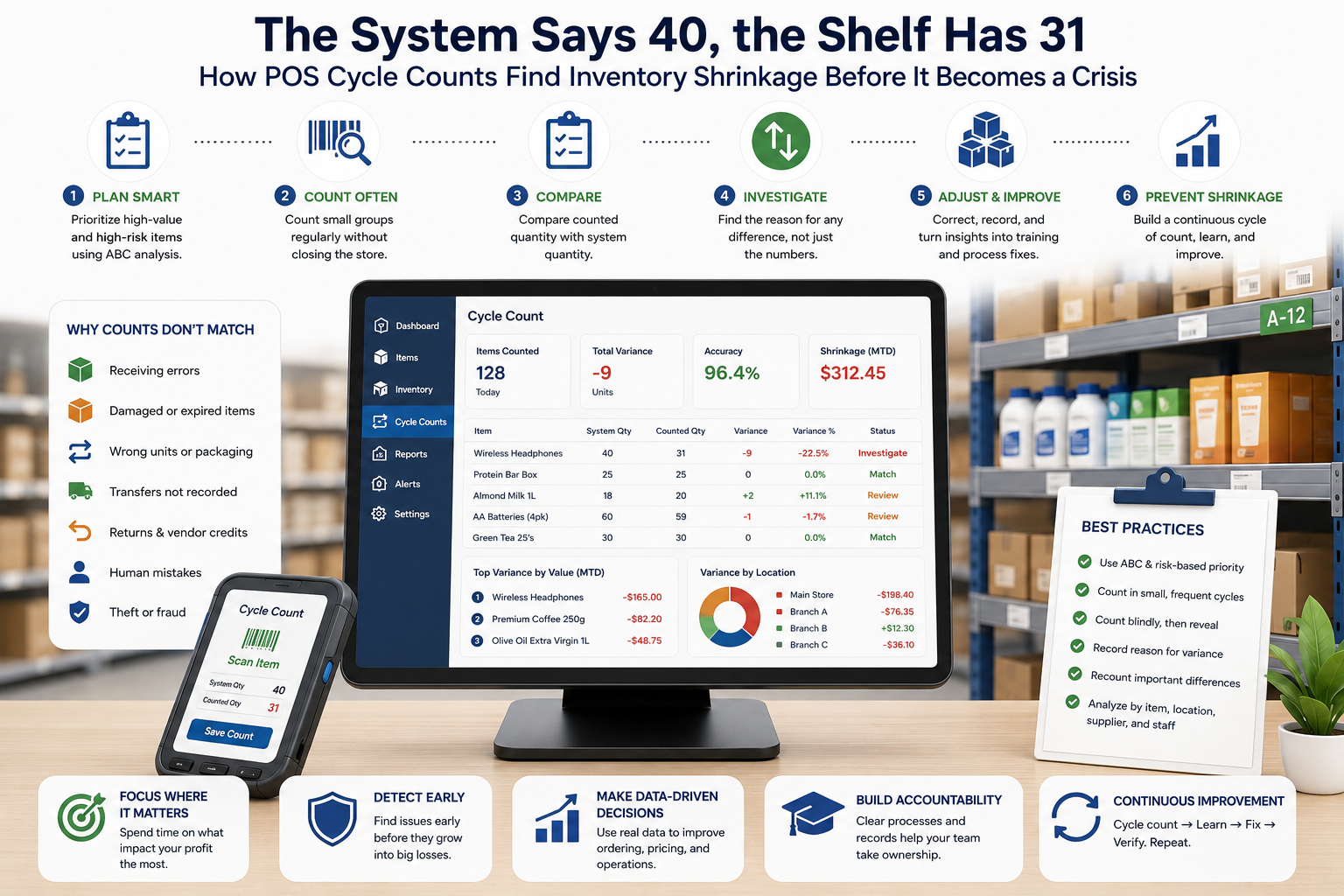
The System Says 40, the Shelf Has 31: How POS Cycle Counts Find Inventory Shrinkage Before It Becomes a Crisis
Inventory discrepancies rarely appear all at once. They build through receiving mistakes, unrecorded damage, wrong units, theft, transfers, returns, and stock adjustments. Learn how POS cycle counts, variance analysis, and root-cause workflows restore accuracy without closing the entire store.
Read article
Your POS Can Recommend the Next Move—But Should It Make the Decision? A Practical Guide to AI in Retail Operations
AI is moving from dashboards into daily retail decisions: forecasting demand, suggesting reorders, detecting anomalies, predicting churn, and summarizing performance. Learn where AI adds value, where human approval still matters, and how to build reliable controls around an intelligent POS.
Read article