
The Customer Has No Receipt—Should You Still Accept the Return? How POS Systems Reduce Return Fraud Without Punishing Honest Shoppers
Receipt-less returns, exchanges, damaged goods, gift purchases, and online orders create difficult decisions at the counter. Learn how a modern POS can verify purchases, apply fair policies, control refunds, detect suspicious patterns, and preserve a smooth customer experience.

The Customer Has No Receipt—Should You Still Accept the Return? How POS Systems Reduce Return Fraud Without Punishing Honest Shoppers
Receipt-less returns, exchanges, damaged goods, gift purchases, and online orders create difficult decisions at the counter. Learn how a modern POS can verify purchases, apply fair policies, control refunds, detect suspicious patterns, and preserve a smooth customer experience.
A Return Is a Reversal of a Specific Sale, Not a New Negative Transaction
A return should begin by locating the original sale whenever possible. The POS should know which item was sold, at what price, with which discount, tax, branch, employee, customer, payment method, and date. Without that connection, the system may refund more than the customer paid or restore the wrong quantity.
Treating every return as a new negative transaction hides the relationship between the sale and the reversal. It weakens margin reporting, tax correction, commission reversal, payment reconciliation, and fraud investigation.
Consider a real return desk scenario: A return should begin by locating the original sale whenever possible. The POS should know which item was sold, at what price, with which discount, tax, branch, employee, customer, payment method, and date. Without that connection, the system may refund more than the customer paid or restore the wrong quantity. If no transaction can be verified, the policy should define whether the store offers an exchange, store credit, refund at the lowest recent price, manager review, or refusal. Staff should not invent a different rule for each customer. If the original card is unavailable, the POS should follow a controlled exception: verified alternative card where allowed, store credit, cheque, or manager-approved method. Cash refunds for card purchases should be limited and fully logged. The workflow should be tested with a verified receipt, no receipt, gift return, original card unavailable, damaged item, serial mismatch, exchange, and manager-approved exception.
Consider a real return desk scenario: Risk signals can include frequent receipt-less returns, repeated returns just below approval limits, different names using the same payment card, many branches, high-value items, serial mismatches, empty packaging, or unusually fast purchase-and-return cycles. Inventory status matters. A returned product may be sellable, opened, damaged, defective, expired, missing parts, awaiting inspection, sent to supplier, or written off. Automatically placing every return back into available stock creates false availability. Treating every return as a new negative transaction hides the relationship between the sale and the reversal. It weakens margin reporting, tax correction, commission reversal, payment reconciliation, and fraud investigation. The workflow should be tested with a verified receipt, no receipt, gift return, original card unavailable, damaged item, serial mismatch, exchange, and manager-approved exception.
Receipt-Less Returns Need Alternative Verification
When the customer has no paper receipt, the purchase may still be found through card reference, customer account, phone or email where permitted, order number, loyalty history, gift receipt, serial number, or online order record.
If no transaction can be verified, the policy should define whether the store offers an exchange, store credit, refund at the lowest recent price, manager review, or refusal. Staff should not invent a different rule for each customer.
Consider a real return desk scenario: If no transaction can be verified, the policy should define whether the store offers an exchange, store credit, refund at the lowest recent price, manager review, or refusal. Staff should not invent a different rule for each customer. An exchange contains both a return and a new sale. The system must reverse the original item, calculate the new item price and tax, preserve the original discount rules where policy allows, and collect or refund the difference. When the customer has no paper receipt, the purchase may still be found through card reference, customer account, phone or email where permitted, order number, loyalty history, gift receipt, serial number, or online order record. The workflow should be tested with a verified receipt, no receipt, gift return, original card unavailable, damaged item, serial mismatch, exchange, and manager-approved exception.
Consider a real return desk scenario: Dashierly or any POS should make the return policy consistent, explainable, and traceable. The strongest system protects margin and inventory while giving honest customers a fast and respectful resolution. Measure return rate by product, supplier, branch, employee, reason, condition, channel, payment type, and customer where lawful. Also measure resale recovery, supplier claims, refund processing time, false alerts, and exchanges that retain the sale. Measure return rate by product, supplier, branch, employee, reason, condition, channel, payment type, and customer where lawful. Also measure resale recovery, supplier claims, refund processing time, false alerts, and exchanges that retain the sale. The workflow should be tested with a verified receipt, no receipt, gift return, original card unavailable, damaged item, serial mismatch, exchange, and manager-approved exception.
Refund Method Should Follow the Original Tender
The safest refund usually returns money to the original payment method. This prevents stolen merchandise from being converted into cash and keeps processor reconciliation clear.
If the original card is unavailable, the POS should follow a controlled exception: verified alternative card where allowed, store credit, cheque, or manager-approved method. Cash refunds for card purchases should be limited and fully logged.
Consider a real return desk scenario: Treating every return as a new negative transaction hides the relationship between the sale and the reversal. It weakens margin reporting, tax correction, commission reversal, payment reconciliation, and fraud investigation. Risk signals can include frequent receipt-less returns, repeated returns just below approval limits, different names using the same payment card, many branches, high-value items, serial mismatches, empty packaging, or unusually fast purchase-and-return cycles. A return should begin by locating the original sale whenever possible. The POS should know which item was sold, at what price, with which discount, tax, branch, employee, customer, payment method, and date. Without that connection, the system may refund more than the customer paid or restore the wrong quantity. The workflow should be tested with a verified receipt, no receipt, gift return, original card unavailable, damaged item, serial mismatch, exchange, and manager-approved exception.
Consider a real return desk scenario: Inventory status matters. A returned product may be sellable, opened, damaged, defective, expired, missing parts, awaiting inspection, sent to supplier, or written off. Automatically placing every return back into available stock creates false availability. When the customer has no paper receipt, the purchase may still be found through card reference, customer account, phone or email where permitted, order number, loyalty history, gift receipt, serial number, or online order record. An exchange contains both a return and a new sale. The system must reverse the original item, calculate the new item price and tax, preserve the original discount rules where policy allows, and collect or refund the difference. The workflow should be tested with a verified receipt, no receipt, gift return, original card unavailable, damaged item, serial mismatch, exchange, and manager-approved exception.
Consider a real return desk scenario: These signals should trigger additional verification or manager review, not automatic accusations. Legitimate customers can have unusual situations, and a rigid system can damage trust. A return should begin by locating the original sale whenever possible. The POS should know which item was sold, at what price, with which discount, tax, branch, employee, customer, payment method, and date. Without that connection, the system may refund more than the customer paid or restore the wrong quantity. Risk signals can include frequent receipt-less returns, repeated returns just below approval limits, different names using the same payment card, many branches, high-value items, serial mismatches, empty packaging, or unusually fast purchase-and-return cycles. The workflow should be tested with a verified receipt, no receipt, gift return, original card unavailable, damaged item, serial mismatch, exchange, and manager-approved exception.
Exchanges Must Preserve Price, Tax, and Inventory History
An exchange contains both a return and a new sale. The system must reverse the original item, calculate the new item price and tax, preserve the original discount rules where policy allows, and collect or refund the difference.
Inventory status matters. A returned product may be sellable, opened, damaged, defective, expired, missing parts, awaiting inspection, sent to supplier, or written off. Automatically placing every return back into available stock creates false availability.
Consider a real return desk scenario: The safest refund usually returns money to the original payment method. This prevents stolen merchandise from being converted into cash and keeps processor reconciliation clear. Dashierly or any POS should make the return policy consistent, explainable, and traceable. The strongest system protects margin and inventory while giving honest customers a fast and respectful resolution. These signals should trigger additional verification or manager review, not automatic accusations. Legitimate customers can have unusual situations, and a rigid system can damage trust. The workflow should be tested with a verified receipt, no receipt, gift return, original card unavailable, damaged item, serial mismatch, exchange, and manager-approved exception.
Risk Signals Should Trigger Review, Not Automatic Rejection
Risk signals can include frequent receipt-less returns, repeated returns just below approval limits, different names using the same payment card, many branches, high-value items, serial mismatches, empty packaging, or unusually fast purchase-and-return cycles.
These signals should trigger additional verification or manager review, not automatic accusations. Legitimate customers can have unusual situations, and a rigid system can damage trust.
Consider a real return desk scenario: When the customer has no paper receipt, the purchase may still be found through card reference, customer account, phone or email where permitted, order number, loyalty history, gift receipt, serial number, or online order record. Treating every return as a new negative transaction hides the relationship between the sale and the reversal. It weakens margin reporting, tax correction, commission reversal, payment reconciliation, and fraud investigation. Inventory status matters. A returned product may be sellable, opened, damaged, defective, expired, missing parts, awaiting inspection, sent to supplier, or written off. Automatically placing every return back into available stock creates false availability. The workflow should be tested with a verified receipt, no receipt, gift return, original card unavailable, damaged item, serial mismatch, exchange, and manager-approved exception.
Consider a real return desk scenario: An exchange contains both a return and a new sale. The system must reverse the original item, calculate the new item price and tax, preserve the original discount rules where policy allows, and collect or refund the difference. These signals should trigger additional verification or manager review, not automatic accusations. Legitimate customers can have unusual situations, and a rigid system can damage trust. Dashierly or any POS should make the return policy consistent, explainable, and traceable. The strongest system protects margin and inventory while giving honest customers a fast and respectful resolution. The workflow should be tested with a verified receipt, no receipt, gift return, original card unavailable, damaged item, serial mismatch, exchange, and manager-approved exception.
Consider a real return desk scenario: Measure return rate by product, supplier, branch, employee, reason, condition, channel, payment type, and customer where lawful. Also measure resale recovery, supplier claims, refund processing time, false alerts, and exchanges that retain the sale. If the original card is unavailable, the POS should follow a controlled exception: verified alternative card where allowed, store credit, cheque, or manager-approved method. Cash refunds for card purchases should be limited and fully logged. If no transaction can be verified, the policy should define whether the store offers an exchange, store credit, refund at the lowest recent price, manager review, or refusal. Staff should not invent a different rule for each customer. The workflow should be tested with a verified receipt, no receipt, gift return, original card unavailable, damaged item, serial mismatch, exchange, and manager-approved exception.
Measure Return Quality, Not Only Return Volume
Measure return rate by product, supplier, branch, employee, reason, condition, channel, payment type, and customer where lawful. Also measure resale recovery, supplier claims, refund processing time, false alerts, and exchanges that retain the sale.
Dashierly or any POS should make the return policy consistent, explainable, and traceable. The strongest system protects margin and inventory while giving honest customers a fast and respectful resolution.
Consider a real return desk scenario: If the original card is unavailable, the POS should follow a controlled exception: verified alternative card where allowed, store credit, cheque, or manager-approved method. Cash refunds for card purchases should be limited and fully logged. The safest refund usually returns money to the original payment method. This prevents stolen merchandise from being converted into cash and keeps processor reconciliation clear. The safest refund usually returns money to the original payment method. This prevents stolen merchandise from being converted into cash and keeps processor reconciliation clear. The workflow should be tested with a verified receipt, no receipt, gift return, original card unavailable, damaged item, serial mismatch, exchange, and manager-approved exception.
Keep reading
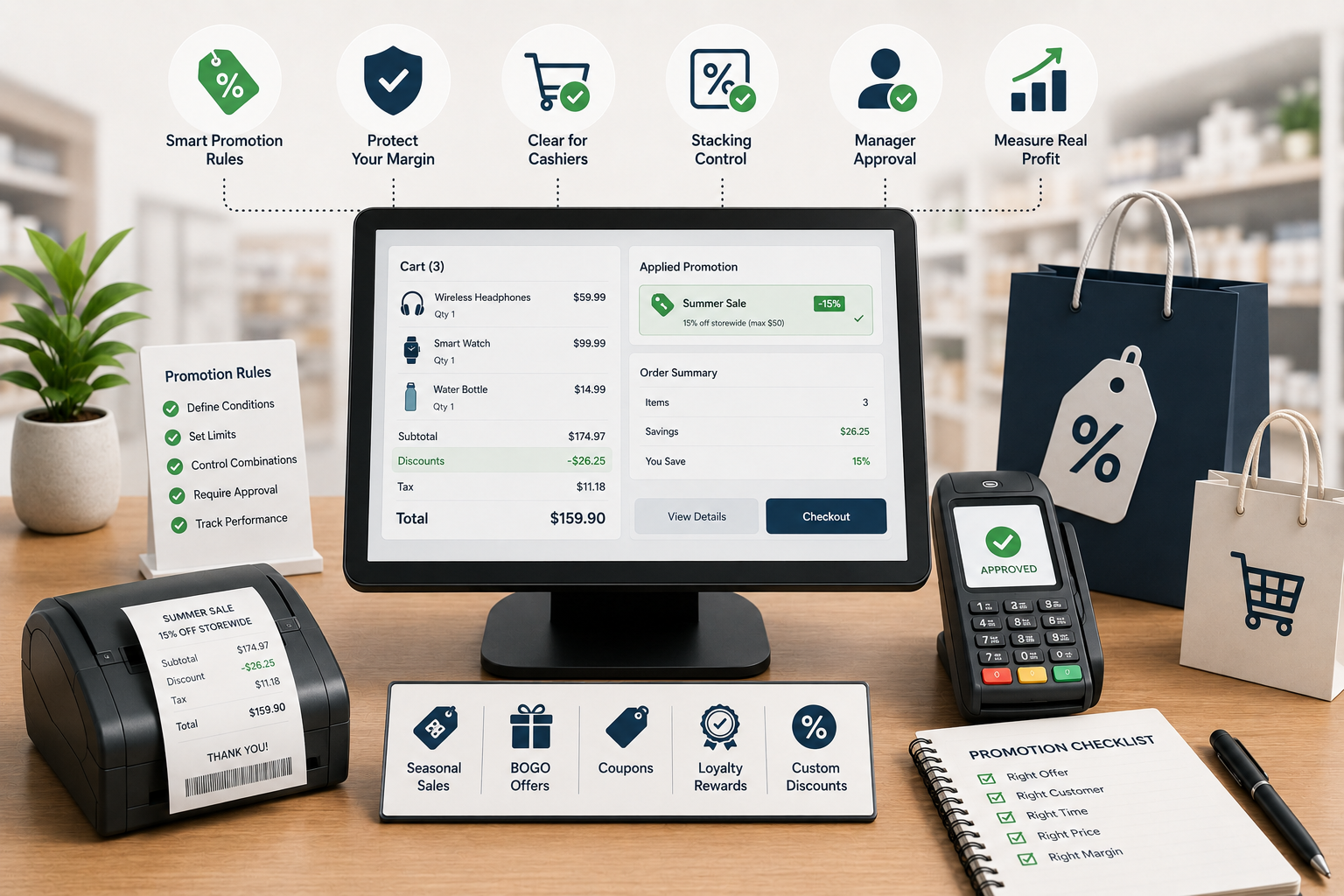
The Discount Worked—But Did the Store Make Money? How POS Promotion Rules Protect Retail Margin
Promotions can increase traffic while quietly damaging margin through discount stacking, wrong eligibility, cashier overrides, returns, and weak reporting. Learn how a modern POS should control offers from setup to post-campaign analysis.
Read article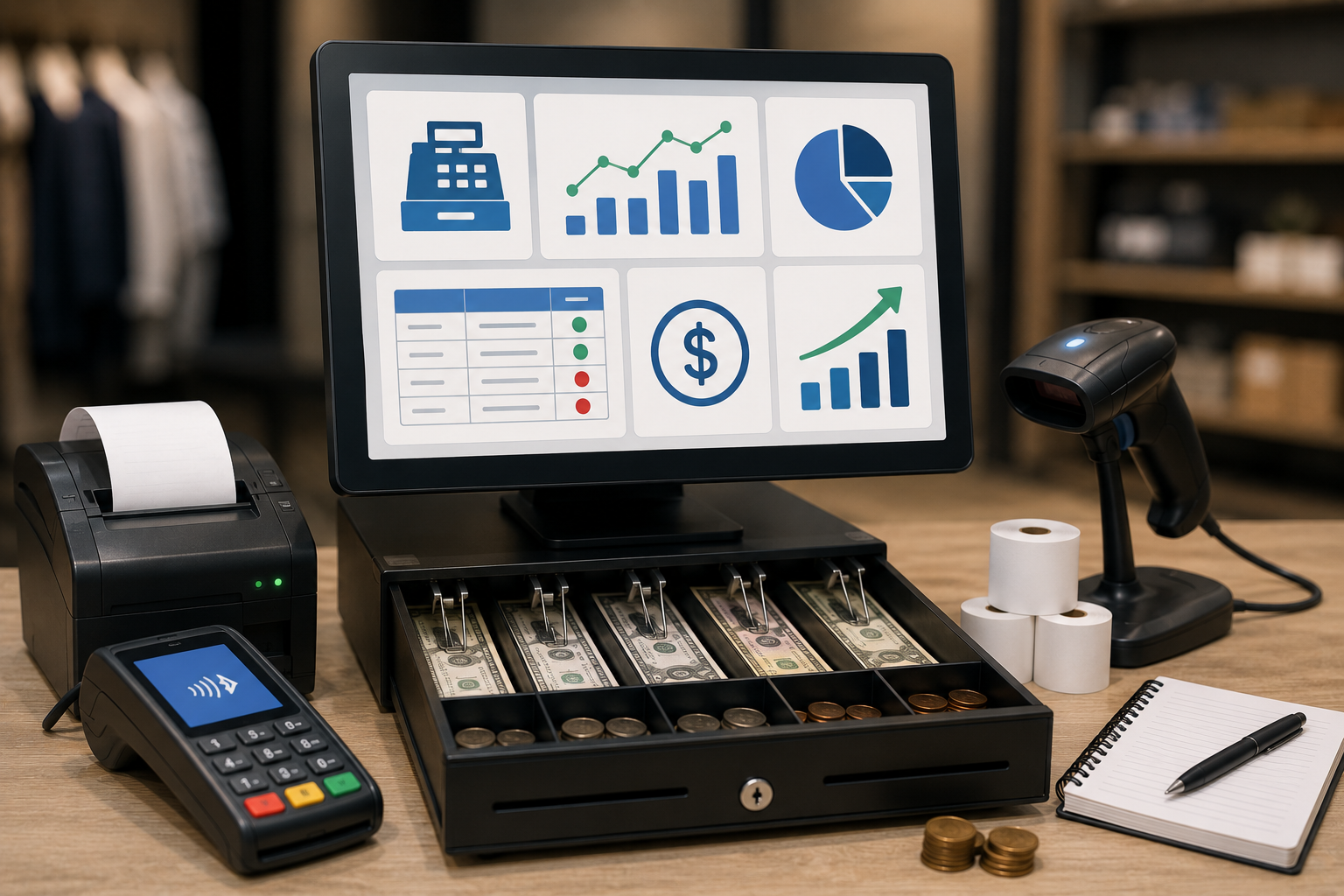
The Register Is Short—But Where Did the Money Go? A Practical POS Guide to Cash Drawers and Payment Reconciliation
A cash difference at closing does not automatically mean theft. Learn how POS register sessions, floats, paid-in and paid-out movements, refunds, tips, card settlements, and clear accountability help retailers reconcile every payment method.
Read article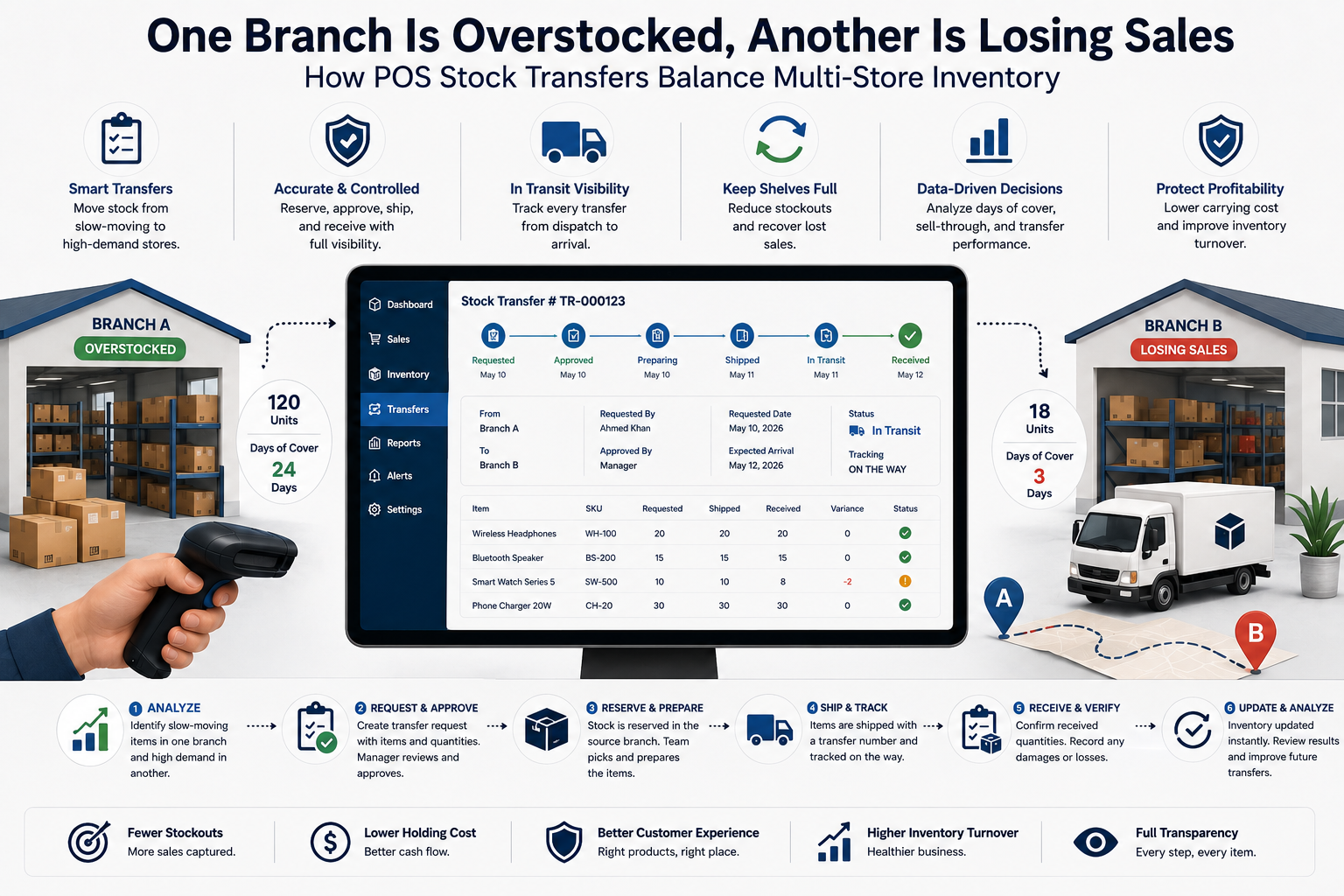
One Branch Is Overstocked, Another Is Losing Sales: How POS Stock Transfers Balance Multi-Store Inventory
Moving stock between branches looks simple, but poor transfer control creates phantom inventory, duplicate availability, missing cartons, delayed receiving, and unreliable reports. Learn how a modern POS should request, ship, receive, reconcile, and analyze inter-branch transfers.
Read article