
A Refund Was Approved at 2:13 AM—Who Did It and Why? How POS Permissions and Audit Logs Protect Retail Operations
Retail risk often begins with ordinary actions performed by the wrong person: discounts, refunds, voids, price changes, cash adjustments, exports, and permission edits. Learn how a modern POS should use role-based access, manager approvals, secure PINs, device controls, and audit trails without slowing down trusted staff.
A Refund Was Approved at 2:13 AM—Who Did It and Why? How POS Permissions and Audit Logs Protect Retail Operations
Retail risk often begins with ordinary actions performed by the wrong person: discounts, refunds, voids, price changes, cash adjustments, exports, and permission edits. Learn how a modern POS should use role-based access, manager approvals, secure PINs, device controls, and audit trails without slowing down trusted staff.
Permissions Should Follow Job Responsibilities, Not Seniority Alone
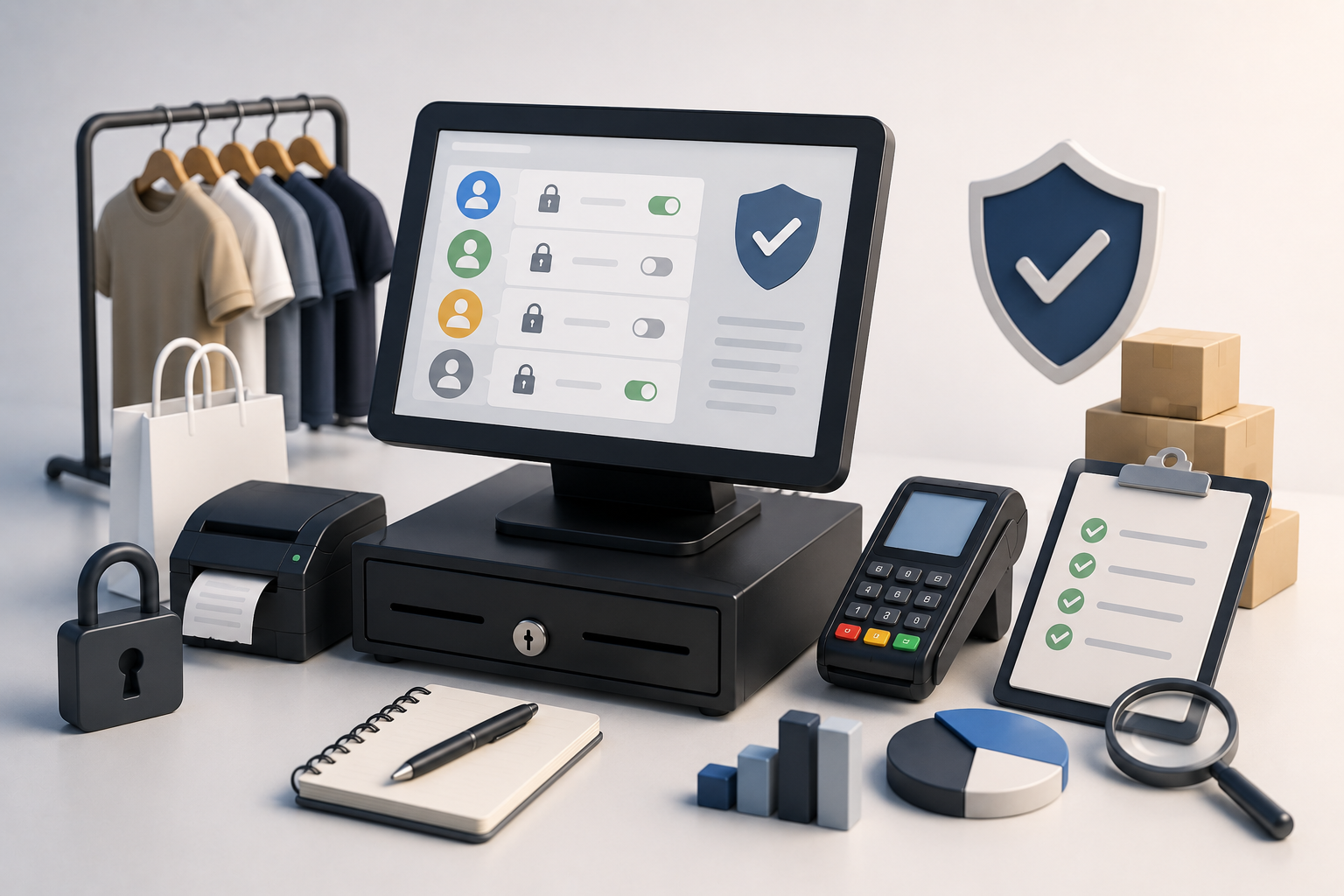
A permission system should answer one practical question: what does this employee need to do their job today? Cashiers may need to sell, accept approved tenders, look up customers, and print receipts. Supervisors may additionally approve refunds, discounts, cash movements, or order exceptions. Finance, inventory, and administrators need different capabilities.
Giving every experienced employee full access feels convenient but creates unnecessary risk. The safer model begins with the least access required, then adds specific permissions based on responsibility, location, device, and shift.
Consider a real store incident: A permission system should answer one practical question: what does this employee need to do their job today? Cashiers may need to sell, accept approved tenders, look up customers, and print receipts. Supervisors may additionally approve refunds, discounts, cash movements, or order exceptions. Finance, inventory, and administrators need different capabilities. The approval record should show the requesting employee, approving manager, action, amount, reason, order or transaction, location, device, and exact time. The manager should enter their own credentials rather than allowing the cashier to reuse them later. Shift handover should close or transfer the active session. A sale, refund, or cash movement must always belong to the person who actually performed it, not to whoever logged in at the start of the day. The workflow should be tested with a small discount, a large refund, a shared-device handover, a failed PIN attempt, a bulk export, a permission change, and a manager approval after business hours.
Consider a real store incident: Risk-based controls should become stronger as the potential impact rises. A small item discount may need only a reason. A large refund may need a manager. A permission change, bulk export, or cash correction may need a second approver or back-office confirmation. Important events include refunds, voids, deleted items, manual discounts, price overrides, cash drawer opens, payouts, stock adjustments, customer exports, permission changes, login failures, and configuration edits. Giving every experienced employee full access feels convenient but creates unnecessary risk. The safer model begins with the least access required, then adds specific permissions based on responsibility, location, device, and shift. The workflow should be tested with a small discount, a large refund, a shared-device handover, a failed PIN attempt, a bulk export, a permission change, and a manager approval after business hours.
Manager Approval Must Confirm a Real Decision
Manager approval should not be a shared secret PIN passed around the store. It represents a real decision by an authorised person who understands the transaction, sees the reason, and accepts accountability.
The approval record should show the requesting employee, approving manager, action, amount, reason, order or transaction, location, device, and exact time. The manager should enter their own credentials rather than allowing the cashier to reuse them later.
Consider a real store incident: The approval record should show the requesting employee, approving manager, action, amount, reason, order or transaction, location, device, and exact time. The manager should enter their own credentials rather than allowing the cashier to reuse them later. An audit log is useful only when it can answer what changed, who changed it, when, where, from which device, why, and what the previous and new values were. A line saying “price edited” without the old price, new price, product, user, and approval is not enough. Manager approval should not be a shared secret PIN passed around the store. It represents a real decision by an authorised person who understands the transaction, sees the reason, and accepts accountability. The workflow should be tested with a small discount, a large refund, a shared-device handover, a failed PIN attempt, a bulk export, a permission change, and a manager approval after business hours.
PINs and Sessions Are Part of the Security Model
PIN security matters because a technically perfect permission model fails when employees share codes or leave sessions open. Use unique credentials, automatic lock, short inactivity timeouts, device assignment, failed-attempt monitoring, and immediate deactivation when employment ends.
Shift handover should close or transfer the active session. A sale, refund, or cash movement must always belong to the person who actually performed it, not to whoever logged in at the start of the day.
Consider a real store incident: Giving every experienced employee full access feels convenient but creates unnecessary risk. The safer model begins with the least access required, then adds specific permissions based on responsibility, location, device, and shift. Risk-based controls should become stronger as the potential impact rises. A small item discount may need only a reason. A large refund may need a manager. A permission change, bulk export, or cash correction may need a second approver or back-office confirmation. A permission system should answer one practical question: what does this employee need to do their job today? Cashiers may need to sell, accept approved tenders, look up customers, and print receipts. Supervisors may additionally approve refunds, discounts, cash movements, or order exceptions. Finance, inventory, and administrators need different capabilities. The workflow should be tested with a small discount, a large refund, a shared-device handover, a failed PIN attempt, a bulk export, a permission change, and a manager approval after business hours.
Consider a real store incident: Important events include refunds, voids, deleted items, manual discounts, price overrides, cash drawer opens, payouts, stock adjustments, customer exports, permission changes, login failures, and configuration edits. Manager approval should not be a shared secret PIN passed around the store. It represents a real decision by an authorised person who understands the transaction, sees the reason, and accepts accountability. An audit log is useful only when it can answer what changed, who changed it, when, where, from which device, why, and what the previous and new values were. A line saying “price edited” without the old price, new price, product, user, and approval is not enough. The workflow should be tested with a small discount, a large refund, a shared-device handover, a failed PIN attempt, a bulk export, a permission change, and a manager approval after business hours.
Consider a real store incident: Use amount thresholds, time restrictions, location limits, device restrictions, mandatory notes, linked evidence, alerts, delayed execution, and separation of duties. The employee who creates a high-value adjustment should not always be the person who approves it. A permission system should answer one practical question: what does this employee need to do their job today? Cashiers may need to sell, accept approved tenders, look up customers, and print receipts. Supervisors may additionally approve refunds, discounts, cash movements, or order exceptions. Finance, inventory, and administrators need different capabilities. Risk-based controls should become stronger as the potential impact rises. A small item discount may need only a reason. A large refund may need a manager. A permission change, bulk export, or cash correction may need a second approver or back-office confirmation. The workflow should be tested with a small discount, a large refund, a shared-device handover, a failed PIN attempt, a bulk export, a permission change, and a manager approval after business hours.
Audit Logs Must Reconstruct the Complete Event
An audit log is useful only when it can answer what changed, who changed it, when, where, from which device, why, and what the previous and new values were. A line saying “price edited” without the old price, new price, product, user, and approval is not enough.
Important events include refunds, voids, deleted items, manual discounts, price overrides, cash drawer opens, payouts, stock adjustments, customer exports, permission changes, login failures, and configuration edits.
Consider a real store incident: PIN security matters because a technically perfect permission model fails when employees share codes or leave sessions open. Use unique credentials, automatic lock, short inactivity timeouts, device assignment, failed-attempt monitoring, and immediate deactivation when employment ends. Dashierly or any POS should make trusted work fast while making sensitive actions deliberate and traceable. The goal is not to block employees; it is to ensure that every important action is performed by the right person, for a valid reason, with evidence that can be reviewed later. Use amount thresholds, time restrictions, location limits, device restrictions, mandatory notes, linked evidence, alerts, delayed execution, and separation of duties. The employee who creates a high-value adjustment should not always be the person who approves it. The workflow should be tested with a small discount, a large refund, a shared-device handover, a failed PIN attempt, a bulk export, a permission change, and a manager approval after business hours.
High-Risk Actions Need Stronger Controls
Risk-based controls should become stronger as the potential impact rises. A small item discount may need only a reason. A large refund may need a manager. A permission change, bulk export, or cash correction may need a second approver or back-office confirmation.
Use amount thresholds, time restrictions, location limits, device restrictions, mandatory notes, linked evidence, alerts, delayed execution, and separation of duties. The employee who creates a high-value adjustment should not always be the person who approves it.
Consider a real store incident: Manager approval should not be a shared secret PIN passed around the store. It represents a real decision by an authorised person who understands the transaction, sees the reason, and accepts accountability. Giving every experienced employee full access feels convenient but creates unnecessary risk. The safer model begins with the least access required, then adds specific permissions based on responsibility, location, device, and shift. Important events include refunds, voids, deleted items, manual discounts, price overrides, cash drawer opens, payouts, stock adjustments, customer exports, permission changes, login failures, and configuration edits. The workflow should be tested with a small discount, a large refund, a shared-device handover, a failed PIN attempt, a bulk export, a permission change, and a manager approval after business hours.
Consider a real store incident: An audit log is useful only when it can answer what changed, who changed it, when, where, from which device, why, and what the previous and new values were. A line saying “price edited” without the old price, new price, product, user, and approval is not enough. Use amount thresholds, time restrictions, location limits, device restrictions, mandatory notes, linked evidence, alerts, delayed execution, and separation of duties. The employee who creates a high-value adjustment should not always be the person who approves it. Dashierly or any POS should make trusted work fast while making sensitive actions deliberate and traceable. The goal is not to block employees; it is to ensure that every important action is performed by the right person, for a valid reason, with evidence that can be reviewed later. The workflow should be tested with a small discount, a large refund, a shared-device handover, a failed PIN attempt, a bulk export, a permission change, and a manager approval after business hours.
Use Permission Data to Improve Processes, Not Only Punish Staff
Permission data can reveal confusing workflows, insufficient training, unrealistic approval limits, and locations where staff repeatedly need emergency access. Excessive manager overrides may indicate a process design problem rather than dishonest employees.
Dashierly or any POS should make trusted work fast while making sensitive actions deliberate and traceable. The goal is not to block employees; it is to ensure that every important action is performed by the right person, for a valid reason, with evidence that can be reviewed later.
Consider a real store incident: Shift handover should close or transfer the active session. A sale, refund, or cash movement must always belong to the person who actually performed it, not to whoever logged in at the start of the day. PIN security matters because a technically perfect permission model fails when employees share codes or leave sessions open. Use unique credentials, automatic lock, short inactivity timeouts, device assignment, failed-attempt monitoring, and immediate deactivation when employment ends. PIN security matters because a technically perfect permission model fails when employees share codes or leave sessions open. Use unique credentials, automatic lock, short inactivity timeouts, device assignment, failed-attempt monitoring, and immediate deactivation when employment ends. The workflow should be tested with a small discount, a large refund, a shared-device handover, a failed PIN attempt, a bulk export, a permission change, and a manager approval after business hours.
Keep reading
The Discount Worked—But Did the Store Make Money? How POS Promotion Rules Protect Retail Margin
Promotions can increase traffic while quietly damaging margin through discount stacking, wrong eligibility, cashier overrides, returns, and weak reporting. Learn how a modern POS should control offers from setup to post-campaign analysis.
Read article
The Gift Card Was Sold Months Ago—Why Is It Still Money You Owe? How POS Systems Manage Stored Value
Gift cards and store credit bring cash in early, but they also create balances, redemption obligations, fraud risks, expiry questions, split payments, refunds, and accounting work. Learn how a modern POS should manage stored value from issue to final redemption.
Read article
Your POS Can Recommend the Next Move—But Should It Make the Decision? A Practical Guide to AI in Retail Operations
AI is moving from dashboards into daily retail decisions: forecasting demand, suggesting reorders, detecting anomalies, predicting churn, and summarizing performance. Learn where AI adds value, where human approval still matters, and how to build reliable controls around an intelligent POS.
Read article