
You Ordered 100 Units, but Only 92 Arrived: How POS Purchase Orders Prevent Supplier and Receiving Errors
Purchase orders should connect planned buying with what physically arrives. Learn how a modern POS handles approvals, partial deliveries, damaged goods, substitutions, cost changes, backorders, supplier claims, and inventory updates without hiding discrepancies.
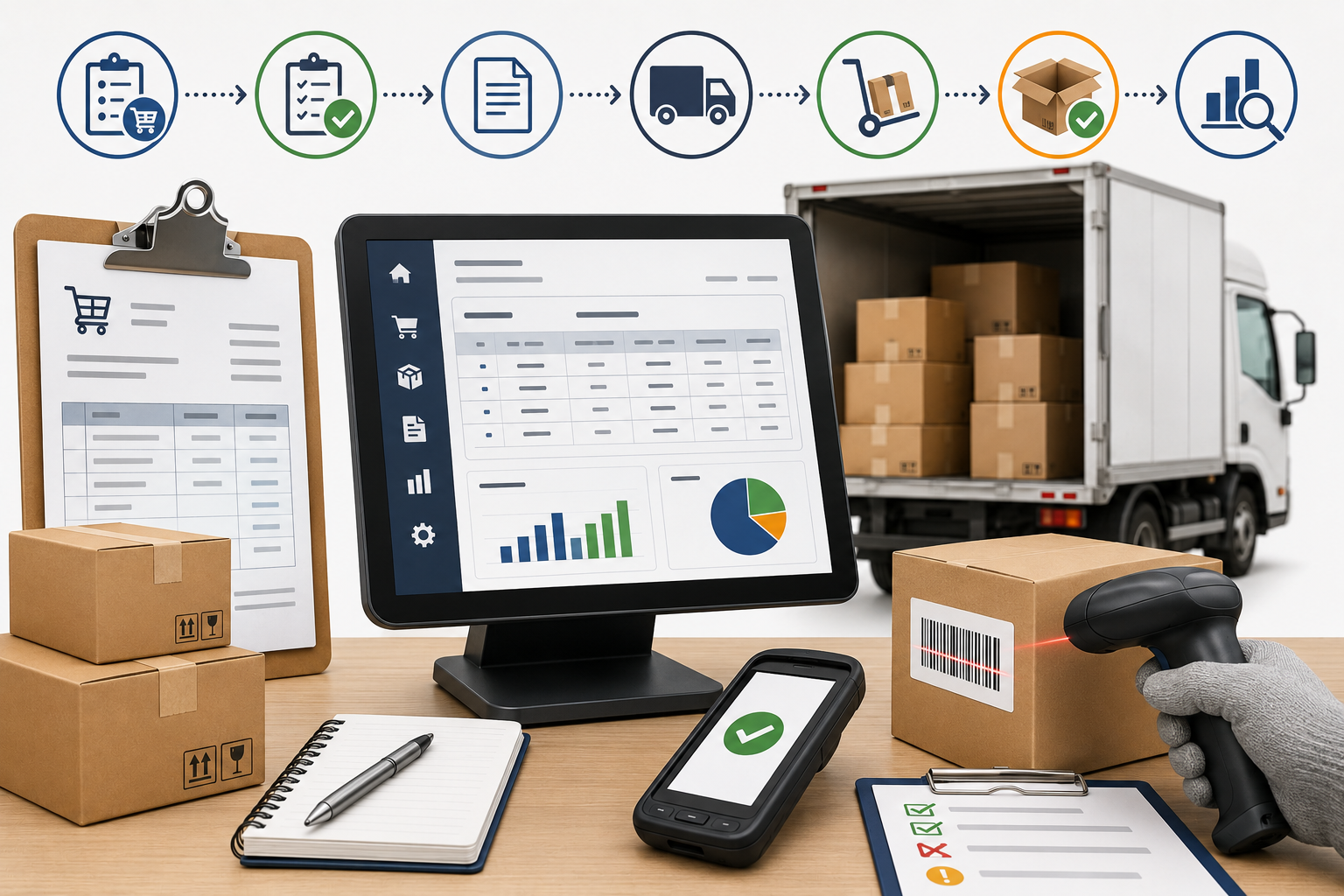
You Ordered 100 Units, but Only 92 Arrived: How POS Purchase Orders Prevent Supplier and Receiving Errors
Purchase orders should connect planned buying with what physically arrives. Learn how a modern POS handles approvals, partial deliveries, damaged goods, substitutions, cost changes, backorders, supplier claims, and inventory updates without hiding discrepancies.
A Purchase Order Is a Controlled Buying Commitment
A purchase order is more than a list emailed to a supplier. It is the approved record of what the business intends to buy: product, quantity, unit, agreed cost, tax, discount, branch, delivery date, payment terms, and supplier.
Without a controlled purchase order, staff can order verbally, duplicate another buyer’s request, accept an unapproved cost, or receive goods that finance never expected. Inventory may increase while the invoice and budget remain disconnected.
For example, A purchase order is more than a list emailed to a supplier. It is the approved record of what the business intends to buy: product, quantity, unit, agreed cost, tax, discount, branch, delivery date, payment terms, and supplier. The approved version should be locked or versioned. If quantities or prices change after approval, the system should show who changed them, why, and whether reapproval is required. The workflow should be tested with a partial delivery, damaged units, a higher invoice cost, an unauthorized substitution, and an old backorder before staff begin using it.
Approvals Should Happen Before the Supplier Ships
Approval rules should reflect total value, product category, supplier, branch, budget, and urgency. A routine replenishment can follow a simple limit while a new supplier, large order, or cost increase may require additional review.
The approved version should be locked or versioned. If quantities or prices change after approval, the system should show who changed them, why, and whether reapproval is required.
For example, The approved version should be locked or versioned. If quantities or prices change after approval, the system should show who changed them, why, and whether reapproval is required. A supplier may deliver 60 units today and promise 40 next week. The purchase order should remain partially received with a visible outstanding balance instead of being closed or duplicated. The workflow should be tested with a partial delivery, damaged units, a higher invoice cost, an unauthorized substitution, and an old backorder before staff begin using it.
Receiving Must Record Reality, Not Copy the Order
Receiving staff must count and inspect what physically arrived. Copying the ordered quantity into the received field hides shortages, over-deliveries, damaged goods, wrong variants, expired products, and supplier substitutions.
The receiving record should capture received quantity, rejected quantity, damage, expiry, batch or serial where relevant, actual cost, packing slip, user, time, branch, and notes or images for disputes.
For example, Without a controlled purchase order, staff can order verbally, duplicate another buyer’s request, accept an unapproved cost, or receive goods that finance never expected. Inventory may increase while the invoice and budget remain disconnected. If the invoice cost differs from the approved order, the difference affects margin, stock valuation, tax, and supplier payment. Substituting a different size, brand, pack, or model can also create catalogue and sales problems. The workflow should be tested with a partial delivery, damaged units, a higher invoice cost, an unauthorized substitution, and an old backorder before staff begin using it.
Partial Deliveries and Backorders Need Clear Status
A supplier may deliver 60 units today and promise 40 next week. The purchase order should remain partially received with a visible outstanding balance instead of being closed or duplicated.
Backordered lines need expected date, supplier confirmation, quantity still due, and a decision to keep open, cancel, substitute, or source elsewhere. Old open orders should trigger review.
For example, Receiving staff must count and inspect what physically arrived. Copying the ordered quantity into the received field hides shortages, over-deliveries, damaged goods, wrong variants, expired products, and supplier substitutions. Dashierly or any POS should connect purchasing, receiving, inventory, supplier claims, accounting, and branch demand. The goal is to pay for what was approved, add only what was received, and make every discrepancy visible while evidence is still available. The workflow should be tested with a partial delivery, damaged units, a higher invoice cost, an unauthorized substitution, and an old backorder before staff begin using it.
Cost Changes and Substitutions Must Not Slip Through
If the invoice cost differs from the approved order, the difference affects margin, stock valuation, tax, and supplier payment. Substituting a different size, brand, pack, or model can also create catalogue and sales problems.
Use tolerance limits, approval for material cost differences, explicit substitution acceptance, and three-way comparison between purchase order, receipt, and supplier invoice.
For example, Approval rules should reflect total value, product category, supplier, branch, budget, and urgency. A routine replenishment can follow a simple limit while a new supplier, large order, or cost increase may require additional review. Without a controlled purchase order, staff can order verbally, duplicate another buyer’s request, accept an unapproved cost, or receive goods that finance never expected. Inventory may increase while the invoice and budget remain disconnected. The workflow should be tested with a partial delivery, damaged units, a higher invoice cost, an unauthorized substitution, and an old backorder before staff begin using it.
For example, A supplier may deliver 60 units today and promise 40 next week. The purchase order should remain partially received with a visible outstanding balance instead of being closed or duplicated. Use tolerance limits, approval for material cost differences, explicit substitution acceptance, and three-way comparison between purchase order, receipt, and supplier invoice. The workflow should be tested with a partial delivery, damaged units, a higher invoice cost, an unauthorized substitution, and an old backorder before staff begin using it.
Supplier Performance Should Shape Future Buying
Measure fill rate, on-time delivery, damage rate, cost variance, substitution rate, claim resolution time, and backorder frequency by supplier. These measures are more useful than judging suppliers only by quoted price.
Dashierly or any POS should connect purchasing, receiving, inventory, supplier claims, accounting, and branch demand. The goal is to pay for what was approved, add only what was received, and make every discrepancy visible while evidence is still available.
For example, The receiving record should capture received quantity, rejected quantity, damage, expiry, batch or serial where relevant, actual cost, packing slip, user, time, branch, and notes or images for disputes. Receiving staff must count and inspect what physically arrived. Copying the ordered quantity into the received field hides shortages, over-deliveries, damaged goods, wrong variants, expired products, and supplier substitutions. The workflow should be tested with a partial delivery, damaged units, a higher invoice cost, an unauthorized substitution, and an old backorder before staff begin using it.
Keep reading
You Bought a Case of 24 but Sold One Bottle: How POS Units of Measure Prevent Inventory and Pricing Errors
Retailers often buy products by case, receive them by pack, and sell them individually. Learn how POS unit-of-measure rules, barcode mapping, cost conversion, stock counts, returns, and purchasing controls prevent quantity and margin errors.
Read article
Your POS Can Recommend the Next Move—But Should It Make the Decision? A Practical Guide to AI in Retail Operations
AI is moving from dashboards into daily retail decisions: forecasting demand, suggesting reorders, detecting anomalies, predicting churn, and summarizing performance. Learn where AI adds value, where human approval still matters, and how to build reliable controls around an intelligent POS.
Read article
The Customer Paid a Deposit, but the Sale Is Not Finished: How POS Systems Should Manage Preorders, Layaway, and Partial Payments
Deposits, preorders, layaway, special orders, and partial payments can secure demand and improve cash flow—but only when inventory, customer balances, due dates, refunds, and accounting stay connected. Learn how a modern POS should manage the entire order lifecycle.
Read article