
A Return Is Not a Sale in Reverse: How POS Systems Handle Refunds, Exchanges, Restocking, and Return Fraud
Returns affect cash, margin, inventory, tax, customer trust, and fraud exposure. Learn how a modern POS should connect every refund or exchange to the original sale, inspect product condition, control approvals, and keep stock accurate.
A Return Is Not a Sale in Reverse: How POS Systems Handle Refunds, Exchanges, Restocking, and Return Fraud
Returns affect cash, margin, inventory, tax, customer trust, and fraud exposure. Learn how a modern POS should connect every refund or exchange to the original sale, inspect product condition, control approvals, and keep stock accurate.
The Return Must Begin with the Original Transaction
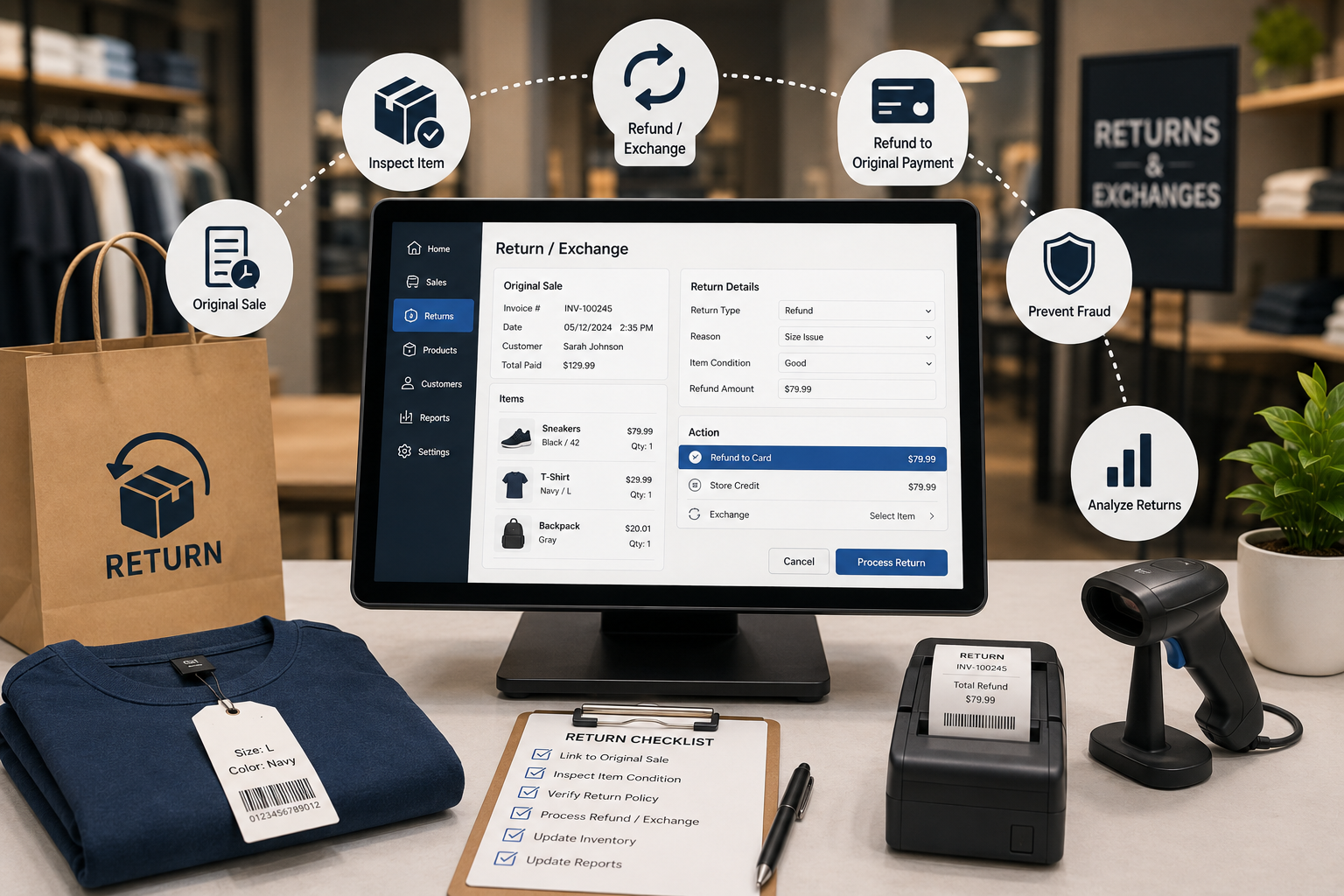
A return should start by finding the original invoice, order, product, quantity, price, discount, tax, payment method, branch, cashier, and date. Without that link, the employee is forced to guess what the customer paid and what policy applies.
The original transaction also prevents a common margin leak: refunding the current full price for an item that was originally sold with a promotion, bundle, loyalty reward, partial payment, or store credit.
For example, A return should start by finding the original invoice, order, product, quantity, price, discount, tax, payment method, branch, cashier, and date. Without that link, the employee is forced to guess what the customer paid and what policy applies. The POS should calculate the difference during an exchange, preserve the original discount logic where appropriate, prevent double refunds, and return money through the approved method rather than whichever option is easiest for the cashier. The corrective action should protect the customer experience while preserving a clear record of value, stock condition, approval, and payment.
A Refund, an Exchange, and Store Credit Are Different Decisions
A refund sends value back, an exchange replaces one item with another, and store credit keeps value inside the retailer. These choices affect payment fees, cash flow, tax, customer retention, and accounting differently.
The POS should calculate the difference during an exchange, preserve the original discount logic where appropriate, prevent double refunds, and return money through the approved method rather than whichever option is easiest for the cashier.
For example, The POS should calculate the difference during an exchange, preserve the original discount logic where appropriate, prevent double refunds, and return money through the approved method rather than whichever option is easiest for the cashier. Strong controls focus on exceptions: no receipt, unusual quantity, repeated returns, mismatched serial number, high-value item, refund to a different payment method, return outside the window, or employee override. The corrective action should protect the customer experience while preserving a clear record of value, stock condition, approval, and payment.
Returned Stock Needs a Condition, Not Just a Quantity
A returned item cannot automatically become available stock. It may be unopened and sellable, opened but resellable, damaged, incomplete, expired, contaminated, counterfeit, quarantined, or suitable only for supplier return or liquidation.
The employee should record condition, reason, missing parts, serial number where relevant, images or notes for high-risk items, and the destination of the product. Restocking should happen only after the condition decision.
For example, The original transaction also prevents a common margin leak: refunding the current full price for an item that was originally sold with a promotion, bundle, loyalty reward, partial payment, or store credit. Return reasons are business data. A spike in wrong size may indicate poor sizing information. Repeated damage may point to packaging or supplier quality. High return rates after a promotion may reveal misleading marketing or impulse buying. The corrective action should protect the customer experience while preserving a clear record of value, stock condition, approval, and payment.
Good Controls Reduce Fraud Without Accusing Every Customer
Strong controls focus on exceptions: no receipt, unusual quantity, repeated returns, mismatched serial number, high-value item, refund to a different payment method, return outside the window, or employee override.
Manager approval, clear limits, customer-friendly explanations, and a visible audit trail are more effective than treating every honest return like a criminal investigation.
For example, A returned item cannot automatically become available stock. It may be unopened and sellable, opened but resellable, damaged, incomplete, expired, contaminated, counterfeit, quarantined, or suitable only for supplier return or liquidation. Dashierly or any POS should make the return transparent from customer counter to finance and inventory. The best return process protects trust and recovers value without hiding cost or risk. The corrective action should protect the customer experience while preserving a clear record of value, stock condition, approval, and payment.
Return Data Should Improve Buying and Product Quality
Return reasons are business data. A spike in wrong size may indicate poor sizing information. Repeated damage may point to packaging or supplier quality. High return rates after a promotion may reveal misleading marketing or impulse buying.
Analyse return rate by product, variant, supplier, branch, channel, reason, employee, customer segment, and time since purchase. Use the result to change buying, descriptions, quality checks, training, and policy.
For example, A refund sends value back, an exchange replaces one item with another, and store credit keeps value inside the retailer. These choices affect payment fees, cash flow, tax, customer retention, and accounting differently. The original transaction also prevents a common margin leak: refunding the current full price for an item that was originally sold with a promotion, bundle, loyalty reward, partial payment, or store credit. The corrective action should protect the customer experience while preserving a clear record of value, stock condition, approval, and payment.
For example, Strong controls focus on exceptions: no receipt, unusual quantity, repeated returns, mismatched serial number, high-value item, refund to a different payment method, return outside the window, or employee override. Analyse return rate by product, variant, supplier, branch, channel, reason, employee, customer segment, and time since purchase. Use the result to change buying, descriptions, quality checks, training, and policy. The corrective action should protect the customer experience while preserving a clear record of value, stock condition, approval, and payment.
Build a Return Workflow the Whole Store Can Follow
Create one process: locate the sale, verify eligibility, select items, record reason and condition, choose refund or exchange, decide restock destination, obtain approval if needed, complete payment, issue receipt, and update inventory.
Dashierly or any POS should make the return transparent from customer counter to finance and inventory. The best return process protects trust and recovers value without hiding cost or risk.
For example, The employee should record condition, reason, missing parts, serial number where relevant, images or notes for high-risk items, and the destination of the product. Restocking should happen only after the condition decision. A returned item cannot automatically become available stock. It may be unopened and sellable, opened but resellable, damaged, incomplete, expired, contaminated, counterfeit, quarantined, or suitable only for supplier return or liquidation. The corrective action should protect the customer experience while preserving a clear record of value, stock condition, approval, and payment.
Keep reading
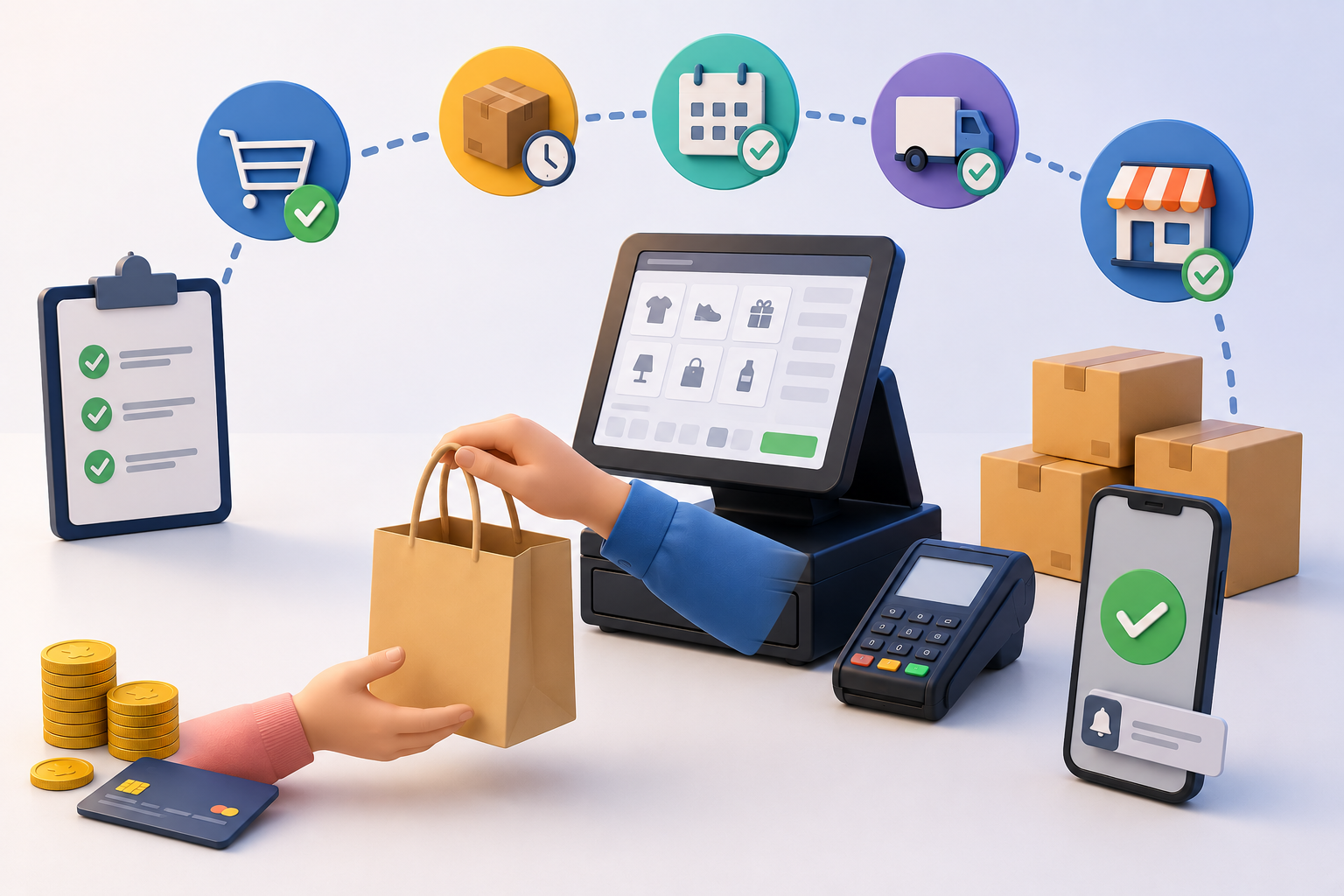
The Customer Paid a Deposit, but the Sale Is Not Finished: How POS Systems Should Manage Preorders, Layaway, and Partial Payments
Deposits, preorders, layaway, special orders, and partial payments can secure demand and improve cash flow—but only when inventory, customer balances, due dates, refunds, and accounting stay connected. Learn how a modern POS should manage the entire order lifecycle.
Read article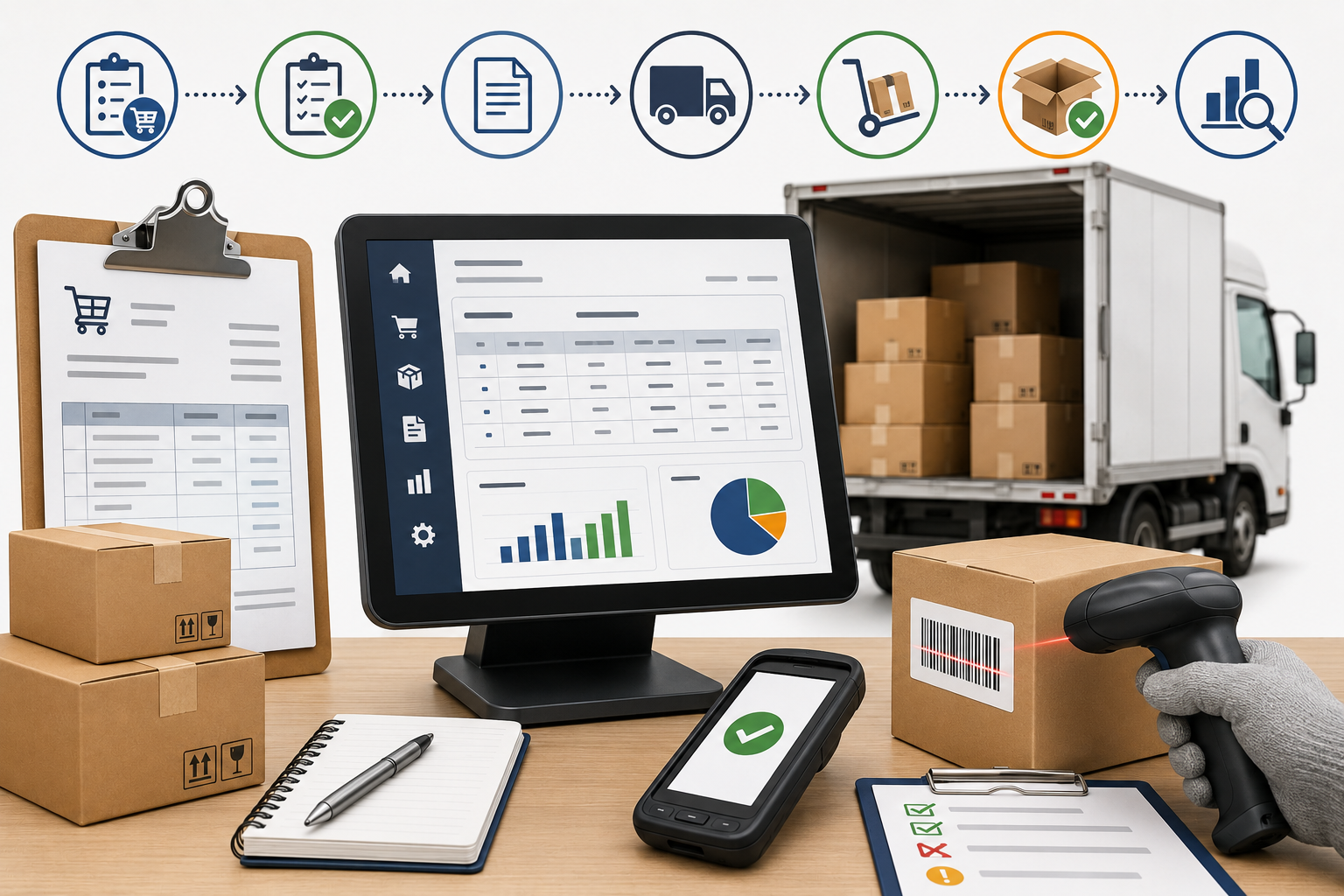
You Ordered 100 Units, but Only 92 Arrived: How POS Purchase Orders Prevent Supplier and Receiving Errors
Purchase orders should connect planned buying with what physically arrives. Learn how a modern POS handles approvals, partial deliveries, damaged goods, substitutions, cost changes, backorders, supplier claims, and inventory updates without hiding discrepancies.
Read article
Your POS Can Recommend the Next Move—But Should It Make the Decision? A Practical Guide to AI in Retail Operations
AI is moving from dashboards into daily retail decisions: forecasting demand, suggesting reorders, detecting anomalies, predicting churn, and summarizing performance. Learn where AI adds value, where human approval still matters, and how to build reliable controls around an intelligent POS.
Read article