
The Customer Paid a Deposit, but the Sale Is Not Finished: How POS Systems Should Manage Preorders, Layaway, and Partial Payments
Deposits, preorders, layaway, special orders, and partial payments can secure demand and improve cash flow—but only when inventory, customer balances, due dates, refunds, and accounting stay connected. Learn how a modern POS should manage the entire order lifecycle.
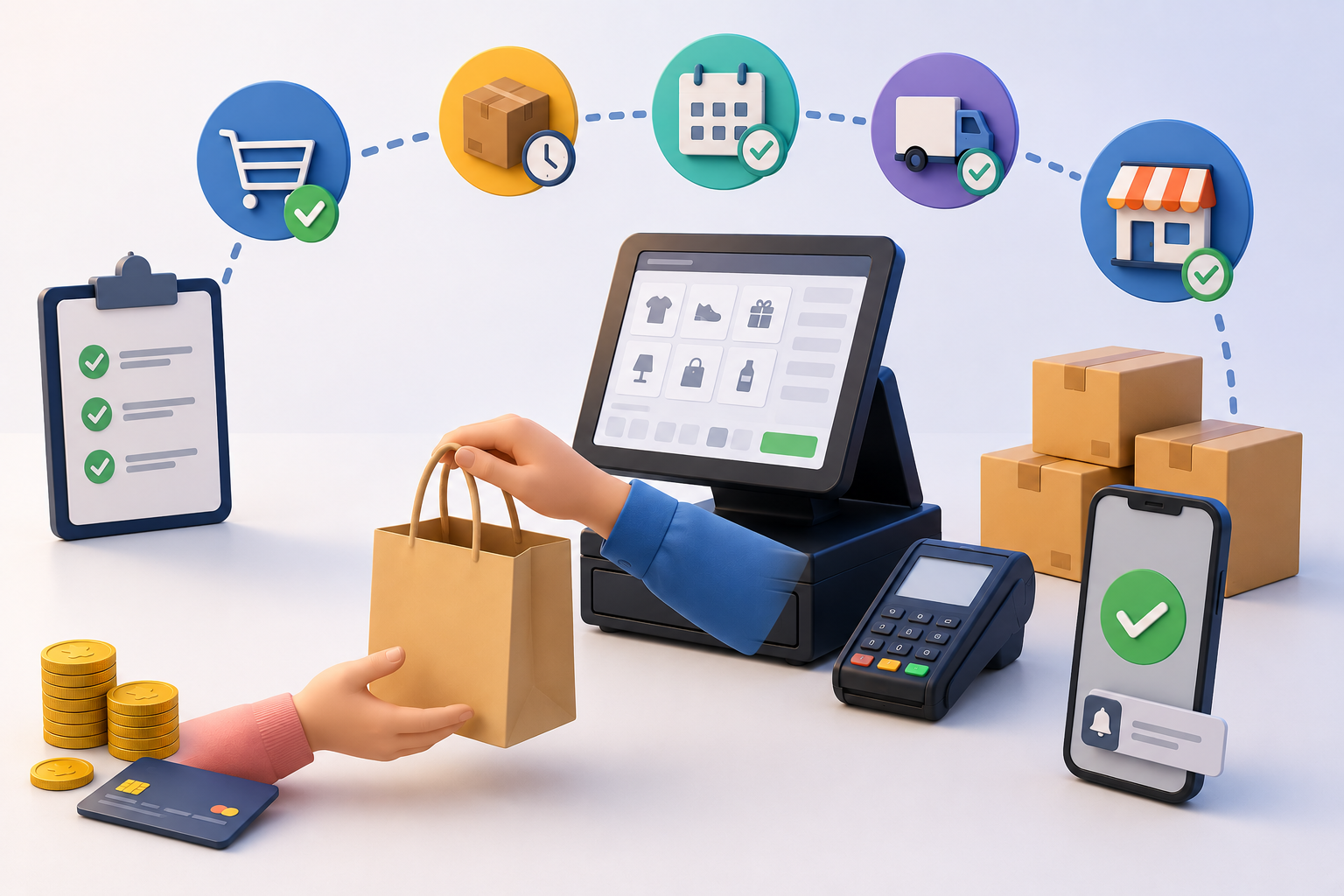
The Customer Paid a Deposit, but the Sale Is Not Finished: How POS Systems Should Manage Preorders, Layaway, and Partial Payments
Deposits, preorders, layaway, special orders, and partial payments can secure demand and improve cash flow—but only when inventory, customer balances, due dates, refunds, and accounting stay connected. Learn how a modern POS should manage the entire order lifecycle.
A Deposit Creates an Obligation, Not a Completed Sale
When a customer pays a deposit, the business receives cash before it has fully delivered the product or service. The POS must record both facts: money was collected, and an obligation remains. Treating the deposit as an ordinary completed sale can distort revenue, taxes, inventory, staff commissions, and refund reporting.
The order therefore needs its own lifecycle. It may be created, awaiting deposit, partially paid, reserved, ordered from supplier, received, ready for pickup, completed, cancelled, expired, or refunded. Each status should reflect a real operational condition rather than a vague note.
Consider a real customer order: When a customer pays a deposit, the business receives cash before it has fully delivered the product or service. The POS must record both facts: money was collected, and an obligation remains. Treating the deposit as an ordinary completed sale can distort revenue, taxes, inventory, staff commissions, and refund reporting. The POS should clearly show what has been reserved: a specific serialised unit, a quantity from future stock, a supplier order, or only a place in a demand queue. The customer should also see the expected availability date and the conditions that can change it. Creating separate sales for each instalment breaks the relationship between money and merchandise. It can duplicate tax, confuse commissions, make refunds difficult, and leave staff unable to explain how much is still owed. The workflow should be tested with a refundable deposit, a non-refundable fee, two payment methods, a supplier delay, a partial fulfilment, a missed due date, and a cancellation.
Consider a real customer order: Cancellation terms should define whether deposits are refundable, partially refundable, transferable, or retained as a fee where legally permitted. The POS should calculate refunds from the original payment history and preserve the reason, approval, and customer communication. Reservations need expiry and release rules. If the customer misses a payment, if the supplier delays, or if the pickup period passes, the system should create a task and apply the policy rather than leaving stock blocked indefinitely. The order therefore needs its own lifecycle. It may be created, awaiting deposit, partially paid, reserved, ordered from supplier, received, ready for pickup, completed, cancelled, expired, or refunded. Each status should reflect a real operational condition rather than a vague note. The workflow should be tested with a refundable deposit, a non-refundable fee, two payment methods, a supplier delay, a partial fulfilment, a missed due date, and a cancellation.
Preorders and Layaway Reserve Different Things
A preorder usually sells future availability before the item is ready or in stock. A layaway or hold often reserves an existing item while the customer pays over time. A special order may trigger a supplier purchase for a specific customer. Mixing these models creates false inventory promises.
The POS should clearly show what has been reserved: a specific serialised unit, a quantity from future stock, a supplier order, or only a place in a demand queue. The customer should also see the expected availability date and the conditions that can change it.
Consider a real customer order: The POS should clearly show what has been reserved: a specific serialised unit, a quantity from future stock, a supplier order, or only a place in a demand queue. The customer should also see the expected availability date and the conditions that can change it. Inventory should move through controlled states such as available, reserved, on supplier order, received for customer, ready for pickup, and released. A unit reserved for one customer should not appear available to another channel. A preorder usually sells future availability before the item is ready or in stock. A layaway or hold often reserves an existing item while the customer pays over time. A special order may trigger a supplier purchase for a specific customer. Mixing these models creates false inventory promises. The workflow should be tested with a refundable deposit, a non-refundable fee, two payment methods, a supplier delay, a partial fulfilment, a missed due date, and a cancellation.
Partial Payments Need a Single Order Balance
Every payment must reduce one central outstanding balance. The order history should show amount, method, date, employee, branch, processor reference, remaining balance, due date, and whether the payment was captured, recorded manually, reversed, or disputed.
Creating separate sales for each instalment breaks the relationship between money and merchandise. It can duplicate tax, confuse commissions, make refunds difficult, and leave staff unable to explain how much is still owed.
Consider a real customer order: The order therefore needs its own lifecycle. It may be created, awaiting deposit, partially paid, reserved, ordered from supplier, received, ready for pickup, completed, cancelled, expired, or refunded. Each status should reflect a real operational condition rather than a vague note. Cancellation terms should define whether deposits are refundable, partially refundable, transferable, or retained as a fee where legally permitted. The POS should calculate refunds from the original payment history and preserve the reason, approval, and customer communication. When a customer pays a deposit, the business receives cash before it has fully delivered the product or service. The POS must record both facts: money was collected, and an obligation remains. Treating the deposit as an ordinary completed sale can distort revenue, taxes, inventory, staff commissions, and refund reporting. The workflow should be tested with a refundable deposit, a non-refundable fee, two payment methods, a supplier delay, a partial fulfilment, a missed due date, and a cancellation.
Consider a real customer order: Reservations need expiry and release rules. If the customer misses a payment, if the supplier delays, or if the pickup period passes, the system should create a task and apply the policy rather than leaving stock blocked indefinitely. A preorder usually sells future availability before the item is ready or in stock. A layaway or hold often reserves an existing item while the customer pays over time. A special order may trigger a supplier purchase for a specific customer. Mixing these models creates false inventory promises. Inventory should move through controlled states such as available, reserved, on supplier order, received for customer, ready for pickup, and released. A unit reserved for one customer should not appear available to another channel. The workflow should be tested with a refundable deposit, a non-refundable fee, two payment methods, a supplier delay, a partial fulfilment, a missed due date, and a cancellation.
Consider a real customer order: Preorders also need a plan for price changes, product substitutions, delayed launches, partial fulfilment, and supplier cancellation. Customers should not discover these rules only after money has been collected. When a customer pays a deposit, the business receives cash before it has fully delivered the product or service. The POS must record both facts: money was collected, and an obligation remains. Treating the deposit as an ordinary completed sale can distort revenue, taxes, inventory, staff commissions, and refund reporting. Cancellation terms should define whether deposits are refundable, partially refundable, transferable, or retained as a fee where legally permitted. The POS should calculate refunds from the original payment history and preserve the reason, approval, and customer communication. The workflow should be tested with a refundable deposit, a non-refundable fee, two payment methods, a supplier delay, a partial fulfilment, a missed due date, and a cancellation.
Inventory Must Move Through Clear Reservation States
Inventory should move through controlled states such as available, reserved, on supplier order, received for customer, ready for pickup, and released. A unit reserved for one customer should not appear available to another channel.
Reservations need expiry and release rules. If the customer misses a payment, if the supplier delays, or if the pickup period passes, the system should create a task and apply the policy rather than leaving stock blocked indefinitely.
Consider a real customer order: Every payment must reduce one central outstanding balance. The order history should show amount, method, date, employee, branch, processor reference, remaining balance, due date, and whether the payment was captured, recorded manually, reversed, or disputed. Dashierly or any POS should connect customer, order, product, reservation, payments, supplier activity, delivery, refund, and accounting in one traceable record. The strongest workflow makes every remaining obligation visible until the order is genuinely complete. Preorders also need a plan for price changes, product substitutions, delayed launches, partial fulfilment, and supplier cancellation. Customers should not discover these rules only after money has been collected. The workflow should be tested with a refundable deposit, a non-refundable fee, two payment methods, a supplier delay, a partial fulfilment, a missed due date, and a cancellation.
Cancellation, Refund, and Expiry Rules Must Be Defined Early
Cancellation terms should define whether deposits are refundable, partially refundable, transferable, or retained as a fee where legally permitted. The POS should calculate refunds from the original payment history and preserve the reason, approval, and customer communication.
Preorders also need a plan for price changes, product substitutions, delayed launches, partial fulfilment, and supplier cancellation. Customers should not discover these rules only after money has been collected.
Consider a real customer order: A preorder usually sells future availability before the item is ready or in stock. A layaway or hold often reserves an existing item while the customer pays over time. A special order may trigger a supplier purchase for a specific customer. Mixing these models creates false inventory promises. The order therefore needs its own lifecycle. It may be created, awaiting deposit, partially paid, reserved, ordered from supplier, received, ready for pickup, completed, cancelled, expired, or refunded. Each status should reflect a real operational condition rather than a vague note. Reservations need expiry and release rules. If the customer misses a payment, if the supplier delays, or if the pickup period passes, the system should create a task and apply the policy rather than leaving stock blocked indefinitely. The workflow should be tested with a refundable deposit, a non-refundable fee, two payment methods, a supplier delay, a partial fulfilment, a missed due date, and a cancellation.
Consider a real customer order: Inventory should move through controlled states such as available, reserved, on supplier order, received for customer, ready for pickup, and released. A unit reserved for one customer should not appear available to another channel. Preorders also need a plan for price changes, product substitutions, delayed launches, partial fulfilment, and supplier cancellation. Customers should not discover these rules only after money has been collected. Dashierly or any POS should connect customer, order, product, reservation, payments, supplier activity, delivery, refund, and accounting in one traceable record. The strongest workflow makes every remaining obligation visible until the order is genuinely complete. The workflow should be tested with a refundable deposit, a non-refundable fee, two payment methods, a supplier delay, a partial fulfilment, a missed due date, and a cancellation.
Measure Whether the Program Improves Cash Flow or Creates Hidden Work
A successful program should improve conversion, demand visibility, cash flow, supplier planning, and customer retention. Measure cancellation rate, overdue balances, time to completion, refund rate, abandoned reservations, aged deposits, pickup delays, and staff time spent resolving exceptions.
Dashierly or any POS should connect customer, order, product, reservation, payments, supplier activity, delivery, refund, and accounting in one traceable record. The strongest workflow makes every remaining obligation visible until the order is genuinely complete.
Consider a real customer order: Creating separate sales for each instalment breaks the relationship between money and merchandise. It can duplicate tax, confuse commissions, make refunds difficult, and leave staff unable to explain how much is still owed. Every payment must reduce one central outstanding balance. The order history should show amount, method, date, employee, branch, processor reference, remaining balance, due date, and whether the payment was captured, recorded manually, reversed, or disputed. Every payment must reduce one central outstanding balance. The order history should show amount, method, date, employee, branch, processor reference, remaining balance, due date, and whether the payment was captured, recorded manually, reversed, or disputed. The workflow should be tested with a refundable deposit, a non-refundable fee, two payment methods, a supplier delay, a partial fulfilment, a missed due date, and a cancellation.
Keep reading

You Ordered 100 Units, but Only 92 Arrived: How POS Purchase Orders Prevent Supplier and Receiving Errors
Purchase orders should connect planned buying with what physically arrives. Learn how a modern POS handles approvals, partial deliveries, damaged goods, substitutions, cost changes, backorders, supplier claims, and inventory updates without hiding discrepancies.
Read article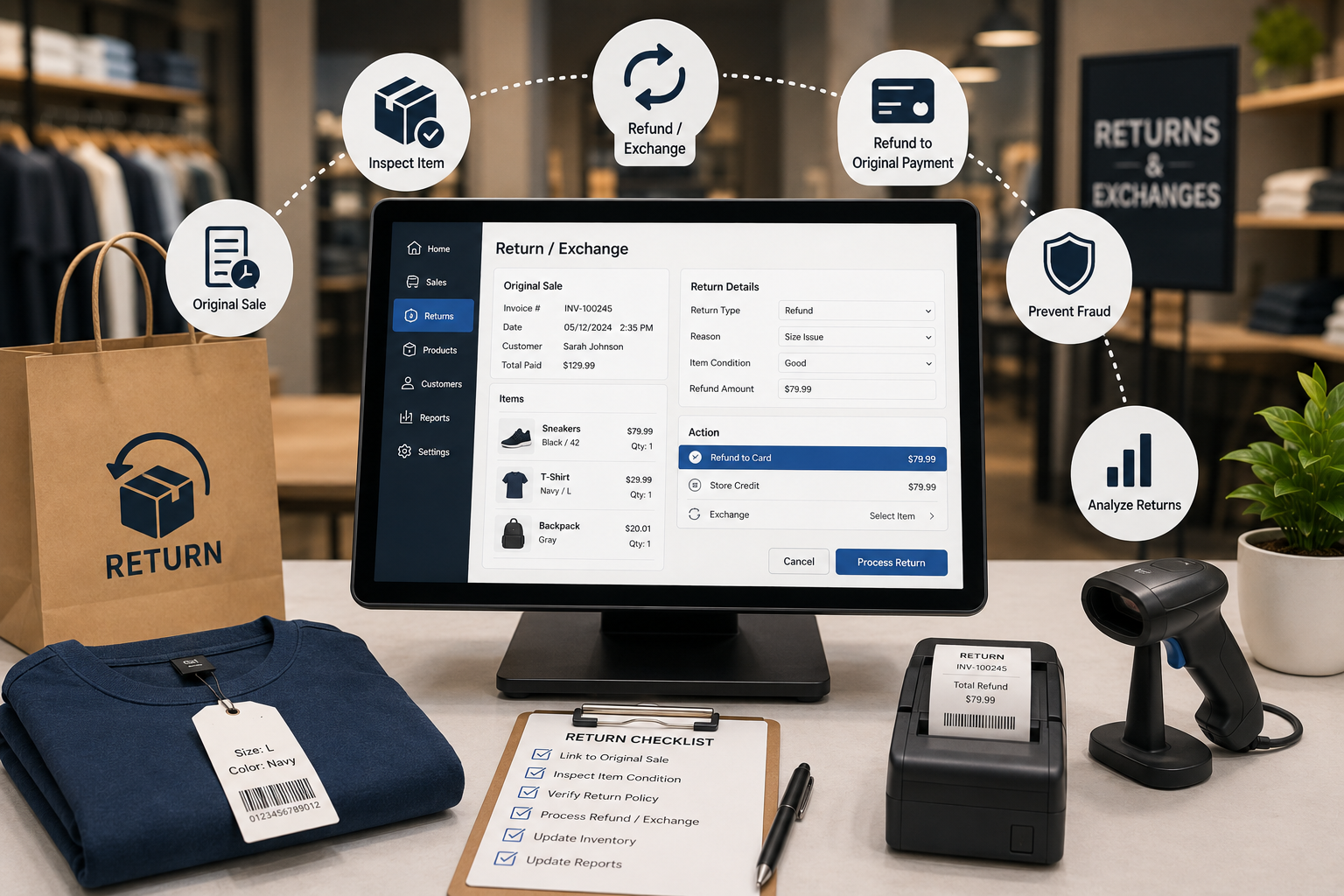
A Return Is Not a Sale in Reverse: How POS Systems Handle Refunds, Exchanges, Restocking, and Return Fraud
Returns affect cash, margin, inventory, tax, customer trust, and fraud exposure. Learn how a modern POS should connect every refund or exchange to the original sale, inspect product condition, control approvals, and keep stock accurate.
Read article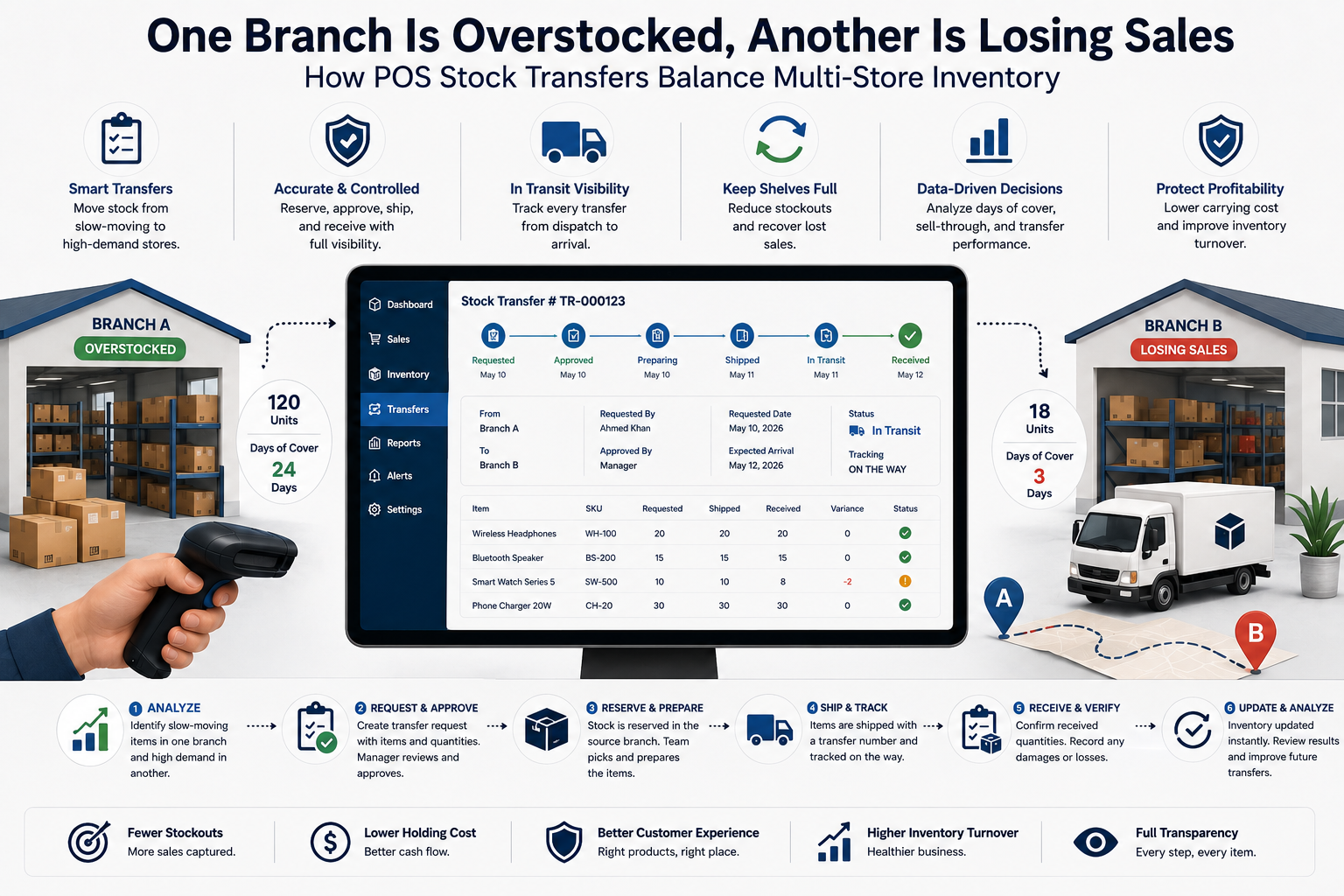
One Branch Is Overstocked, Another Is Losing Sales: How POS Stock Transfers Balance Multi-Store Inventory
Moving stock between branches looks simple, but poor transfer control creates phantom inventory, duplicate availability, missing cartons, delayed receiving, and unreliable reports. Learn how a modern POS should request, ship, receive, reconcile, and analyze inter-branch transfers.
Read article