
The Drawer Is Short at Closing—What Happened? How POS Shift Reconciliation Finds Cash Errors Before They Repeat
Cash shortages and overages are rarely solved by simply blaming the cashier. A reliable POS should connect opening floats, cash sales, refunds, payouts, drops, tips, drawer access, shift handovers, and closing counts. Learn how to reconcile every shift and turn differences into process improvements.
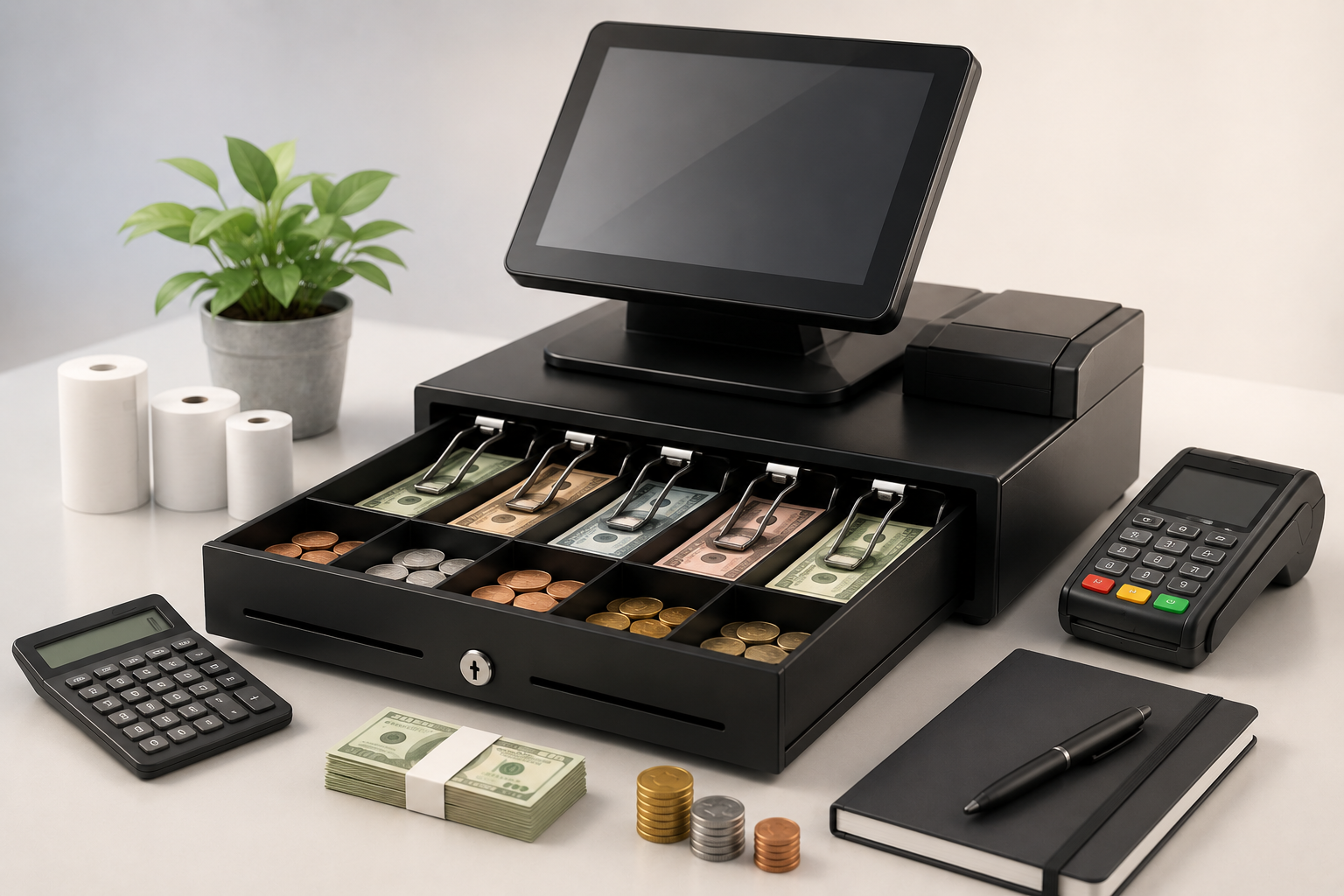
The Drawer Is Short at Closing—What Happened? How POS Shift Reconciliation Finds Cash Errors Before They Repeat
Cash shortages and overages are rarely solved by simply blaming the cashier. A reliable POS should connect opening floats, cash sales, refunds, payouts, drops, tips, drawer access, shift handovers, and closing counts. Learn how to reconcile every shift and turn differences into process improvements.
The Expected Cash Balance Must Be Calculated from Every Movement
Cash reconciliation begins with a simple question: how much money should be in the drawer at this moment? The answer is not just opening float plus cash sales. It also includes refunds paid in cash, paid-outs, petty cash, cash drops, change added during the shift, tips, deposits, and any manual corrections.
A reliable POS calculates expected cash from recorded events and compares it with the physical count. If even one type of movement happens outside the system, the final difference becomes difficult to explain.
Consider a real closing shift: Cash reconciliation begins with a simple question: how much money should be in the drawer at this moment? The answer is not just opening float plus cash sales. It also includes refunds paid in cash, paid-outs, petty cash, cash drops, change added during the shift, tips, deposits, and any manual corrections. Where possible, assign one cashier to one drawer or use login-based ownership with explicit handover. If sharing is necessary, record every user session, opening event, reason, supervisor approval, and handover count. Require a reason for no-sale access, payouts, cash refunds, and manual drawer corrections. High-risk events should need approval, a note, receipt, photo, or linked expense record. The workflow should be tested with a cash refund, a paid-out expense, a cash drop, a no-sale opening, a cashier handover, a blind count, and a recount after a difference.
Consider a real closing shift: A cash shortage can come from wrong change, a refund posted to the wrong tender, an unrecorded cash purchase, a duplicate payout, counterfeit money, a forgotten drop, or theft. An overage can also indicate a problem, such as a missed sale or customer under-refund. Blind counts reduce bias because the employee does not see the expected amount before entering the physical total. Important differences should trigger a recount and supervisor review before the drawer is closed. A reliable POS calculates expected cash from recorded events and compares it with the physical count. If even one type of movement happens outside the system, the final difference becomes difficult to explain. The workflow should be tested with a cash refund, a paid-out expense, a cash drop, a no-sale opening, a cashier handover, a blind count, and a recount after a difference.
One Drawer Should Have Clear Ownership
Shared drawers weaken accountability because several people can create sales, issue refunds, remove cash, or open the drawer. When a shortage appears, no one can reconstruct who controlled the cash at each moment.
Where possible, assign one cashier to one drawer or use login-based ownership with explicit handover. If sharing is necessary, record every user session, opening event, reason, supervisor approval, and handover count.
Consider a real closing shift: Where possible, assign one cashier to one drawer or use login-based ownership with explicit handover. If sharing is necessary, record every user session, opening event, reason, supervisor approval, and handover count. At shift change, the outgoing cashier should stop activity, complete pending transactions, count the drawer, and hand it over through a documented process. The incoming cashier should confirm the opening amount before taking responsibility. Shared drawers weaken accountability because several people can create sales, issue refunds, remove cash, or open the drawer. When a shortage appears, no one can reconstruct who controlled the cash at each moment. The workflow should be tested with a cash refund, a paid-out expense, a cash drop, a no-sale opening, a cashier handover, a blind count, and a recount after a difference.
No-Sale Opens, Refunds, and Payouts Need Reasons
No-sale openings are sometimes legitimate: making change, correcting a jam, checking the till, or accessing vouchers. They are also a common blind spot because the drawer opens without a sale.
Require a reason for no-sale access, payouts, cash refunds, and manual drawer corrections. High-risk events should need approval, a note, receipt, photo, or linked expense record.
Consider a real closing shift: A reliable POS calculates expected cash from recorded events and compares it with the physical count. If even one type of movement happens outside the system, the final difference becomes difficult to explain. A cash shortage can come from wrong change, a refund posted to the wrong tender, an unrecorded cash purchase, a duplicate payout, counterfeit money, a forgotten drop, or theft. An overage can also indicate a problem, such as a missed sale or customer under-refund. Cash reconciliation begins with a simple question: how much money should be in the drawer at this moment? The answer is not just opening float plus cash sales. It also includes refunds paid in cash, paid-outs, petty cash, cash drops, change added during the shift, tips, deposits, and any manual corrections. The workflow should be tested with a cash refund, a paid-out expense, a cash drop, a no-sale opening, a cashier handover, a blind count, and a recount after a difference.
Consider a real closing shift: Blind counts reduce bias because the employee does not see the expected amount before entering the physical total. Important differences should trigger a recount and supervisor review before the drawer is closed. Shared drawers weaken accountability because several people can create sales, issue refunds, remove cash, or open the drawer. When a shortage appears, no one can reconstruct who controlled the cash at each moment. At shift change, the outgoing cashier should stop activity, complete pending transactions, count the drawer, and hand it over through a documented process. The incoming cashier should confirm the opening amount before taking responsibility. The workflow should be tested with a cash refund, a paid-out expense, a cash drop, a no-sale opening, a cashier handover, a blind count, and a recount after a difference.
Consider a real closing shift: The investigation should compare timeline, transactions, drawer openings, refunds, payouts, voids, cancelled receipts, discounts, user changes, and handover points. The objective is to identify the process failure, not to start with guilt. Cash reconciliation begins with a simple question: how much money should be in the drawer at this moment? The answer is not just opening float plus cash sales. It also includes refunds paid in cash, paid-outs, petty cash, cash drops, change added during the shift, tips, deposits, and any manual corrections. A cash shortage can come from wrong change, a refund posted to the wrong tender, an unrecorded cash purchase, a duplicate payout, counterfeit money, a forgotten drop, or theft. An overage can also indicate a problem, such as a missed sale or customer under-refund. The workflow should be tested with a cash refund, a paid-out expense, a cash drop, a no-sale opening, a cashier handover, a blind count, and a recount after a difference.
Shift Handover Must Preserve Evidence
At shift change, the outgoing cashier should stop activity, complete pending transactions, count the drawer, and hand it over through a documented process. The incoming cashier should confirm the opening amount before taking responsibility.
Blind counts reduce bias because the employee does not see the expected amount before entering the physical total. Important differences should trigger a recount and supervisor review before the drawer is closed.
Consider a real closing shift: No-sale openings are sometimes legitimate: making change, correcting a jam, checking the till, or accessing vouchers. They are also a common blind spot because the drawer opens without a sale. Dashierly or any POS should turn cash control into a repeatable routine: open, operate, document, count, compare, investigate, approve, and learn. Good reconciliation protects employees as much as it protects the business because it replaces suspicion with evidence. The investigation should compare timeline, transactions, drawer openings, refunds, payouts, voids, cancelled receipts, discounts, user changes, and handover points. The objective is to identify the process failure, not to start with guilt. The workflow should be tested with a cash refund, a paid-out expense, a cash drop, a no-sale opening, a cashier handover, a blind count, and a recount after a difference.
A Difference Needs Investigation, Not an Automatic Accusation
A cash shortage can come from wrong change, a refund posted to the wrong tender, an unrecorded cash purchase, a duplicate payout, counterfeit money, a forgotten drop, or theft. An overage can also indicate a problem, such as a missed sale or customer under-refund.
The investigation should compare timeline, transactions, drawer openings, refunds, payouts, voids, cancelled receipts, discounts, user changes, and handover points. The objective is to identify the process failure, not to start with guilt.
Consider a real closing shift: Shared drawers weaken accountability because several people can create sales, issue refunds, remove cash, or open the drawer. When a shortage appears, no one can reconstruct who controlled the cash at each moment. A reliable POS calculates expected cash from recorded events and compares it with the physical count. If even one type of movement happens outside the system, the final difference becomes difficult to explain. Blind counts reduce bias because the employee does not see the expected amount before entering the physical total. Important differences should trigger a recount and supervisor review before the drawer is closed. The workflow should be tested with a cash refund, a paid-out expense, a cash drop, a no-sale opening, a cashier handover, a blind count, and a recount after a difference.
Consider a real closing shift: At shift change, the outgoing cashier should stop activity, complete pending transactions, count the drawer, and hand it over through a documented process. The incoming cashier should confirm the opening amount before taking responsibility. The investigation should compare timeline, transactions, drawer openings, refunds, payouts, voids, cancelled receipts, discounts, user changes, and handover points. The objective is to identify the process failure, not to start with guilt. Dashierly or any POS should turn cash control into a repeatable routine: open, operate, document, count, compare, investigate, approve, and learn. Good reconciliation protects employees as much as it protects the business because it replaces suspicion with evidence. The workflow should be tested with a cash refund, a paid-out expense, a cash drop, a no-sale opening, a cashier handover, a blind count, and a recount after a difference.
Consider a real closing shift: Track shortage and overage frequency, average difference, repeated users, repeated drawers, time of day, branch, transaction volume, no-sale opens, refund patterns, and delayed closings. Small repeated differences can cost more than one dramatic incident. Require a reason for no-sale access, payouts, cash refunds, and manual drawer corrections. High-risk events should need approval, a note, receipt, photo, or linked expense record. Where possible, assign one cashier to one drawer or use login-based ownership with explicit handover. If sharing is necessary, record every user session, opening event, reason, supervisor approval, and handover count. The workflow should be tested with a cash refund, a paid-out expense, a cash drop, a no-sale opening, a cashier handover, a blind count, and a recount after a difference.
Use Reconciliation Trends to Improve Store Operations
Track shortage and overage frequency, average difference, repeated users, repeated drawers, time of day, branch, transaction volume, no-sale opens, refund patterns, and delayed closings. Small repeated differences can cost more than one dramatic incident.
Dashierly or any POS should turn cash control into a repeatable routine: open, operate, document, count, compare, investigate, approve, and learn. Good reconciliation protects employees as much as it protects the business because it replaces suspicion with evidence.
Consider a real closing shift: Require a reason for no-sale access, payouts, cash refunds, and manual drawer corrections. High-risk events should need approval, a note, receipt, photo, or linked expense record. No-sale openings are sometimes legitimate: making change, correcting a jam, checking the till, or accessing vouchers. They are also a common blind spot because the drawer opens without a sale. No-sale openings are sometimes legitimate: making change, correcting a jam, checking the till, or accessing vouchers. They are also a common blind spot because the drawer opens without a sale. The workflow should be tested with a cash refund, a paid-out expense, a cash drop, a no-sale opening, a cashier handover, a blind count, and a recount after a difference.
Keep reading
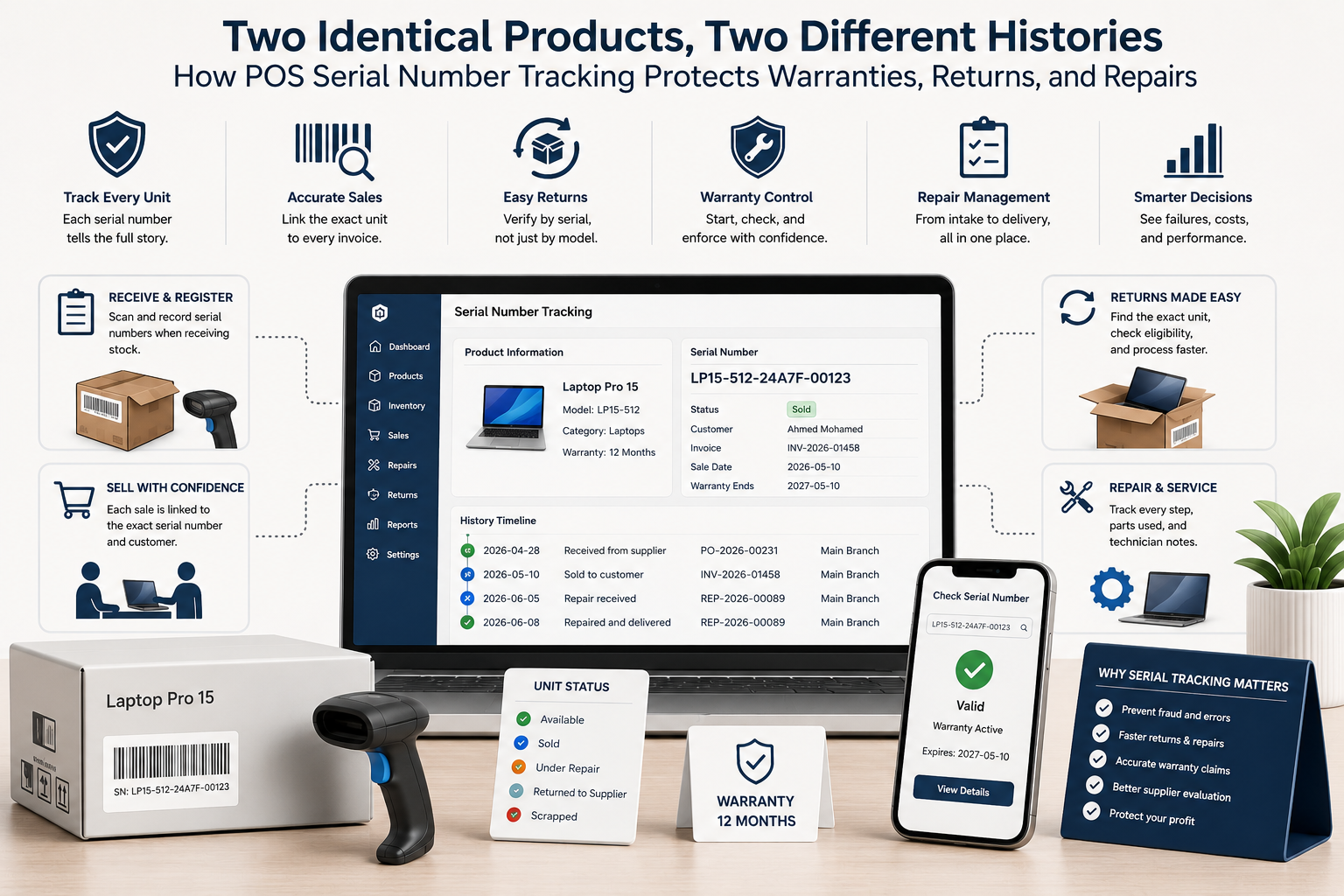
Two Identical Products, Two Different Histories: How POS Serial Number Tracking Protects Warranties, Returns, and Repairs
Quantity tracking tells you how many units exist. Serial tracking tells you exactly which unit was received, sold, returned, repaired, replaced, or still covered by warranty. Learn how a modern POS should manage serialized inventory from supplier receipt to after-sales service.
Read article
The Website Says “In Stock,” but the Shelf Is Empty: How POS Systems Prevent Omnichannel Inventory Failures
Online orders, store sales, pickup reservations, returns, and transfers compete for the same units. Learn how a connected POS protects inventory accuracy, prevents overselling, and keeps click-and-collect promises realistic.
Read article
You Ordered 100 Units, but Only 92 Arrived: How POS Purchase Orders Prevent Supplier and Receiving Errors
Purchase orders should connect planned buying with what physically arrives. Learn how a modern POS handles approvals, partial deliveries, damaged goods, substitutions, cost changes, backorders, supplier claims, and inventory updates without hiding discrepancies.
Read article