
You Bought a Case of 24 but Sold One Bottle: How POS Units of Measure Prevent Inventory and Pricing Errors
Retailers often buy products by case, receive them by pack, and sell them individually. Learn how POS unit-of-measure rules, barcode mapping, cost conversion, stock counts, returns, and purchasing controls prevent quantity and margin errors.
You Bought a Case of 24 but Sold One Bottle: How POS Units of Measure Prevent Inventory and Pricing Errors
Retailers often buy products by case, receive them by pack, and sell them individually. Learn how POS unit-of-measure rules, barcode mapping, cost conversion, stock counts, returns, and purchasing controls prevent quantity and margin errors.
One Product Can Exist in Several Commercial Units
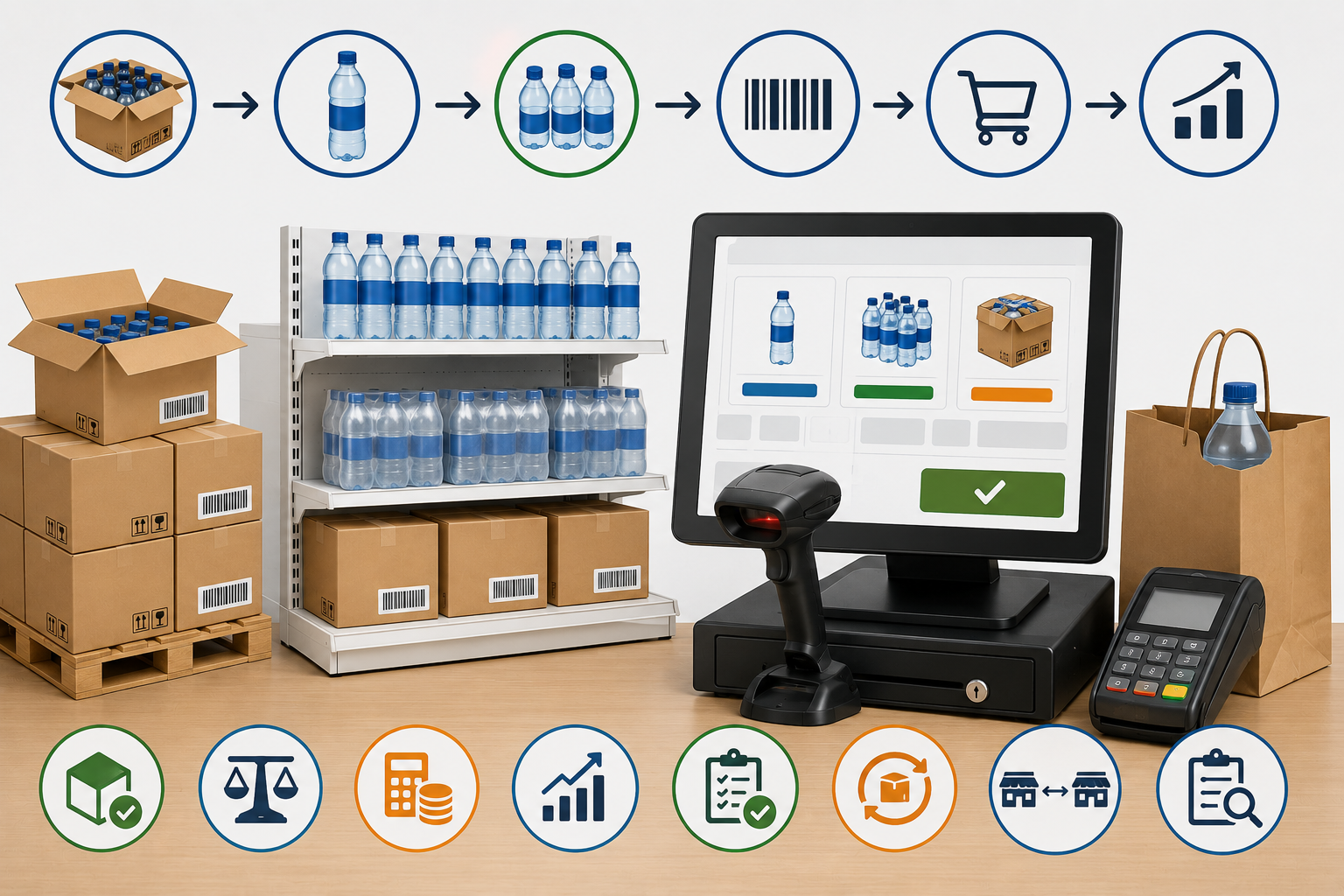
A supermarket may buy water in cases of 24, receive it in shrink-wrapped packs of 6, and sell single bottles. A hardware store may purchase cable by roll and sell it by meter. A bakery may buy ingredients by sack and consume them by gram. The product is the same, but the commercial unit changes.
A POS that stores only one quantity field cannot safely understand these workflows. It needs a base inventory unit and clearly defined purchasing, receiving, selling, transfer, and counting units.
For example, A supermarket may buy water in cases of 24, receive it in shrink-wrapped packs of 6, and sell single bottles. A hardware store may purchase cable by roll and sell it by meter. A bakery may buy ingredients by sack and consume them by gram. The product is the same, but the commercial unit changes. Changes to conversion factors should be restricted and audited because editing 24 to 12 can double available inventory, distort cost, and corrupt historical comparisons. Existing transactions should preserve the factor used at the time. The setup should be tested with one full case, one partial pack, loose units, a barcode change, and a return to confirm that quantity and cost remain correct.
Conversion Factors Must Be Exact and Controlled
If one case contains 24 bottles, the factor must be stored as an exact relationship: one case equals 24 base units. A six-pack equals six base units. The system should not rely on employees remembering the conversion.
Changes to conversion factors should be restricted and audited because editing 24 to 12 can double available inventory, distort cost, and corrupt historical comparisons. Existing transactions should preserve the factor used at the time.
For example, Changes to conversion factors should be restricted and audited because editing 24 to 12 can double available inventory, distort cost, and corrupt historical comparisons. Existing transactions should preserve the factor used at the time. If a case costs $48 and contains 24 bottles, the unit cost begins at $2 before freight, tax, discounts, or landed-cost allocation. The POS should derive cost consistently rather than treating the case cost as the cost of one bottle. The setup should be tested with one full case, one partial pack, loose units, a barcode change, and a return to confirm that quantity and cost remain correct.
Every Barcode Should Identify the Correct Selling Unit
The outer case may have one barcode, the six-pack another, and the single bottle a third. Scanning each code should add the correct quantity and price without requiring the cashier to select a manual conversion.
Duplicate or incorrectly mapped barcodes can sell a full case at the price of one bottle, deduct one unit instead of 24, or create an unknown item at receiving. Barcode mappings need product, unit, factor, price, and active dates.
For example, A POS that stores only one quantity field cannot safely understand these workflows. It needs a base inventory unit and clearly defined purchasing, receiving, selling, transfer, and counting units. When receiving three cases, inventory should increase by 72 base units. When counting two full cases, one six-pack, and four loose bottles, the count should equal 58 units. Staff need counting screens that support mixed packaging without mental arithmetic. The setup should be tested with one full case, one partial pack, loose units, a barcode change, and a return to confirm that quantity and cost remain correct.
Cost and Margin Must Follow the Smallest Sellable Unit
If a case costs $48 and contains 24 bottles, the unit cost begins at $2 before freight, tax, discounts, or landed-cost allocation. The POS should derive cost consistently rather than treating the case cost as the cost of one bottle.
Margin reports must compare the selling price with the correct unit cost. Promotions such as “buy six” should also calculate from the six individual units or the defined pack, depending on the commercial rule.
For example, The outer case may have one barcode, the six-pack another, and the single bottle a third. Scanning each code should add the correct quantity and price without requiring the cashier to select a manual conversion. Dashierly or any POS should let businesses buy, store, and sell in the units that match real operations while maintaining one reliable inventory balance. Correct unit logic protects stock accuracy, pricing, purchasing, and profit at the same time. The setup should be tested with one full case, one partial pack, loose units, a barcode change, and a return to confirm that quantity and cost remain correct.
Receiving, Counting, and Returns Must Use the Same Logic
When receiving three cases, inventory should increase by 72 base units. When counting two full cases, one six-pack, and four loose bottles, the count should equal 58 units. Staff need counting screens that support mixed packaging without mental arithmetic.
Returns must restore the exact unit returned. A customer returning one bottle should not add one case. Transfers between branches and supplier returns must also specify the unit and conversion used.
For example, If one case contains 24 bottles, the factor must be stored as an exact relationship: one case equals 24 base units. A six-pack equals six base units. The system should not rely on employees remembering the conversion. A POS that stores only one quantity field cannot safely understand these workflows. It needs a base inventory unit and clearly defined purchasing, receiving, selling, transfer, and counting units. The setup should be tested with one full case, one partial pack, loose units, a barcode change, and a return to confirm that quantity and cost remain correct.
Test Pack Rules Before They Reach the Checkout
Test every product with a purchase order, partial receipt, full case scan, pack scan, single-unit sale, promotion, return, transfer, and stock count. The highest-risk items are those with similar packaging and several barcodes.
Dashierly or any POS should let businesses buy, store, and sell in the units that match real operations while maintaining one reliable inventory balance. Correct unit logic protects stock accuracy, pricing, purchasing, and profit at the same time.
For example, Duplicate or incorrectly mapped barcodes can sell a full case at the price of one bottle, deduct one unit instead of 24, or create an unknown item at receiving. Barcode mappings need product, unit, factor, price, and active dates. The outer case may have one barcode, the six-pack another, and the single bottle a third. Scanning each code should add the correct quantity and price without requiring the cashier to select a manual conversion. The setup should be tested with one full case, one partial pack, loose units, a barcode change, and a return to confirm that quantity and cost remain correct.
Keep reading
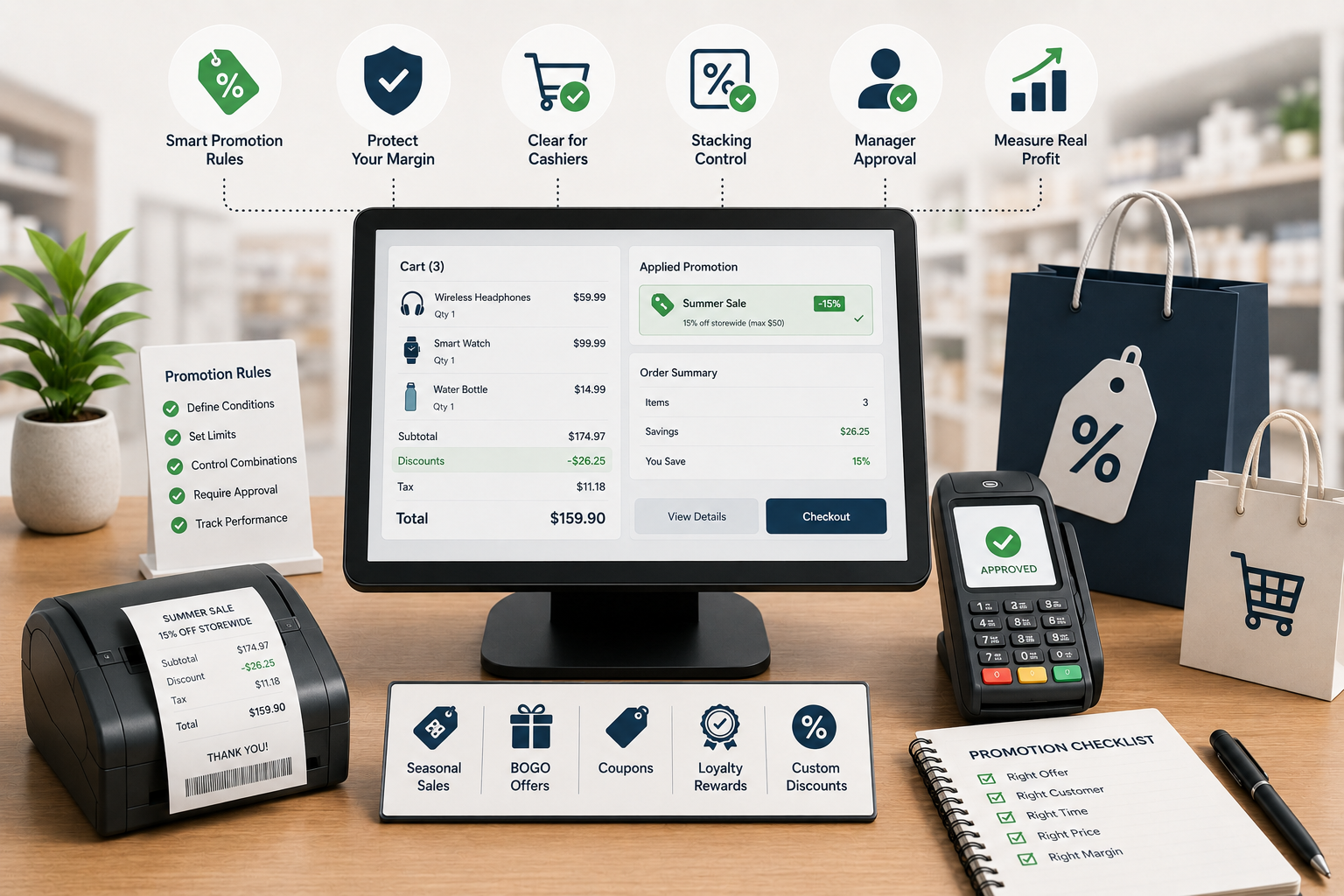
The Discount Worked—But Did the Store Make Money? How POS Promotion Rules Protect Retail Margin
Promotions can increase traffic while quietly damaging margin through discount stacking, wrong eligibility, cashier overrides, returns, and weak reporting. Learn how a modern POS should control offers from setup to post-campaign analysis.
Read article
The Gift Card Was Sold Months Ago—Why Is It Still Money You Owe? How POS Systems Manage Stored Value
Gift cards and store credit bring cash in early, but they also create balances, redemption obligations, fraud risks, expiry questions, split payments, refunds, and accounting work. Learn how a modern POS should manage stored value from issue to final redemption.
Read article
You Ordered 100 Units, but Only 92 Arrived: How POS Purchase Orders Prevent Supplier and Receiving Errors
Purchase orders should connect planned buying with what physically arrives. Learn how a modern POS handles approvals, partial deliveries, damaged goods, substitutions, cost changes, backorders, supplier claims, and inventory updates without hiding discrepancies.
Read article