
Where Retail Profit Disappears: How Modern POS Systems Fight Shrink, Return Fraud, and Costly Errors in 2026
A practical guide to using POS data, permissions, audit trails, return controls, inventory reconciliation, and real-time alerts to reduce retail shrink without treating every customer or employee as a suspect.
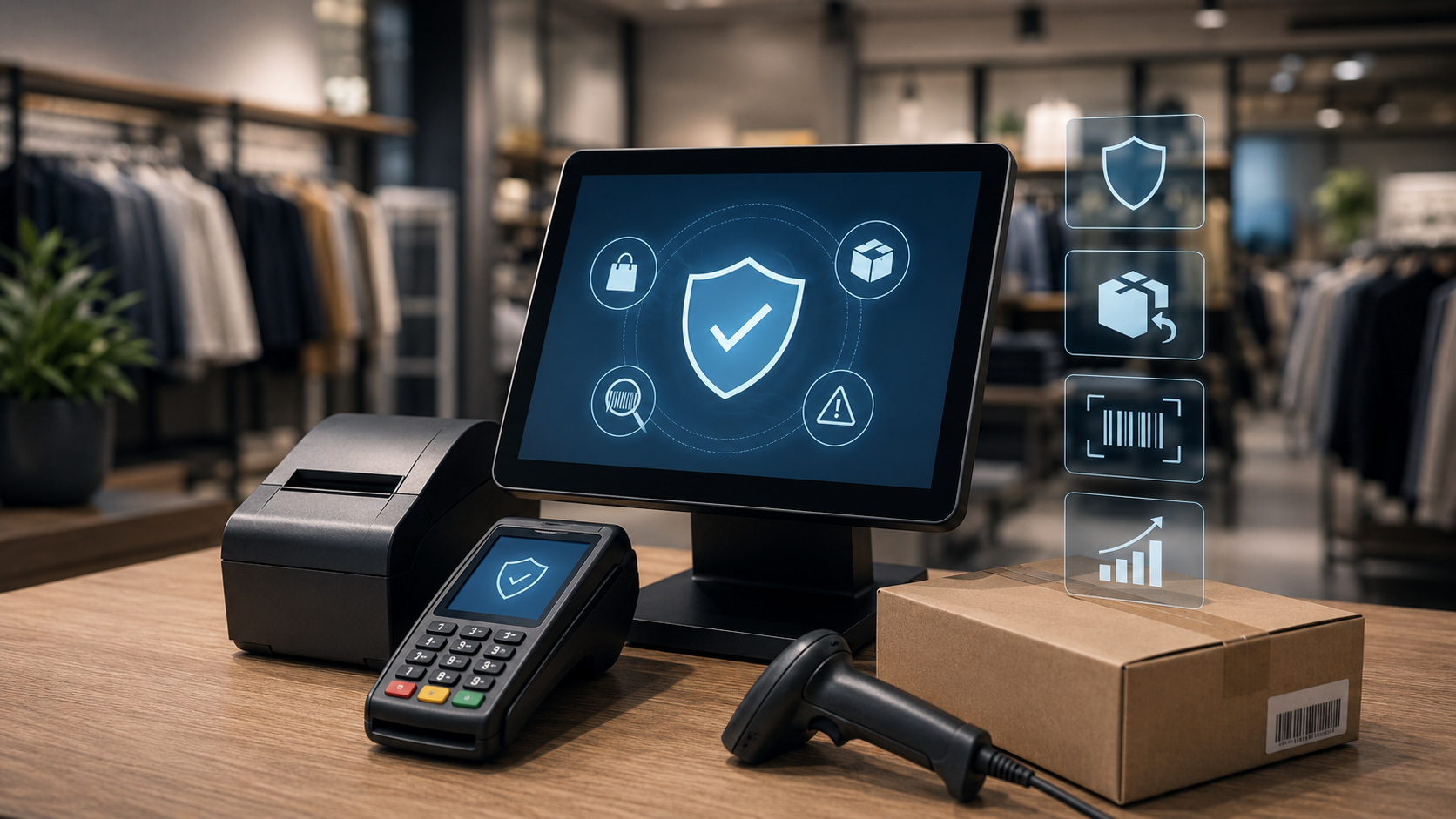
Where Retail Profit Disappears: How Modern POS Systems Fight Shrink, Return Fraud, and Costly Errors in 2026
A practical guide to using POS data, permissions, audit trails, return controls, inventory reconciliation, and real-time alerts to reduce retail shrink without treating every customer or employee as a suspect.
The Sale That Looks Normal Until It Is Not
A cashier removes one item, applies a discount, then completes a cash sale. Nothing looks dramatic. But if the same sequence appears repeatedly near closing time, or only under one user account, it deserves attention.
Modern loss prevention begins with patterns, not accusations. The POS can connect voids, refunds, discounts, no-sale drawer openings, payment changes, and inventory adjustments to the user, device, branch, and time. One event may be harmless. A repeated pattern is a business question.
Shrink Is Often a Process Problem Before It Is a Theft Problem
Shrink includes theft, but also receiving mistakes, damaged goods, incorrect pricing, duplicate products, wrong units, supplier shortages, unrecorded waste, and returns that never reach sellable stock.
That matters because a store cannot solve a process error with more suspicion. If the receiving team counts boxes but not units, or staff use a shared admin account, the system loses the evidence needed to understand the difference.
Returns Need Judgment, Not a Blanket Wall
A strict return policy can reduce abuse and still damage valuable relationships. A completely relaxed policy can protect conversion while inviting fraud, wardrobing, receipt manipulation, and repeated no-proof refunds.
A stronger POS creates several outcomes: approve normal returns quickly, ask for manager review when risk signals appear, and decline only when the evidence is clear. The goal is not to punish frequent legitimate customers because a small group abuses the policy.
Permissions and Audit Trails Change Behavior
Cashiers need enough authority to serve customers, but not unlimited ability to change prices, refund cash, delete lines, edit stock, or reopen closed transactions.
Role-based permissions reduce accidental damage and make intentional misuse harder. Audit history also protects honest employees: when every sensitive action has a user, time, reason, and linked transaction, managers investigate facts instead of rumors.
Reconcile Small Differences Before They Become Large Losses
Daily reconciliation does not need to become a full inventory count. Compare expected cash with actual cash, sales with payment totals, returns with stock movement, received quantities with purchase records, and system stock with targeted physical checks.
Small repeated differences are more informative than one annual surprise. A product that is always short after promotions may have a scanning or unit problem. A branch with excessive manual adjustments may need training, not surveillance.
Build a Loss-Prevention Routine That Staff Can Actually Follow
Start with three reports: unusual refunds and discounts, inventory adjustments by user, and products with repeated stock differences. Review them weekly with operations, not only security.
Set clear reasons for returns, voids, discounts, damage, and adjustments. Remove shared accounts. Require approval only where the risk justifies the delay. Train staff on why the controls exist.
Dashierly or any POS should be judged by whether it gives managers usable visibility without slowing every sale. Good loss prevention protects margin, customer trust, and honest employees at the same time.
Do not build an alert for every unusual event. Too many alerts train managers to ignore all of them. Rank signals by value, frequency, transaction size, and repeat behavior.
A good investigation starts with the transaction, then checks inventory movement, payment, user history, receipt, customer context, and supporting records. Jumping directly to accusation creates fear and destroys cooperation.
Return reasons should be operationally useful. “Other” should not become the largest category. Clear reasons help separate product quality, wrong size, pricing, customer preference, fraud, and staff process.
High-risk controls should be stronger, not universal. A large cash refund needs more review than a normal exchange with a receipt. Proportional controls protect both speed and margin.
Loss prevention is also a customer-experience discipline. Accurate stock, consistent pricing, fair returns, and fewer checkout errors reduce disputes before they become losses.
Measure the result: shrink rate, cash variance, refund rate, manual adjustment rate, unresolved discrepancies, investigation time, and customer complaints after policy changes.
Do not build an alert for every unusual event. Too many alerts train managers to ignore all of them. Rank signals by value, frequency, transaction size, and repeat behavior.
A good investigation starts with the transaction, then checks inventory movement, payment, user history, receipt, customer context, and supporting records. Jumping directly to accusation creates fear and destroys cooperation.
Return reasons should be operationally useful. “Other” should not become the largest category. Clear reasons help separate product quality, wrong size, pricing, customer preference, fraud, and staff process.
High-risk controls should be stronger, not universal. A large cash refund needs more review than a normal exchange with a receipt. Proportional controls protect both speed and margin.
Loss prevention is also a customer-experience discipline. Accurate stock, consistent pricing, fair returns, and fewer checkout errors reduce disputes before they become losses.
Measure the result: shrink rate, cash variance, refund rate, manual adjustment rate, unresolved discrepancies, investigation time, and customer complaints after policy changes.
Do not build an alert for every unusual event. Too many alerts train managers to ignore all of them. Rank signals by value, frequency, transaction size, and repeat behavior.
A good investigation starts with the transaction, then checks inventory movement, payment, user history, receipt, customer context, and supporting records. Jumping directly to accusation creates fear and destroys cooperation.
Return reasons should be operationally useful. “Other” should not become the largest category. Clear reasons help separate product quality, wrong size, pricing, customer preference, fraud, and staff process.
High-risk controls should be stronger, not universal. A large cash refund needs more review than a normal exchange with a receipt. Proportional controls protect both speed and margin.
Keep reading

You Ordered 100 Units, but Only 92 Arrived: How POS Purchase Orders Prevent Supplier and Receiving Errors
Purchase orders should connect planned buying with what physically arrives. Learn how a modern POS handles approvals, partial deliveries, damaged goods, substitutions, cost changes, backorders, supplier claims, and inventory updates without hiding discrepancies.
Read article
The Drawer Is Short at Closing—What Happened? How POS Shift Reconciliation Finds Cash Errors Before They Repeat
Cash shortages and overages are rarely solved by simply blaming the cashier. A reliable POS should connect opening floats, cash sales, refunds, payouts, drops, tips, drawer access, shift handovers, and closing counts. Learn how to reconcile every shift and turn differences into process improvements.
Read article
The Customer Paid a Deposit, but the Sale Is Not Finished: How POS Systems Should Manage Preorders, Layaway, and Partial Payments
Deposits, preorders, layaway, special orders, and partial payments can secure demand and improve cash flow—but only when inventory, customer balances, due dates, refunds, and accounting stay connected. Learn how a modern POS should manage the entire order lifecycle.
Read article