
Your Best Seller May Be Losing You Money: What Your POS Should Reveal About Real Retail Profit
A busy store can report strong sales while quietly losing margin. Learn how a modern POS should expose the real effect of discounts, returns, payment fees, taxes, product costs, stock losses, and channel differences.

Your Best Seller May Be Losing You Money: What Your POS Should Reveal About Real Retail Profit
A busy store can report strong sales while quietly losing margin. Learn how a modern POS should expose the real effect of discounts, returns, payment fees, taxes, product costs, stock losses, and channel differences.
A Full Till Can Hide a Weak Business
A Saturday can look excellent on the dashboard: high transaction count, a strong average basket, and several products sold out. Yet the owner may discover later that the day produced very little profit. The promotion was deeper than planned, returns from the previous week were processed, card fees were high, two popular products had outdated costs, and one branch recorded stock loss.
Sales activity creates energy, but energy is not profit. A POS that celebrates gross sales without showing what was given back, discounted, taxed, paid to providers, or consumed by product cost can create false confidence.
For example, A Saturday can look excellent on the dashboard: high transaction count, a strong average basket, and several products sold out. Yet the owner may discover later that the day produced very little profit. The promotion was deeper than planned, returns from the previous week were processed, card fees were high, two popular products had outdated costs, and one branch recorded stock loss. A product sold at full price can be highly profitable. The same item sold with a coupon, returned once, resold at a markdown, and paid through an expensive channel may contribute almost nothing. Product profitability must follow the entire transaction, not stop at the first sale. The point is not to create a perfect accounting model inside the till, but to stop obvious margin leaks from remaining invisible.
Revenue, Net Sales, Gross Profit, and Cash Are Not the Same
Gross revenue is the value before deductions. Net sales usually subtract discounts and returns. Gross profit then subtracts the cost of goods sold. Cash received may include tax collected for the government and can differ from profit because settlement timing, refunds, supplier payments, and expenses follow different schedules.
These definitions must be visible inside the POS. When two reports use the word sales differently, managers can make opposite decisions from the same day. Every metric needs a formula, date range, tax treatment, and clear inclusion or exclusion of refunds and fees.
A product sold at full price can be highly profitable. The same item sold with a coupon, returned once, resold at a markdown, and paid through an expensive channel may contribute almost nothing. Product profitability must follow the entire transaction, not stop at the first sale.
For example, A product sold at full price can be highly profitable. The same item sold with a coupon, returned once, resold at a markdown, and paid through an expensive channel may contribute almost nothing. Product profitability must follow the entire transaction, not stop at the first sale. A Saturday can look excellent on the dashboard: high transaction count, a strong average basket, and several products sold out. Yet the owner may discover later that the day produced very little profit. The promotion was deeper than planned, returns from the previous week were processed, card fees were high, two popular products had outdated costs, and one branch recorded stock loss. The point is not to create a perfect accounting model inside the till, but to stop obvious margin leaks from remaining invisible.
The Product Report Must Include the Costs That Follow the Sale
Useful reports connect selling price, actual discount, average or landed product cost, return cost, payment fee, tax, commission, delivery subsidy, wastage, and stock adjustment. Not every store needs every cost in real time, but the gaps should be known.
Storewide averages are comfortable and dangerous. A 35 percent average margin can hide one category at 55 percent and another at 8 percent. Strong branch revenue can hide repeated manual discounts. A healthy average return rate can hide one product with a quality problem.
Break reports by product, category, supplier, branch, cashier, channel, promotion, customer type, hour, and payment method. The objective is not to create dozens of dashboards. It is to find the segment where the result changes.
For example, Sales activity creates energy, but energy is not profit. A POS that celebrates gross sales without showing what was given back, discounted, taxed, paid to providers, or consumed by product cost can create false confidence. Choose one action for every meaningful exception: correct a cost, change a price, stop a promotion, renegotiate a fee, train a cashier, investigate a return pattern, or count a product. Then check the effect next week. The point is not to create a perfect accounting model inside the till, but to stop obvious margin leaks from remaining invisible.
Average Numbers Hide the Decisions That Matter
Start the weekly meeting with exceptions, not totals. Which products sold more but earned less? Which promotions grew units while reducing gross profit? Which returns have no recorded reason? Which payment method costs the most? Which branch has unusual discounting or negative stock?
For example, Gross revenue is the value before deductions. Net sales usually subtract discounts and returns. Gross profit then subtracts the cost of goods sold. Cash received may include tax collected for the government and can differ from profit because settlement timing, refunds, supplier payments, and expenses follow different schedules. Gross revenue is the value before deductions. Net sales usually subtract discounts and returns. Gross profit then subtracts the cost of goods sold. Cash received may include tax collected for the government and can differ from profit because settlement timing, refunds, supplier payments, and expenses follow different schedules. The point is not to create a perfect accounting model inside the till, but to stop obvious margin leaks from remaining invisible.
Build a Weekly Profit Review Instead of Waiting for Month-End
Choose one action for every meaningful exception: correct a cost, change a price, stop a promotion, renegotiate a fee, train a cashier, investigate a return pattern, or count a product. Then check the effect next week.
Dashierly or any POS should make the path from sale to margin understandable. The system does not replace accounting, but it should give the store a timely operational view before the monthly statements arrive.
The real goal is not to prove that the store is busy. It is to understand which sales create healthy cash and repeatable profit, which sales merely move inventory, and which sales quietly make the business weaker.
For example, These definitions must be visible inside the POS. When two reports use the word sales differently, managers can make opposite decisions from the same day. Every metric needs a formula, date range, tax treatment, and clear inclusion or exclusion of refunds and fees. Break reports by product, category, supplier, branch, cashier, channel, promotion, customer type, hour, and payment method. The objective is not to create dozens of dashboards. It is to find the segment where the result changes. The point is not to create a perfect accounting model inside the till, but to stop obvious margin leaks from remaining invisible.
Keep reading
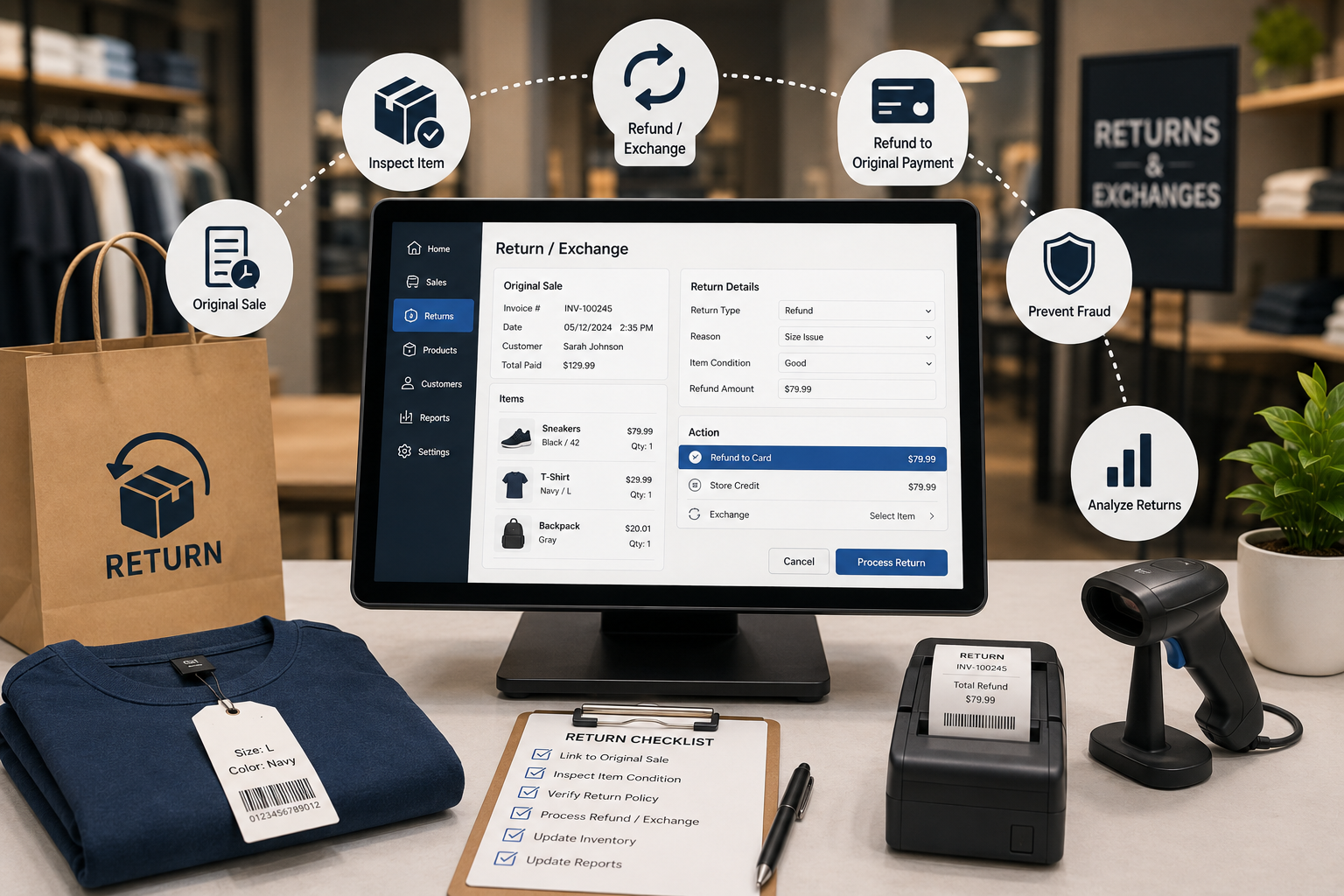
A Return Is Not a Sale in Reverse: How POS Systems Handle Refunds, Exchanges, Restocking, and Return Fraud
Returns affect cash, margin, inventory, tax, customer trust, and fraud exposure. Learn how a modern POS should connect every refund or exchange to the original sale, inspect product condition, control approvals, and keep stock accurate.
Read article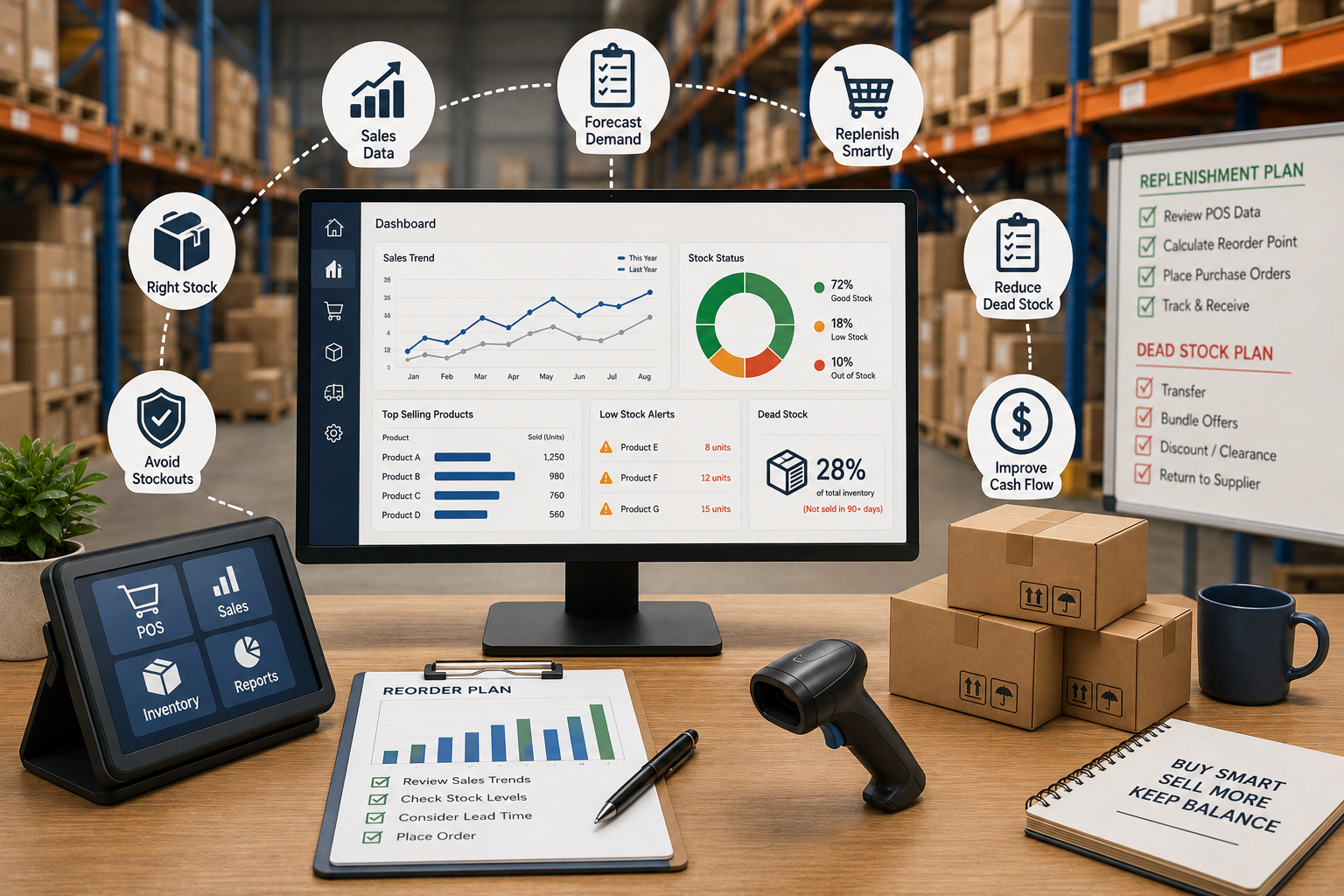
Your Warehouse Is Full, but the Best Sellers Are Missing: How POS Data Fixes Replenishment and Dead Stock
A full warehouse does not mean healthy inventory. Learn how POS sales velocity, lead time, seasonality, reorder points, supplier performance, transfers, and dead-stock analysis help retailers buy the right products at the right time.
Read article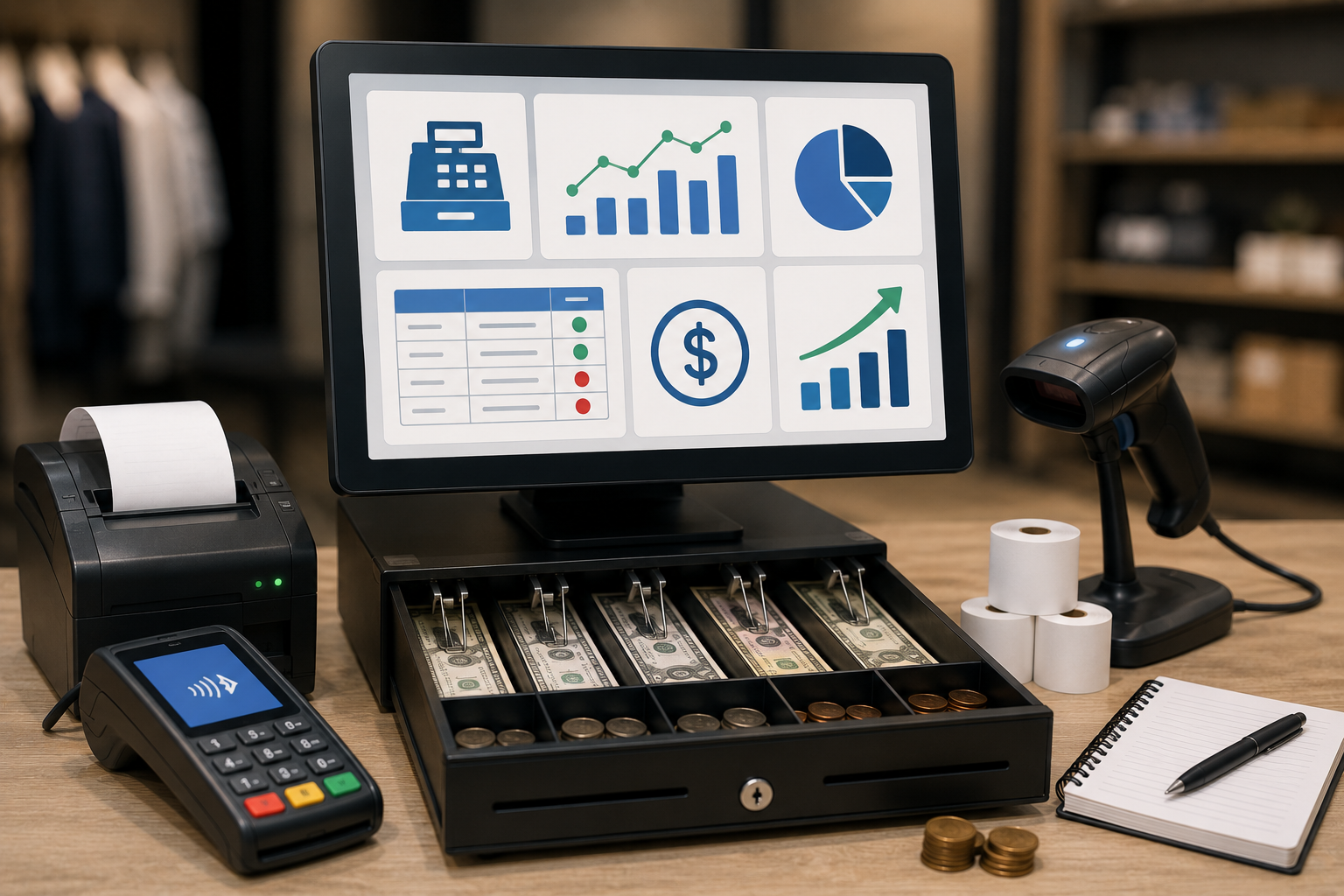
The Register Is Short—But Where Did the Money Go? A Practical POS Guide to Cash Drawers and Payment Reconciliation
A cash difference at closing does not automatically mean theft. Learn how POS register sessions, floats, paid-in and paid-out movements, refunds, tips, card settlements, and clear accountability help retailers reconcile every payment method.
Read article