
The System Says 40, the Shelf Has 31: How POS Cycle Counts Find Inventory Shrinkage Before It Becomes a Crisis
Inventory discrepancies rarely appear all at once. They build through receiving mistakes, unrecorded damage, wrong units, theft, transfers, returns, and stock adjustments. Learn how POS cycle counts, variance analysis, and root-cause workflows restore accuracy without closing the entire store.
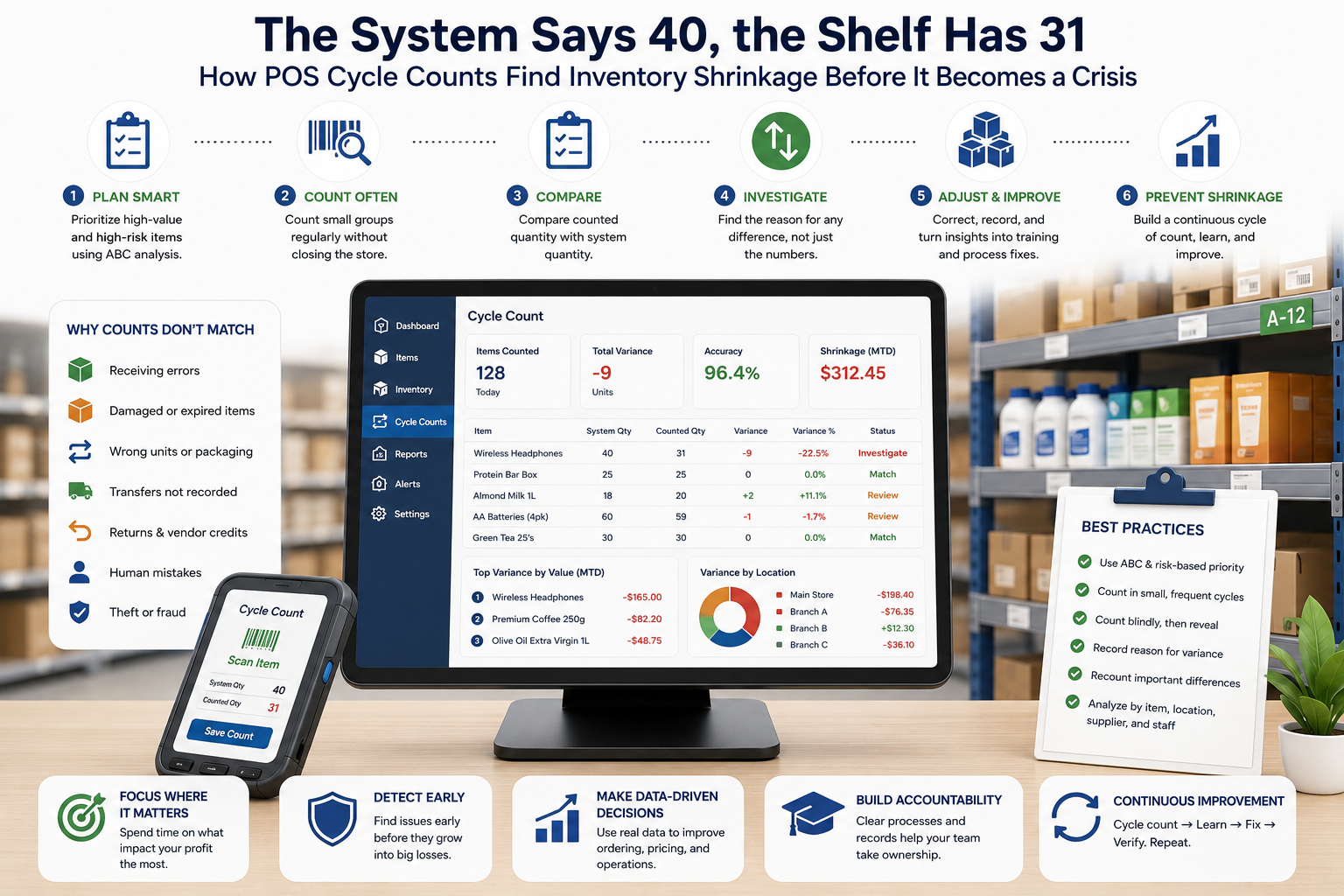
The System Says 40, the Shelf Has 31: How POS Cycle Counts Find Inventory Shrinkage Before It Becomes a Crisis
Inventory discrepancies rarely appear all at once. They build through receiving mistakes, unrecorded damage, wrong units, theft, transfers, returns, and stock adjustments. Learn how POS cycle counts, variance analysis, and root-cause workflows restore accuracy without closing the entire store.
Shrinkage Is the Gap Between Records and Reality
Inventory shrinkage is the difference between the quantity recorded in the POS and the quantity that physically exists. Theft is one cause, but not the only one. Receiving errors, supplier shortages, wrong units, unrecorded damage, product used internally, transfer mistakes, return errors, duplicate products, and unauthorized adjustments all create the same symptom.
The financial loss matters, but the operational damage is wider. Inaccurate stock can stop replenishment, promise unavailable products online, hide real demand, create unnecessary purchase orders, and send staff searching for items that are not there.
For example, Inventory shrinkage is the difference between the quantity recorded in the POS and the quantity that physically exists. Theft is one cause, but not the only one. Receiving errors, supplier shortages, wrong units, unrecorded damage, product used internally, transfer mistakes, return errors, duplicate products, and unauthorized adjustments all create the same symptom. Frequent small counts are easier to investigate because the time window is shorter. Staff can compare the difference with recent receipts, sales, returns, transfers, waste, and adjustments before the evidence disappears. The count should be reviewed against recent receipts, transfers, returns, waste, and adjustments before the quantity is approved.
Count Small Areas Often Instead of Everything Once
A full annual stocktake can reveal the final difference, but it often arrives too late to explain when or why the problem began. Cycle counting divides inventory into smaller groups that are counted daily, weekly, monthly, or according to risk.
Frequent small counts are easier to investigate because the time window is shorter. Staff can compare the difference with recent receipts, sales, returns, transfers, waste, and adjustments before the evidence disappears.
For example, Frequent small counts are easier to investigate because the time window is shorter. Staff can compare the difference with recent receipts, sales, returns, transfers, waste, and adjustments before the evidence disappears. After a count, simply replacing the system quantity with the physical quantity closes the number but not the problem. Every material variance should have a reason code and, when necessary, investigation notes and approval. The count should be reviewed against recent receipts, transfers, returns, waste, and adjustments before the quantity is approved.
Prioritize Risk with ABC and Exception-Based Counting
Not every product deserves the same counting frequency. High-value items, fast sellers, theft-prone accessories, perishables, products with frequent returns, and items showing negative stock should be counted more often.
Use ABC classification, stock value, sales velocity, previous variance, supplier reliability, branch risk, and POS exceptions to build the schedule. A low-value stable product may need a quarterly count while a premium phone or battery display may need weekly attention.
For example, The financial loss matters, but the operational damage is wider. Inaccurate stock can stop replenishment, promise unavailable products online, hide real demand, create unnecessary purchase orders, and send staff searching for items that are not there. Counts work best when the counting area is controlled. Pause movements for the selected zone, complete open receipts and transfers where possible, use blind counts so the counter cannot copy the expected number, and require a recount for important differences. The count should be reviewed against recent receipts, transfers, returns, waste, and adjustments before the quantity is approved.
A Variance Needs a Reason, Not Just an Adjustment
After a count, simply replacing the system quantity with the physical quantity closes the number but not the problem. Every material variance should have a reason code and, when necessary, investigation notes and approval.
Useful reasons include receiving shortage, wrong pack conversion, damage, expiry, supplier error, shoplifting, employee misuse, transfer not received, return posted incorrectly, duplicate SKU, scanning error, and unexplained variance.
For example, Not every product deserves the same counting frequency. High-value items, fast sellers, theft-prone accessories, perishables, products with frequent returns, and items showing negative stock should be counted more often. Dashierly or any POS should make counting part of normal retail control rather than an annual emergency. Accurate inventory comes from a loop: count, explain, correct, improve, and verify that the same cause does not return. The count should be reviewed against recent receipts, transfers, returns, waste, and adjustments before the quantity is approved.
Cycle Counts Must Protect Normal Store Operations
Counts work best when the counting area is controlled. Pause movements for the selected zone, complete open receipts and transfers where possible, use blind counts so the counter cannot copy the expected number, and require a recount for important differences.
The store does not need to close. Count shelves before opening, during quiet periods, by aisle or category, or with a second employee validating high-risk products. Mobile scanning reduces handwriting and transcription mistakes.
For example, A full annual stocktake can reveal the final difference, but it often arrives too late to explain when or why the problem began. Cycle counting divides inventory into smaller groups that are counted daily, weekly, monthly, or according to risk. The financial loss matters, but the operational damage is wider. Inaccurate stock can stop replenishment, promise unavailable products online, hide real demand, create unnecessary purchase orders, and send staff searching for items that are not there. The count should be reviewed against recent receipts, transfers, returns, waste, and adjustments before the quantity is approved.
Turn Repeated Differences into Process Improvements
Variance reports should show product, expected quantity, counted quantity, difference, cost impact, location, counter, approver, reason, and history. Repeated patterns reveal whether the business needs training, supplier claims, better receiving, packaging changes, security, or catalogue cleanup.
Dashierly or any POS should make counting part of normal retail control rather than an annual emergency. Accurate inventory comes from a loop: count, explain, correct, improve, and verify that the same cause does not return.
For example, Use ABC classification, stock value, sales velocity, previous variance, supplier reliability, branch risk, and POS exceptions to build the schedule. A low-value stable product may need a quarterly count while a premium phone or battery display may need weekly attention. Not every product deserves the same counting frequency. High-value items, fast sellers, theft-prone accessories, perishables, products with frequent returns, and items showing negative stock should be counted more often. The count should be reviewed against recent receipts, transfers, returns, waste, and adjustments before the quantity is approved.
Keep reading
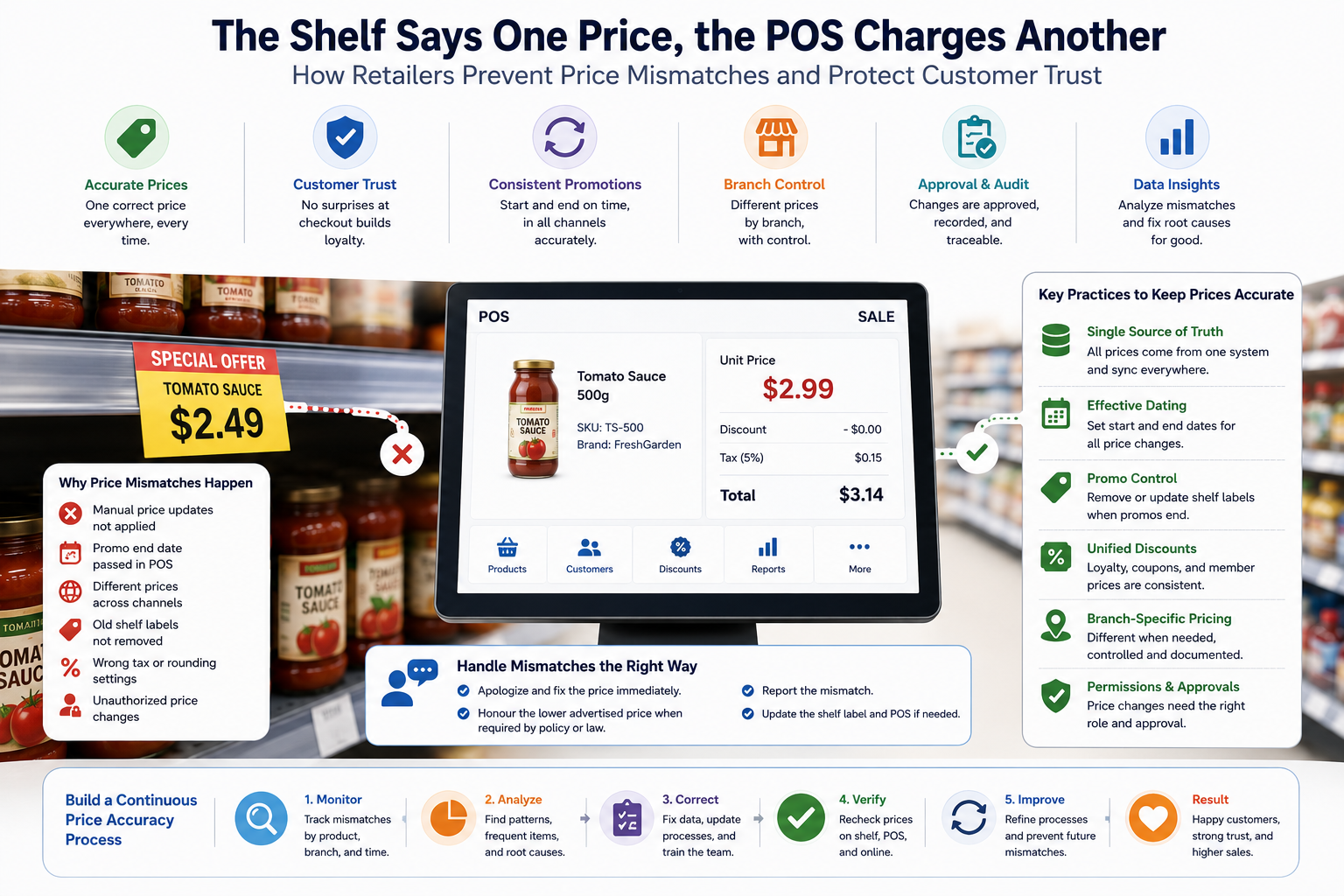
The Shelf Says One Price, the POS Charges Another: How Retailers Prevent Price Mismatches and Protect Customer Trust
Price mismatches are more than an awkward checkout moment. They create refunds, complaints, margin leakage, regulatory risk, and lost trust. Learn how a modern POS should synchronize price lists, shelf labels, promotions, branches, taxes, and approvals.
Read article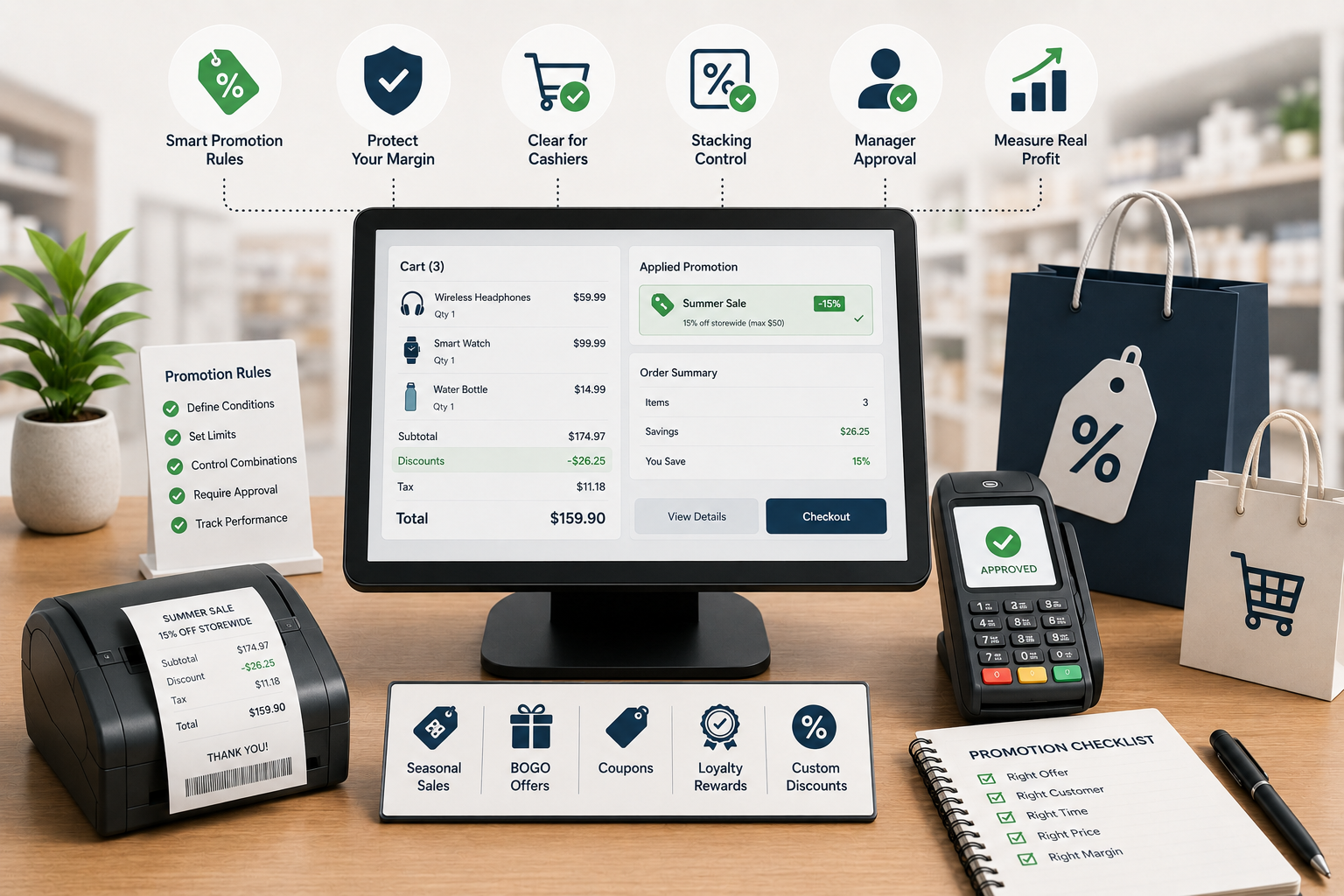
The Discount Worked—But Did the Store Make Money? How POS Promotion Rules Protect Retail Margin
Promotions can increase traffic while quietly damaging margin through discount stacking, wrong eligibility, cashier overrides, returns, and weak reporting. Learn how a modern POS should control offers from setup to post-campaign analysis.
Read article
You Ordered 100 Units, but Only 92 Arrived: How POS Purchase Orders Prevent Supplier and Receiving Errors
Purchase orders should connect planned buying with what physically arrives. Learn how a modern POS handles approvals, partial deliveries, damaged goods, substitutions, cost changes, backorders, supplier claims, and inventory updates without hiding discrepancies.
Read article