
The Customer Bought Online—Is Your Store Ready? How POS Powers Click & Collect and Unified Commerce in 2026
A practical guide to connecting POS, online orders, inventory, branches, pickup, returns, and customer data so retailers can deliver reliable click-and-collect and unified commerce experiences.
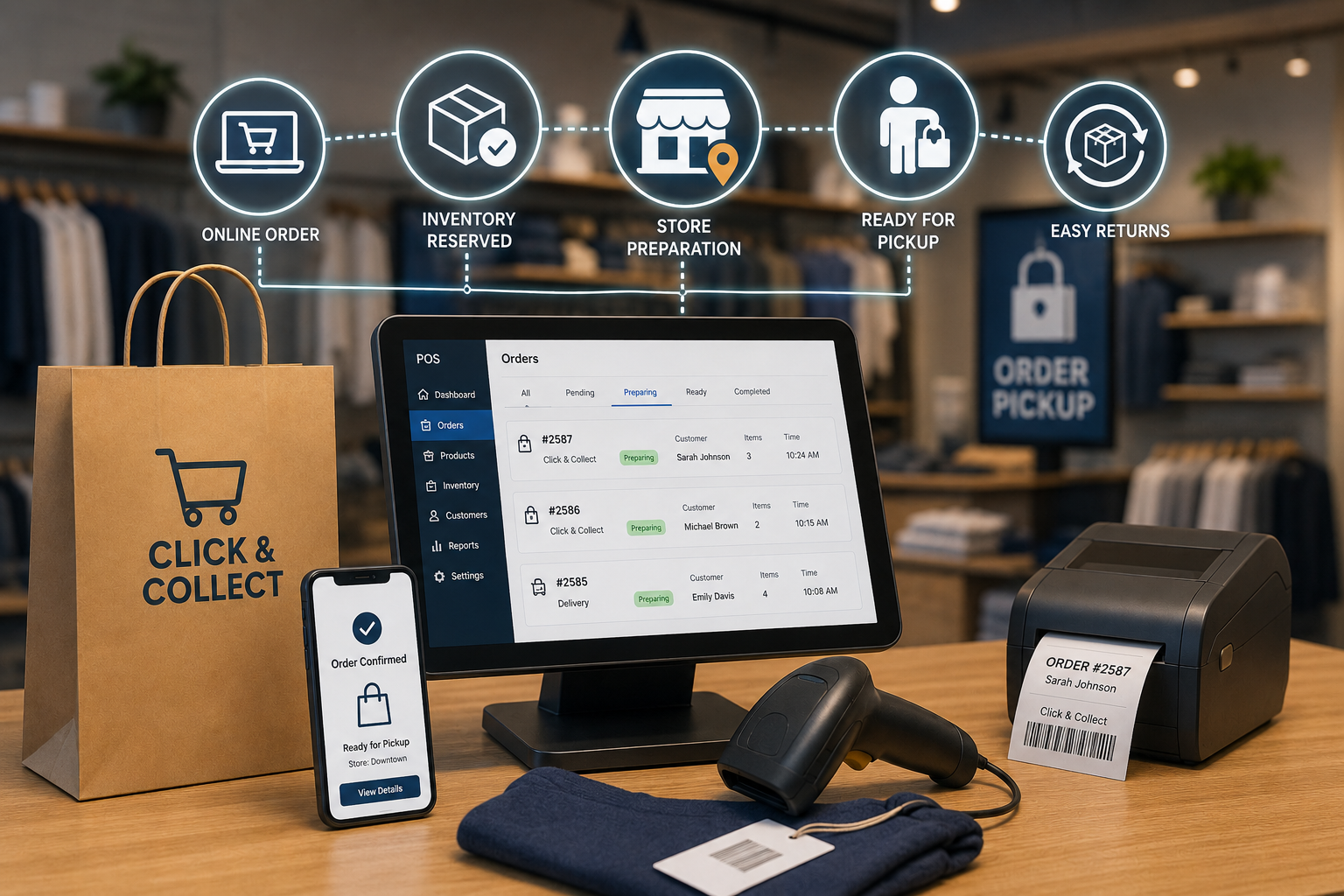
The Customer Bought Online—Is Your Store Ready? How POS Powers Click & Collect and Unified Commerce in 2026
A practical guide to connecting POS, online orders, inventory, branches, pickup, returns, and customer data so retailers can deliver reliable click-and-collect and unified commerce experiences.
The Customer Sees One Order—Your Business Must Stop Seeing Five Systems
A shopper orders a shirt from a phone, chooses pickup at the nearest branch, receives a confirmation, and expects the store to know everything. The customer does not care that the website, POS, warehouse, payment gateway, loyalty system, and branch stock may be separate.
When those systems disagree, the customer pays the price: a cancelled order, a long wait, a refund delay, or an employee asking the customer to repeat information already entered online. Unified commerce is not a slogan. It is the removal of those gaps.
Inventory Accuracy Is the Promise Behind Click & Collect
Click & collect begins with a promise that the item is available. If system stock says three units but one is damaged, one is reserved, and one was sold on another device seconds ago, the promise is false.
A capable POS should distinguish on-hand, available, reserved, picked, packed, in-transit, returned, and damaged stock. It should reserve the item immediately, prevent accidental sale, and release the reservation if the customer cancels or misses the collection window.
Pickup Speed Depends on Store Workflow, Not Only Software
A fast website cannot compensate for a slow store process. Staff need a visible queue, clear priority, product location, substitute rules, packing instructions, customer contact status, pickup verification, and a designated handoff area.
Imagine the order is ready but hidden behind the counter with no name label, while the employee who picked it has gone on break. The software recorded success, but the customer still waits. Good workflow assigns ownership and makes the next step obvious.
Online Returns Should Not Become a Separate Customer Journey
A customer who bought online should be able to return in store without becoming a technical exception. The POS should find the order, verify payment, apply the right policy, update stock, preserve tax and promotion logic, and send the refund through the original or approved method.
Online returns also create an inventory question: is the item sellable, damaged, quarantined, or destined for another location? Treating every return as immediately available creates phantom stock and more failed pickup promises.
Unified Commerce Requires Clear Ownership and Exception Handling
Unified commerce fails when everyone assumes another team owns the problem. Who handles a missing item after payment? Who contacts the customer? Who approves a substitute? Who resolves a payment captured for an unfulfilled order?
Create exception paths for overselling, partial fulfillment, failed payment, late pickup, damaged goods, wrong branch, duplicate orders, and cross-channel return disputes. The ordinary path should be fast; the unusual path should be visible and owned.
A Practical Rollout Plan for Retailers Adding Online Orders
Start with one branch and a limited product range. Measure inventory accuracy before promising fast pickup. Map every step from online checkout to handoff and return. Train staff using real exceptions, not only perfect orders.
Track order acceptance time, picking time, ready-to-collect time, customer wait, cancellation rate, missing-item rate, substitution rate, pickup completion, return resolution, and support contacts.
Dashierly or any POS should be evaluated by how well it connects sales, inventory, branches, customers, payments, returns, permissions, notifications, and reporting. The goal is not merely to accept online orders. It is to keep the promise made when the customer clicks buy.
Do not promise a pickup time based only on website speed. The promise must include store workload, stock confidence, picking distance, staffing, and the time required to verify the item.
Customer notifications should reflect real states: order received, accepted, being prepared, ready, delayed, partially fulfilled, collected, cancelled, or refunded. Vague messages create support calls.
Reserve inventory at the correct moment. Reserving too late causes overselling; reserving too early for abandoned carts can block real customers.
Pickup verification must be secure but simple. Order number, QR code, identity check, or approved delegate rules should protect the order without creating a twenty-minute handoff.
Branch performance should not be judged only on store sales. A branch that fulfills online orders or accepts cross-channel returns is contributing value even when the original sale occurred elsewhere.
Unified customer history should help service, not create confusion. Staff should see relevant orders, returns, preferences, and loyalty status without unnecessary sensitive information.
Do not promise a pickup time based only on website speed. The promise must include store workload, stock confidence, picking distance, staffing, and the time required to verify the item.
Customer notifications should reflect real states: order received, accepted, being prepared, ready, delayed, partially fulfilled, collected, cancelled, or refunded. Vague messages create support calls.
Reserve inventory at the correct moment. Reserving too late causes overselling; reserving too early for abandoned carts can block real customers.
Pickup verification must be secure but simple. Order number, QR code, identity check, or approved delegate rules should protect the order without creating a twenty-minute handoff.
Branch performance should not be judged only on store sales. A branch that fulfills online orders or accepts cross-channel returns is contributing value even when the original sale occurred elsewhere.
Unified customer history should help service, not create confusion. Staff should see relevant orders, returns, preferences, and loyalty status without unnecessary sensitive information.
Do not promise a pickup time based only on website speed. The promise must include store workload, stock confidence, picking distance, staffing, and the time required to verify the item.
Customer notifications should reflect real states: order received, accepted, being prepared, ready, delayed, partially fulfilled, collected, cancelled, or refunded. Vague messages create support calls.
Reserve inventory at the correct moment. Reserving too late causes overselling; reserving too early for abandoned carts can block real customers.
Keep reading
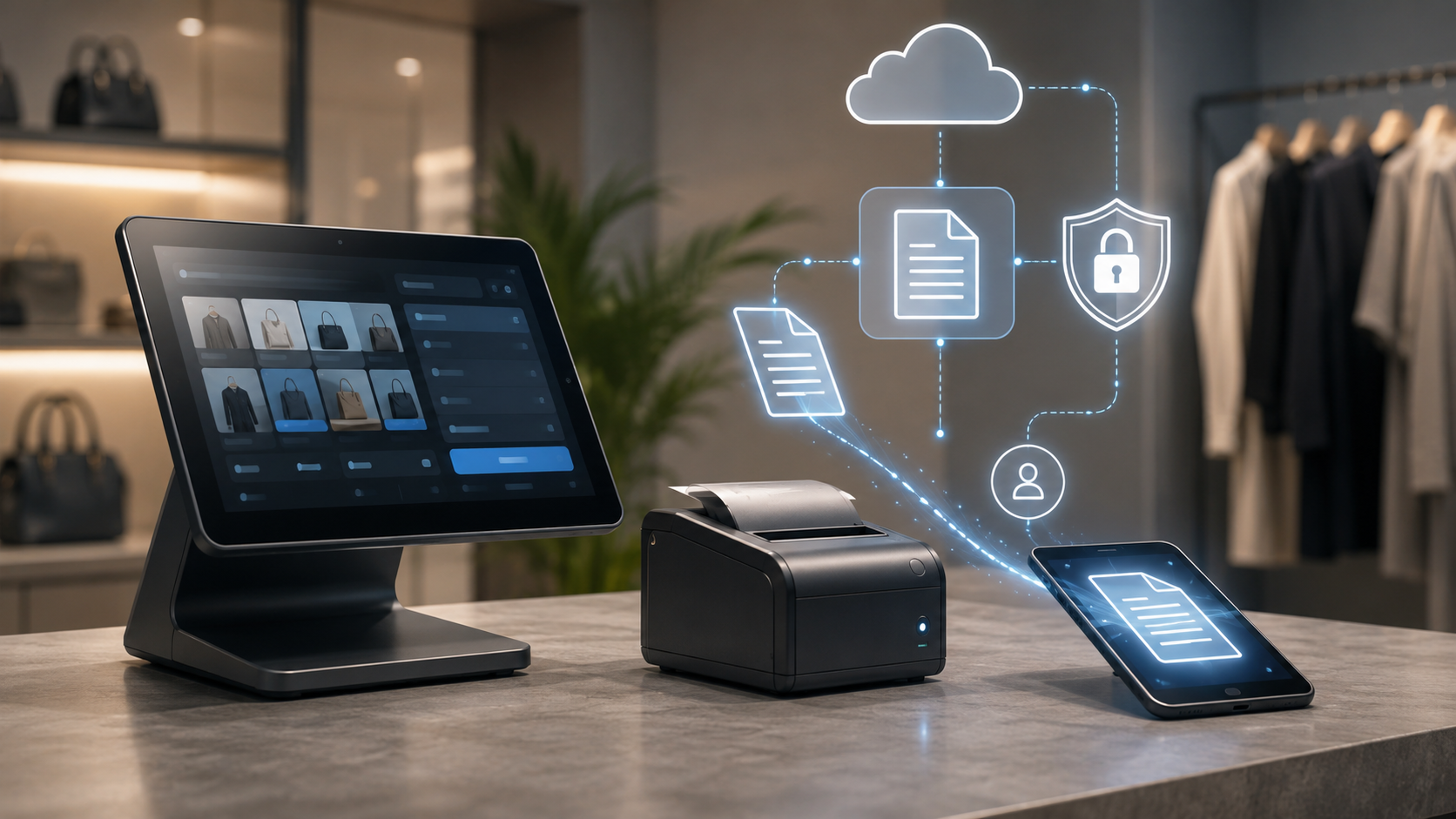
The Sale Is Finished, but the Document Is Just Beginning: How POS Digital Receipts and E-Invoicing Should Work
A modern POS must do more than print a slip. It should create accurate receipts, structured invoices, searchable records, customer delivery choices, tax-ready data, secure archives, and reliable links to returns. Learn how to design the document workflow without turning checkout into a privacy or compliance problem.
Read article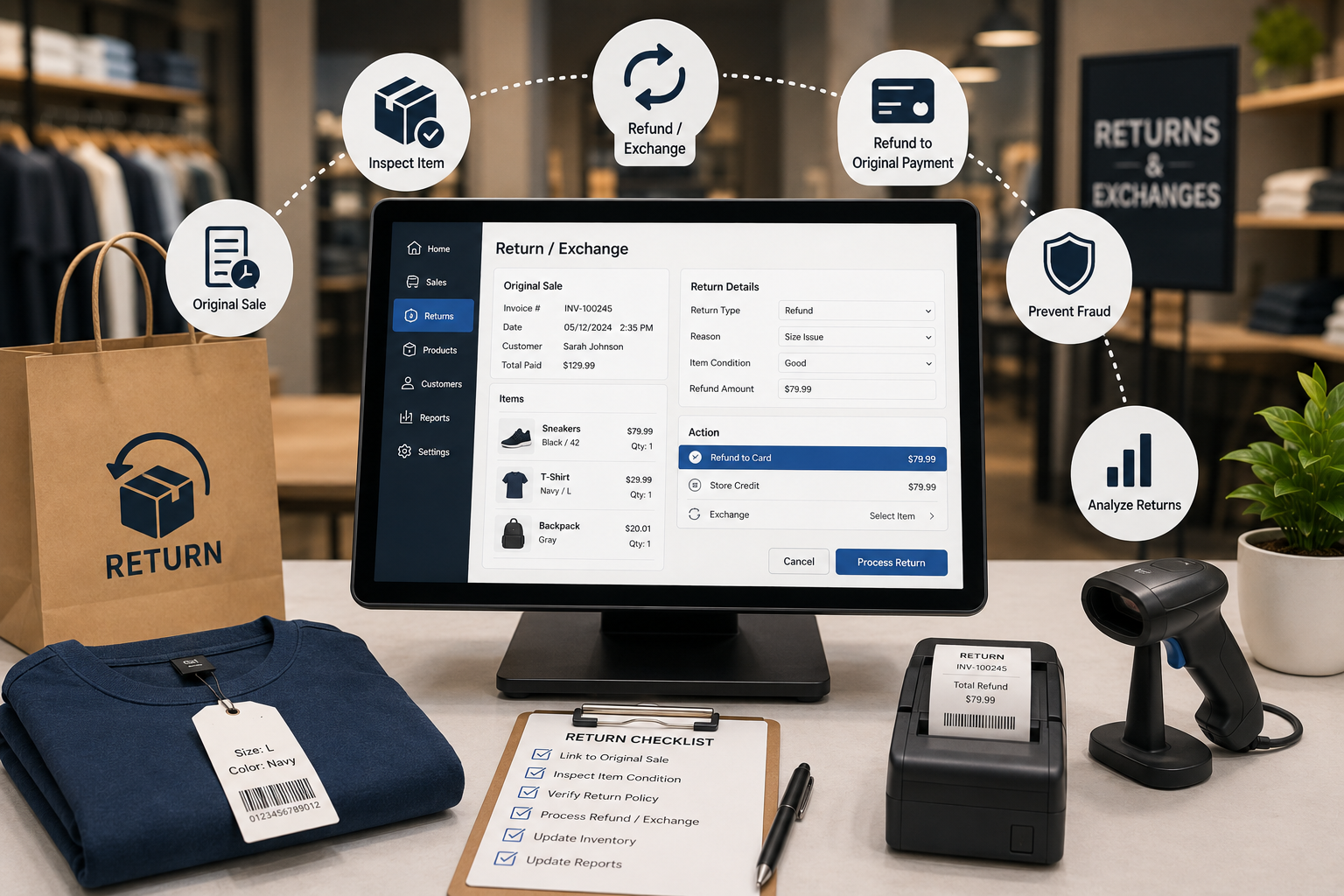
A Return Is Not a Sale in Reverse: How POS Systems Handle Refunds, Exchanges, Restocking, and Return Fraud
Returns affect cash, margin, inventory, tax, customer trust, and fraud exposure. Learn how a modern POS should connect every refund or exchange to the original sale, inspect product condition, control approvals, and keep stock accurate.
Read article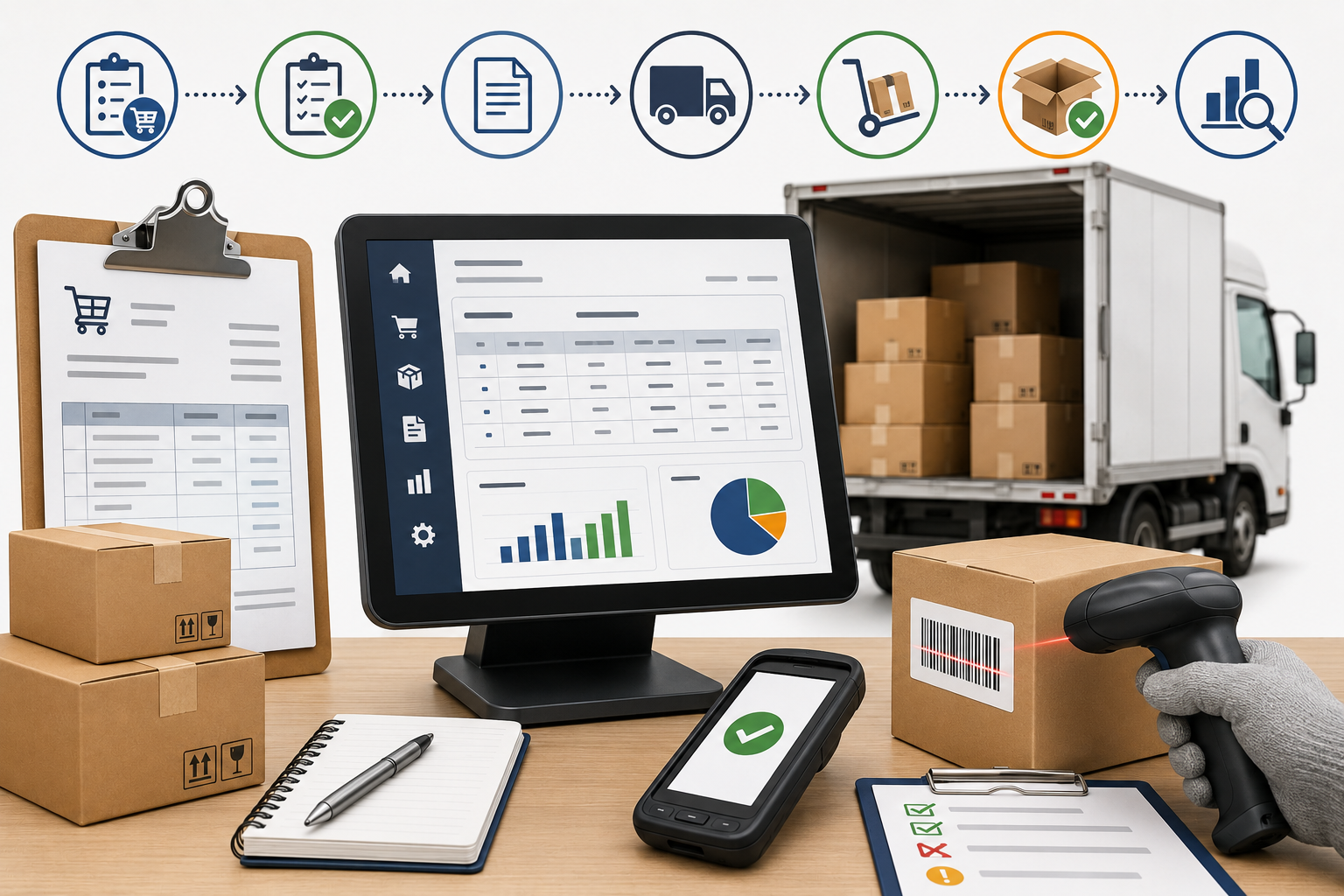
You Ordered 100 Units, but Only 92 Arrived: How POS Purchase Orders Prevent Supplier and Receiving Errors
Purchase orders should connect planned buying with what physically arrives. Learn how a modern POS handles approvals, partial deliveries, damaged goods, substitutions, cost changes, backorders, supplier claims, and inventory updates without hiding discrepancies.
Read article