
Blog

Dashierly articles

Practical content to improve sales, store operations, and customer experience.

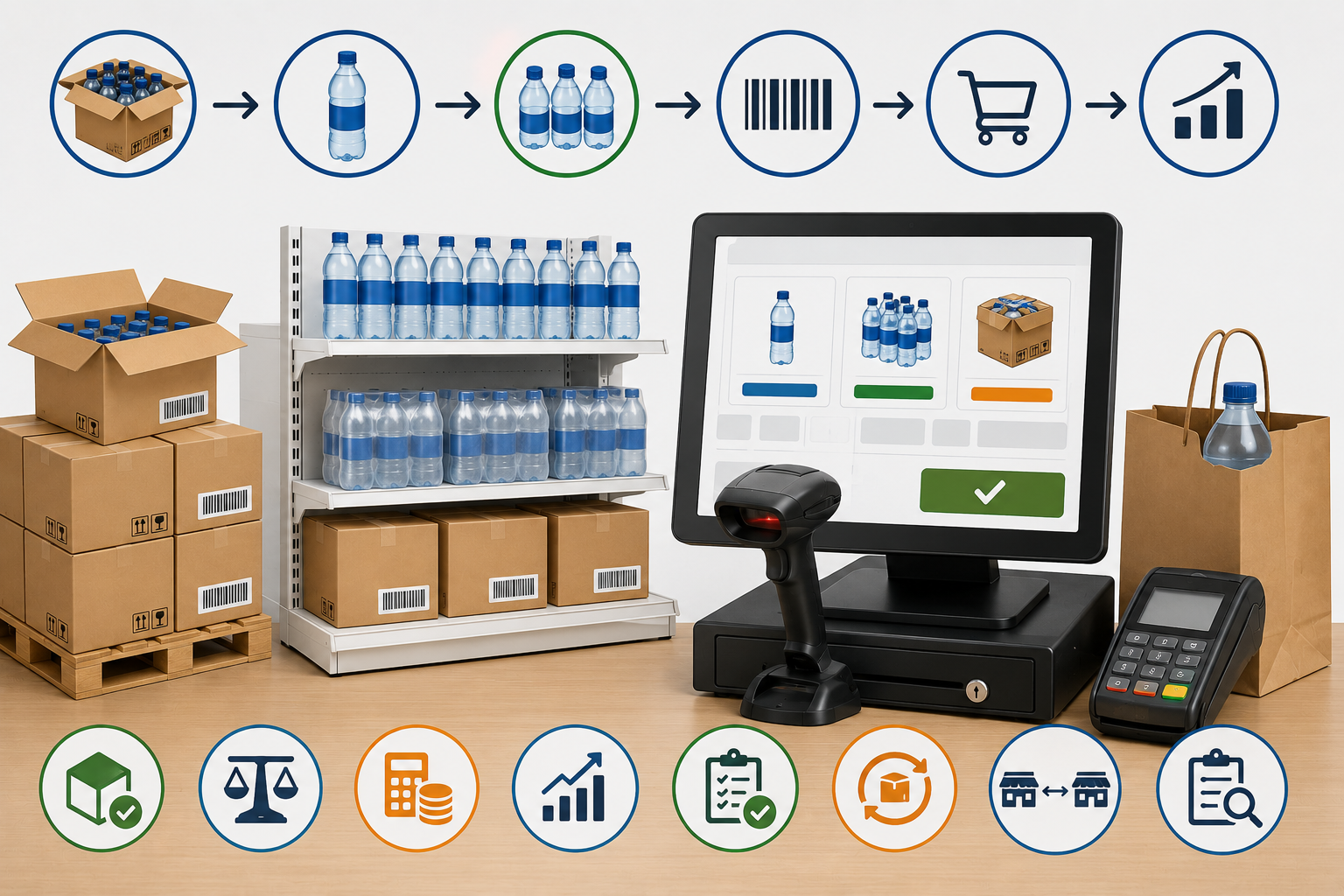
You Bought a Case of 24 but Sold One Bottle: How POS Units of Measure Prevent Inventory and Pricing Errors

You Bought a Case of 24 but Sold One Bottle: How POS Units of Measure Prevent Inventory and Pricing Errors

Retailers often buy products by case, receive them by pack, and sell them individually. Learn how POS unit-of-measure rules, barcode mapping, cost conversion, stock counts, returns, and purchasing controls prevent quantity and margin errors.

Read article
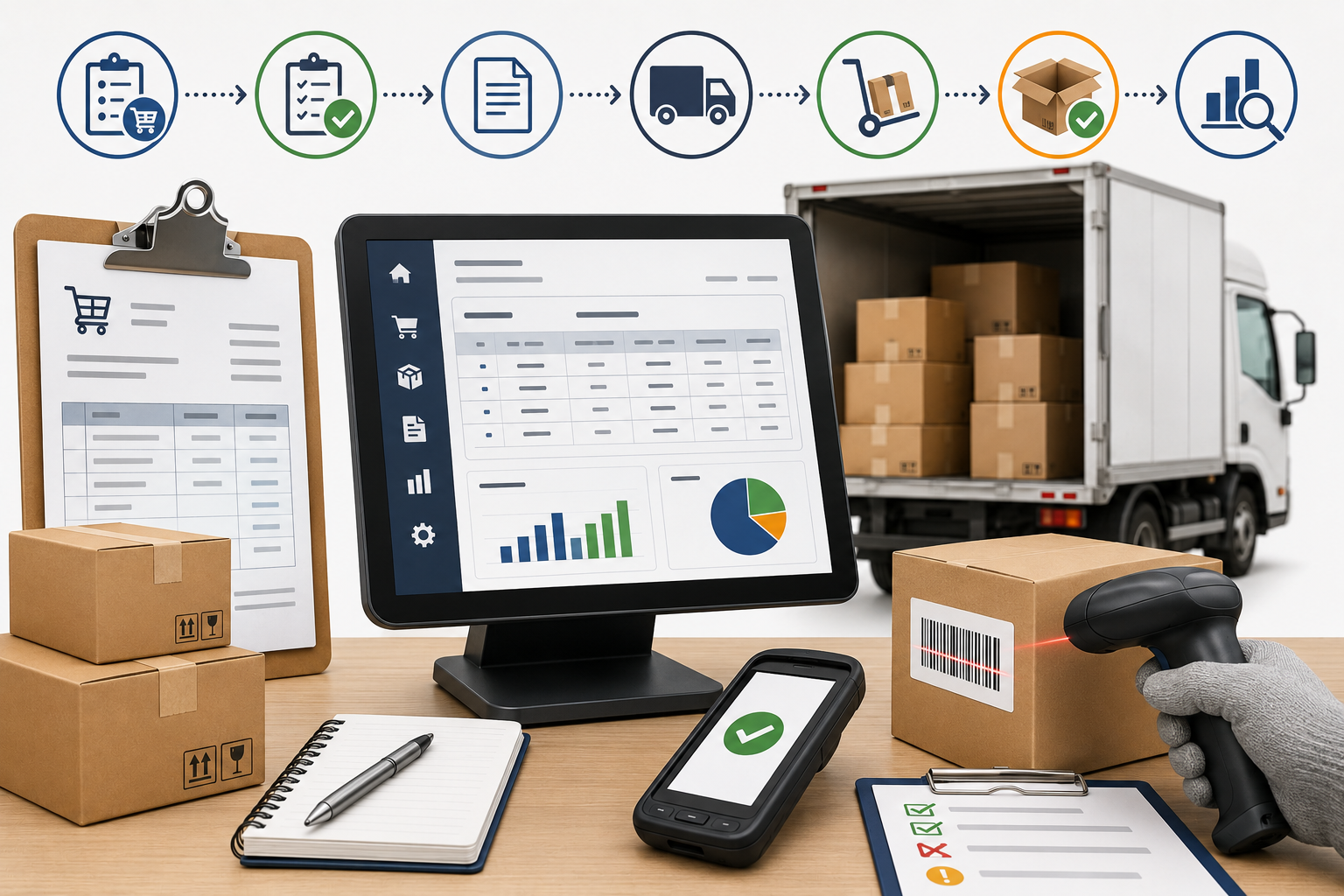
You Ordered 100 Units, but Only 92 Arrived: How POS Purchase Orders Prevent Supplier and Receiving Errors

You Ordered 100 Units, but Only 92 Arrived: How POS Purchase Orders Prevent Supplier and Receiving Errors

Purchase orders should connect planned buying with what physically arrives. Learn how a modern POS handles approvals, partial deliveries, damaged goods, substitutions, cost changes, backorders, supplier claims, and inventory updates without hiding discrepancies.

Read article
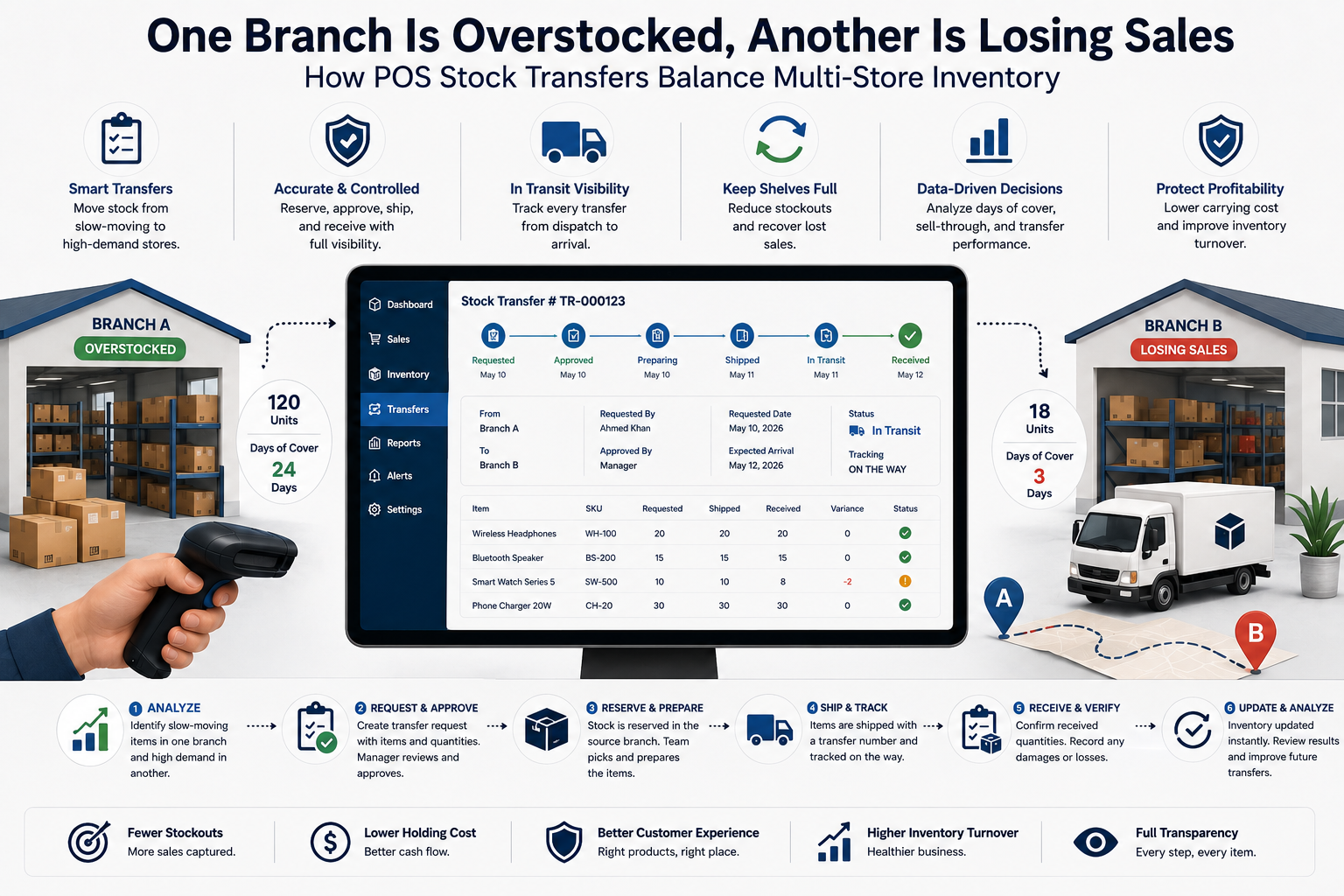
One Branch Is Overstocked, Another Is Losing Sales: How POS Stock Transfers Balance Multi-Store Inventory

One Branch Is Overstocked, Another Is Losing Sales: How POS Stock Transfers Balance Multi-Store Inventory

Moving stock between branches looks simple, but poor transfer control creates phantom inventory, duplicate availability, missing cartons, delayed receiving, and unreliable reports. Learn how a modern POS should request, ship, receive, reconcile, and analyze inter-branch transfers.

Read article
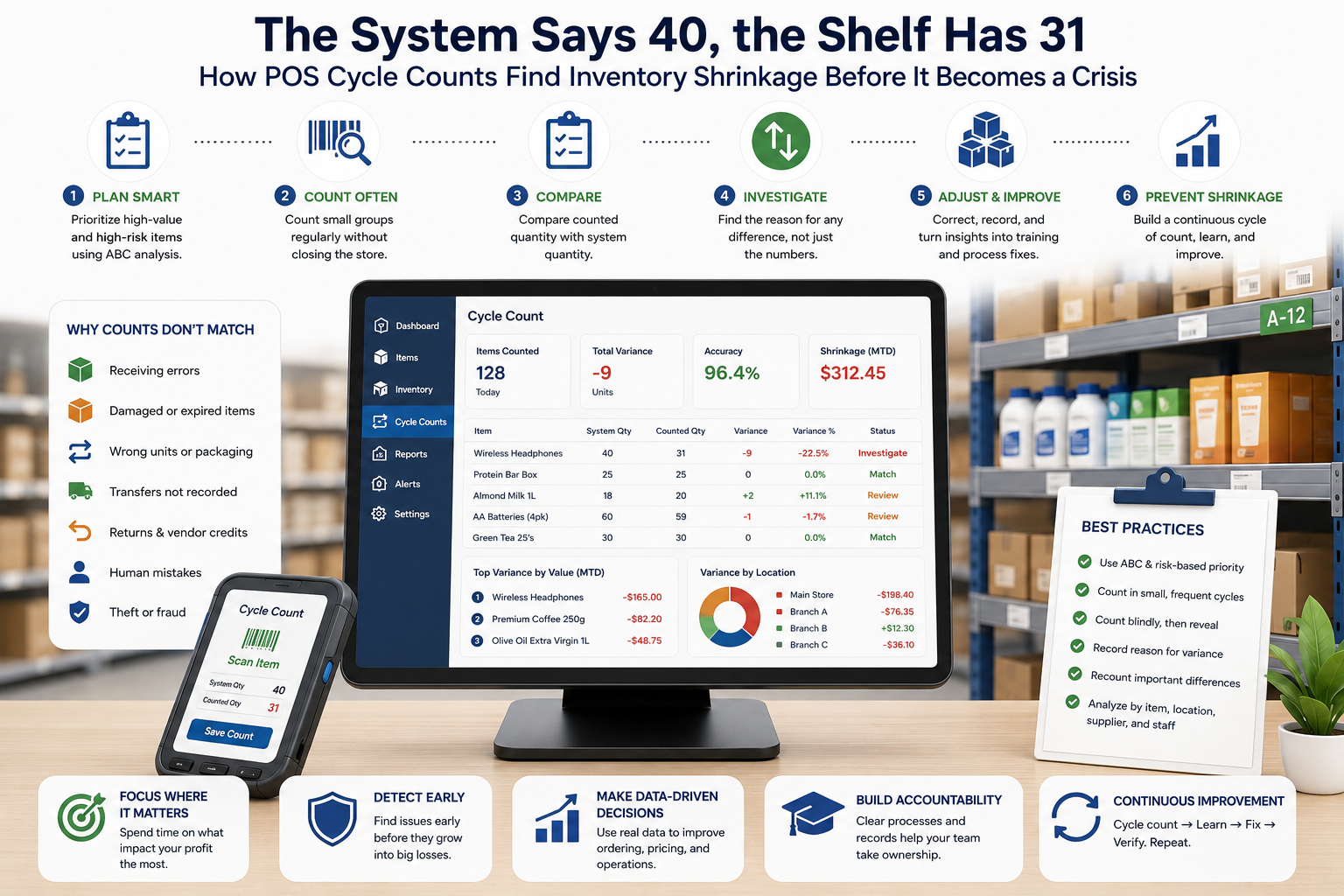
The System Says 40, the Shelf Has 31: How POS Cycle Counts Find Inventory Shrinkage Before It Becomes a Crisis

The System Says 40, the Shelf Has 31: How POS Cycle Counts Find Inventory Shrinkage Before It Becomes a Crisis

Inventory discrepancies rarely appear all at once. They build through receiving mistakes, unrecorded damage, wrong units, theft, transfers, returns, and stock adjustments. Learn how POS cycle counts, variance analysis, and root-cause workflows restore accuracy without closing the entire store.

Read article
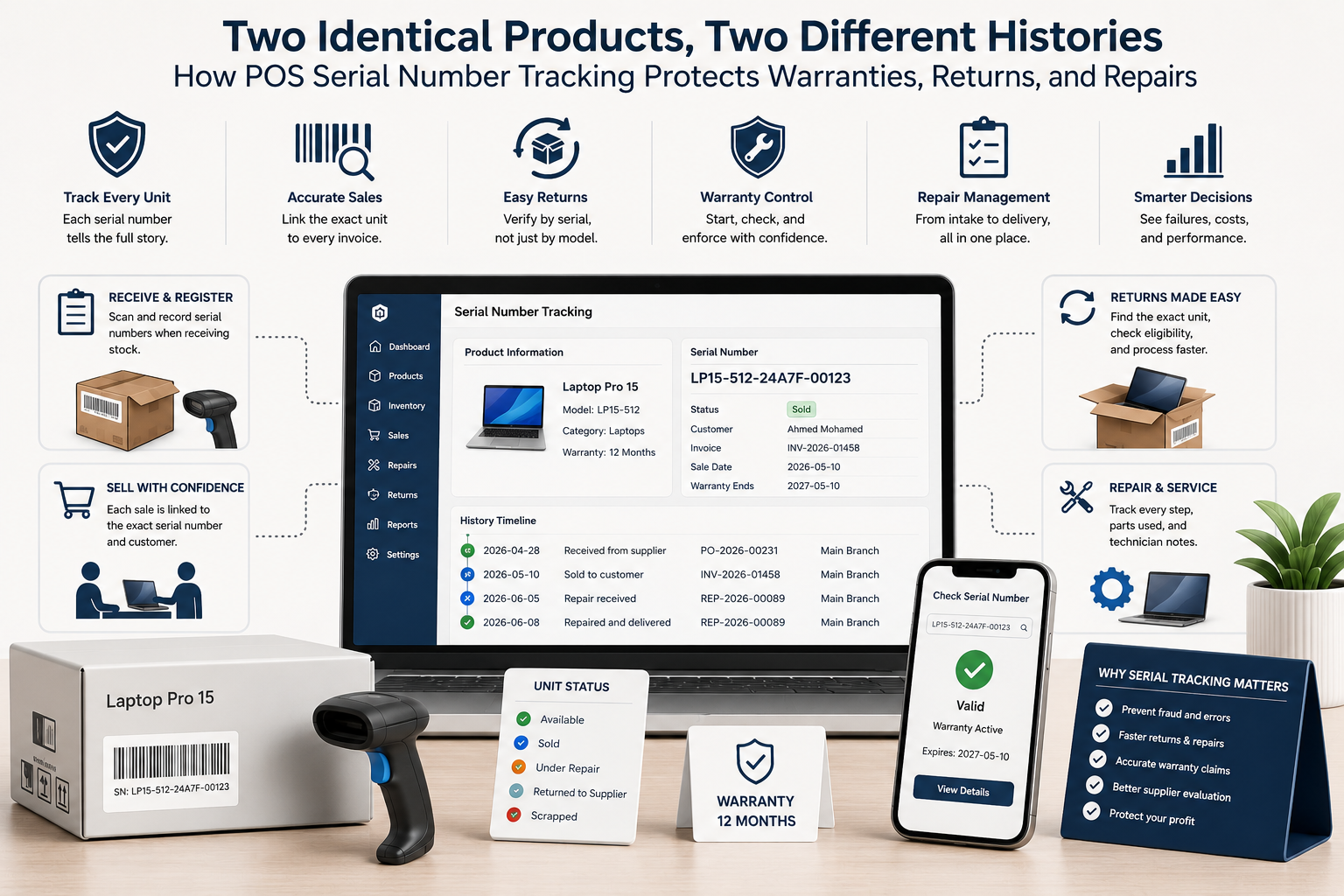
Two Identical Products, Two Different Histories: How POS Serial Number Tracking Protects Warranties, Returns, and Repairs

Two Identical Products, Two Different Histories: How POS Serial Number Tracking Protects Warranties, Returns, and Repairs

Quantity tracking tells you how many units exist. Serial tracking tells you exactly which unit was received, sold, returned, repaired, replaced, or still covered by warranty. Learn how a modern POS should manage serialized inventory from supplier receipt to after-sales service.

Read article
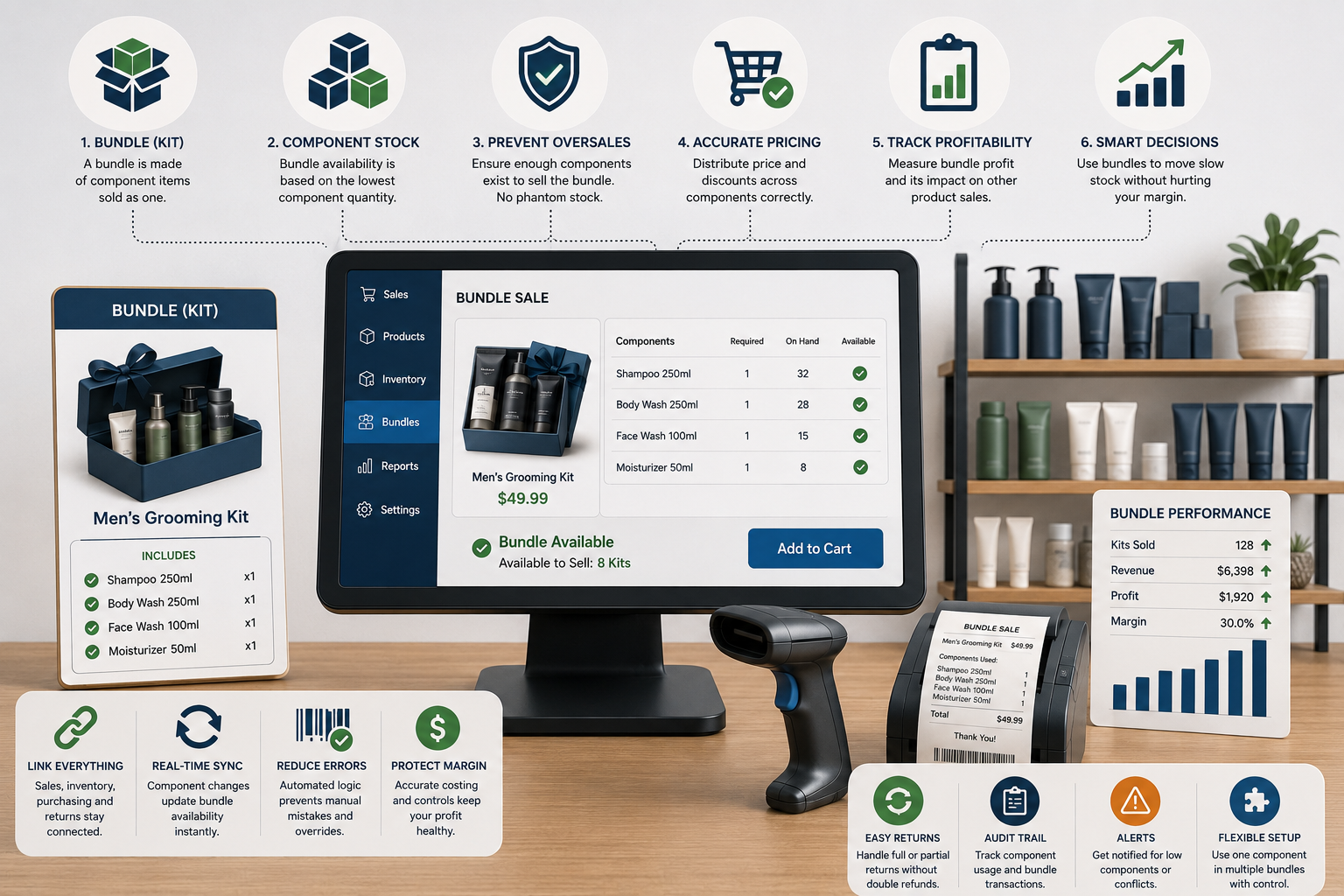
The Bundle Sold Out, but Every Item Is Still on the Shelf: How POS Systems Should Manage Kits, Multipacks, and Component Stock

The Bundle Sold Out, but Every Item Is Still on the Shelf: How POS Systems Should Manage Kits, Multipacks, and Component Stock

Bundles can raise basket value, simplify buying, and move slow stock—but poor setup creates phantom availability, overselling, wrong costs, and confusing returns. Learn how POS systems should manage components, pricing, inventory, purchasing, and profitability.

Read article
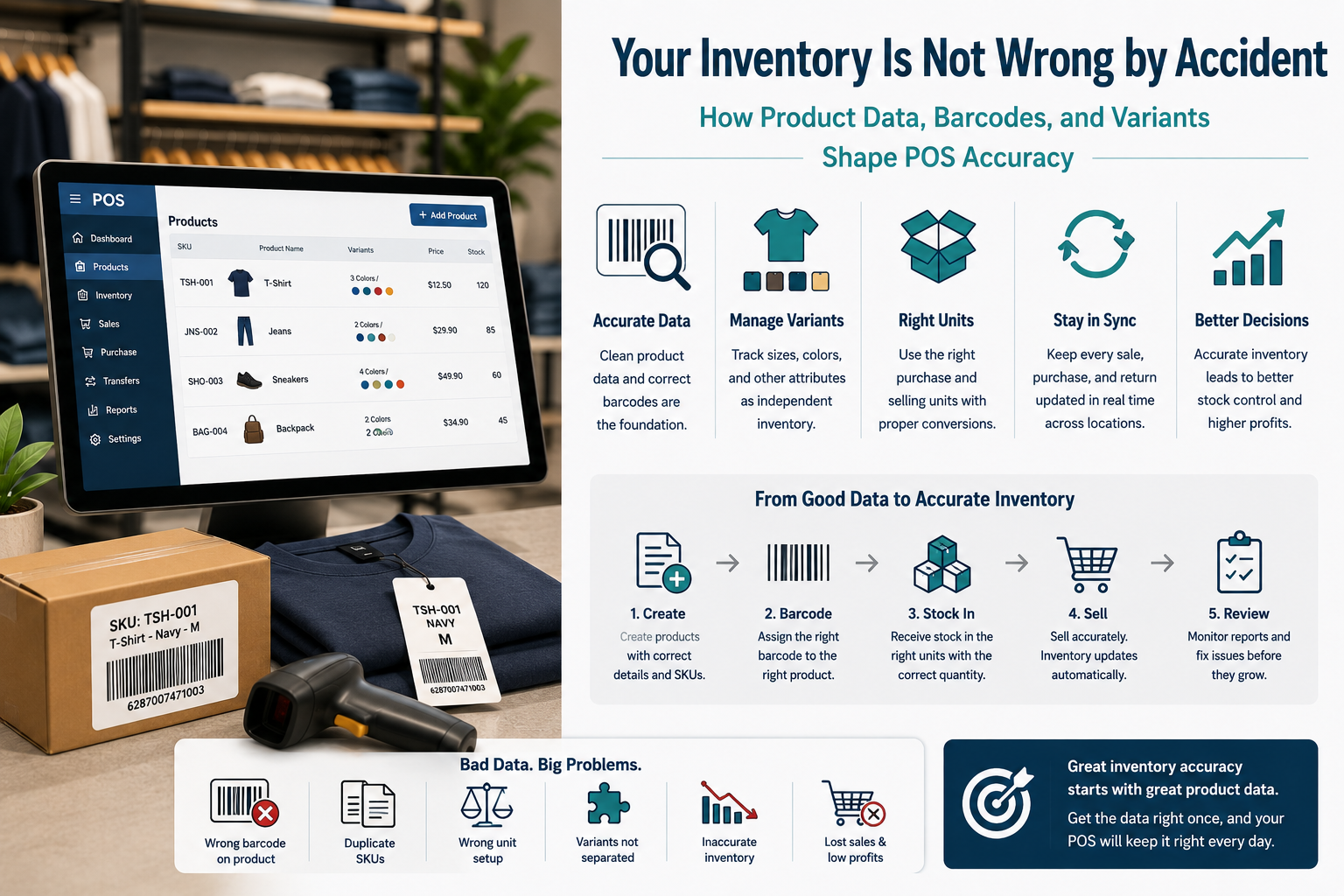
Your Inventory Is Not Wrong by Accident: How Product Data, Barcodes, and Variants Shape POS Accuracy

Your Inventory Is Not Wrong by Accident: How Product Data, Barcodes, and Variants Shape POS Accuracy

Inventory problems often begin before a sale happens. Learn how duplicate SKUs, shared barcodes, wrong units, poorly designed variants, pack sizes, and inconsistent product data create stock errors—and how a modern POS can prevent them.

Read article
Your Store Is Not Understaffed All Day: How POS Data Helps Schedule the Right People at the Right Time

Your Store Is Not Understaffed All Day: How POS Data Helps Schedule the Right People at the Right Time

Retail staffing problems are often timing problems. Learn how POS sales patterns, transaction volume, basket complexity, returns, receiving, and service demand can improve schedules without cutting service or exhausting employees.

Read article
One Brand, Five Stores, Five Different Realities: How a Multi-Location POS Keeps Retail Under Control

One Brand, Five Stores, Five Different Realities: How a Multi-Location POS Keeps Retail Under Control

Opening another branch creates more than another checkout counter. Learn how a multi-location POS should control inventory, pricing, permissions, transfers, reporting, customers, and daily operations without turning every store into a separate business.

Read article
PreviousPage 1 / 2Next