
The Bundle Sold Out, but Every Item Is Still on the Shelf: How POS Systems Should Manage Kits, Multipacks, and Component Stock
Bundles can raise basket value, simplify buying, and move slow stock—but poor setup creates phantom availability, overselling, wrong costs, and confusing returns. Learn how POS systems should manage components, pricing, inventory, purchasing, and profitability.
The Bundle Sold Out, but Every Item Is Still on the Shelf: How POS Systems Should Manage Kits, Multipacks, and Component Stock
Bundles can raise basket value, simplify buying, and move slow stock—but poor setup creates phantom availability, overselling, wrong costs, and confusing returns. Learn how POS systems should manage components, pricing, inventory, purchasing, and profitability.
A Bundle Is a Product Promise Built from Other Products
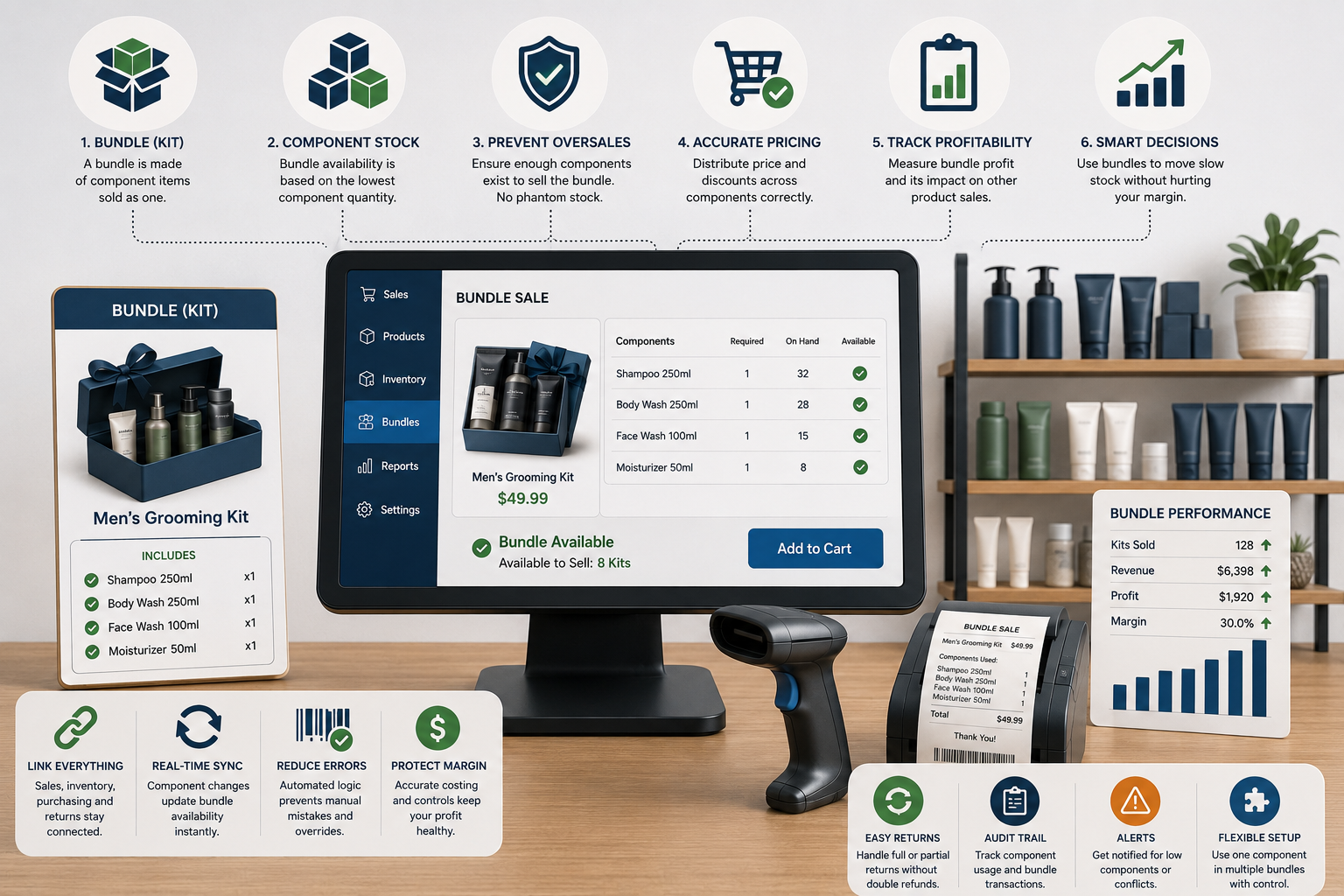
A bundle can be a camera with a case and memory card, a skincare routine, a three-pack of drinks, a school starter kit, or a gift box assembled from several products. The customer sees one offer, but the POS must understand every component behind it.
That difference matters because the bundle may have its own name, barcode, price, image, and sales report while inventory remains attached to the underlying items. Treating the bundle as a completely independent stock item can duplicate quantities or hide which component is actually missing.
For example, A bundle can be a camera with a case and memory card, a skincare routine, a three-pack of drinks, a school starter kit, or a gift box assembled from several products. The customer sees one offer, but the POS must understand every component behind it. Availability must also respect branch stock, reservations, damaged quantities, online orders, and quantities already committed to other bundles. A component used by several offers can become the shared bottleneck. The setup should be tested with the last available component, a partial return, a branch transfer, an online reservation, and a component used in two different bundles.
Bundle Availability Must Follow the Limiting Component
If a kit requires two bottles and one pump, ten bottles and three pumps can create only three complete kits. The available bundle quantity should be calculated from the component that supports the fewest complete bundles.
Availability must also respect branch stock, reservations, damaged quantities, online orders, and quantities already committed to other bundles. A component used by several offers can become the shared bottleneck.
For example, Availability must also respect branch stock, reservations, damaged quantities, online orders, and quantities already committed to other bundles. A component used by several offers can become the shared bottleneck. Suppliers usually sell components, not the final virtual bundle. Purchase orders, receiving, reorder points, lead times, and stock transfers therefore operate at component level even when demand is generated by bundle sales. The setup should be tested with the last available component, a partial return, a branch transfer, an online reservation, and a component used in two different bundles.
Pricing Must Separate Customer Value from Real Cost
The bundle price may be lower than the sum of individual selling prices, but profitability depends on component cost, packaging, assembly time, commission, tax, fulfillment, and the opportunity cost of selling a scarce component inside a discounted set.
Allocate the selling value and discount across components using a consistent rule. This matters for margin reporting, taxes, refunds, supplier funding, and understanding which products actually contributed to profit.
For example, That difference matters because the bundle may have its own name, barcode, price, image, and sales report while inventory remains attached to the underlying items. Treating the bundle as a completely independent stock item can duplicate quantities or hide which component is actually missing. A full bundle return can restore components only after condition checks. A partial return requires a fair allocated value for the returned line. Exchanges can be more complex when the customer replaces one component while keeping the rest. The setup should be tested with the last available component, a partial return, a branch transfer, an online reservation, and a component used in two different bundles.
Purchasing and Replenishment Still Happen at Component Level
Suppliers usually sell components, not the final virtual bundle. Purchase orders, receiving, reorder points, lead times, and stock transfers therefore operate at component level even when demand is generated by bundle sales.
Bundle demand should flow into component forecasts. Selling one breakfast kit containing two juices should create demand for two juices, not one abstract kit that the purchasing team cannot reorder.
For example, The bundle price may be lower than the sum of individual selling prices, but profitability depends on component cost, packaging, assembly time, commission, tax, fulfillment, and the opportunity cost of selling a scarce component inside a discounted set. Dashierly or any POS should let retailers present a simple offer while maintaining precise component logic behind the screen. A successful bundle makes buying easier for the customer without making inventory, purchasing, or profit harder for the business. The setup should be tested with the last available component, a partial return, a branch transfer, an online reservation, and a component used in two different bundles.
Returns and Exchanges Need Component Logic
A full bundle return can restore components only after condition checks. A partial return requires a fair allocated value for the returned line. Exchanges can be more complex when the customer replaces one component while keeping the rest.
The POS should prevent a component from being refunded twice, decide whether opened items return to sellable stock, preserve the original bundle economics, and show staff what happens to each component.
For example, If a kit requires two bottles and one pump, ten bottles and three pumps can create only three complete kits. The available bundle quantity should be calculated from the component that supports the fewest complete bundles. That difference matters because the bundle may have its own name, barcode, price, image, and sales report while inventory remains attached to the underlying items. Treating the bundle as a completely independent stock item can duplicate quantities or hide which component is actually missing. The setup should be tested with the last available component, a partial return, a branch transfer, an online reservation, and a component used in two different bundles.
Measure Whether the Bundle Improves the Business
Measure bundle units, attach rate, average basket, gross margin, component stockouts, cannibalization of full-price sales, return rate, assembly cost, and whether slow products genuinely moved or were merely discounted.
Dashierly or any POS should let retailers present a simple offer while maintaining precise component logic behind the screen. A successful bundle makes buying easier for the customer without making inventory, purchasing, or profit harder for the business.
For example, Allocate the selling value and discount across components using a consistent rule. This matters for margin reporting, taxes, refunds, supplier funding, and understanding which products actually contributed to profit. The bundle price may be lower than the sum of individual selling prices, but profitability depends on component cost, packaging, assembly time, commission, tax, fulfillment, and the opportunity cost of selling a scarce component inside a discounted set. The setup should be tested with the last available component, a partial return, a branch transfer, an online reservation, and a component used in two different bundles.
Keep reading

The Gift Card Was Sold Months Ago—Why Is It Still Money You Owe? How POS Systems Manage Stored Value
Gift cards and store credit bring cash in early, but they also create balances, redemption obligations, fraud risks, expiry questions, split payments, refunds, and accounting work. Learn how a modern POS should manage stored value from issue to final redemption.
Read article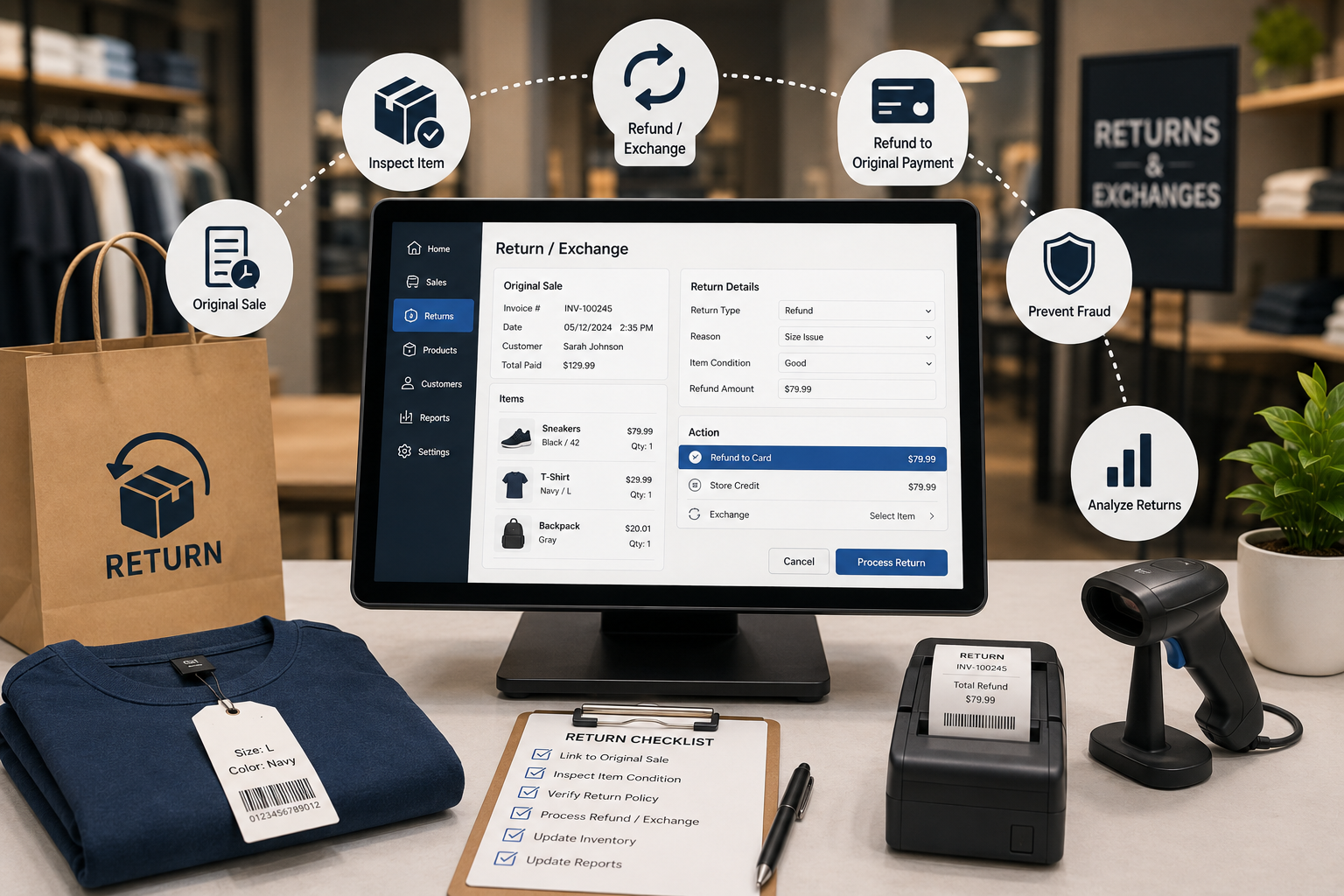
A Return Is Not a Sale in Reverse: How POS Systems Handle Refunds, Exchanges, Restocking, and Return Fraud
Returns affect cash, margin, inventory, tax, customer trust, and fraud exposure. Learn how a modern POS should connect every refund or exchange to the original sale, inspect product condition, control approvals, and keep stock accurate.
Read article
The Sale Is Finished, but the Document Is Just Beginning: How POS Digital Receipts and E-Invoicing Should Work
A modern POS must do more than print a slip. It should create accurate receipts, structured invoices, searchable records, customer delivery choices, tax-ready data, secure archives, and reliable links to returns. Learn how to design the document workflow without turning checkout into a privacy or compliance problem.
Read article