Blog

Dashierly articles

Practical content to improve sales, store operations, and customer experience.

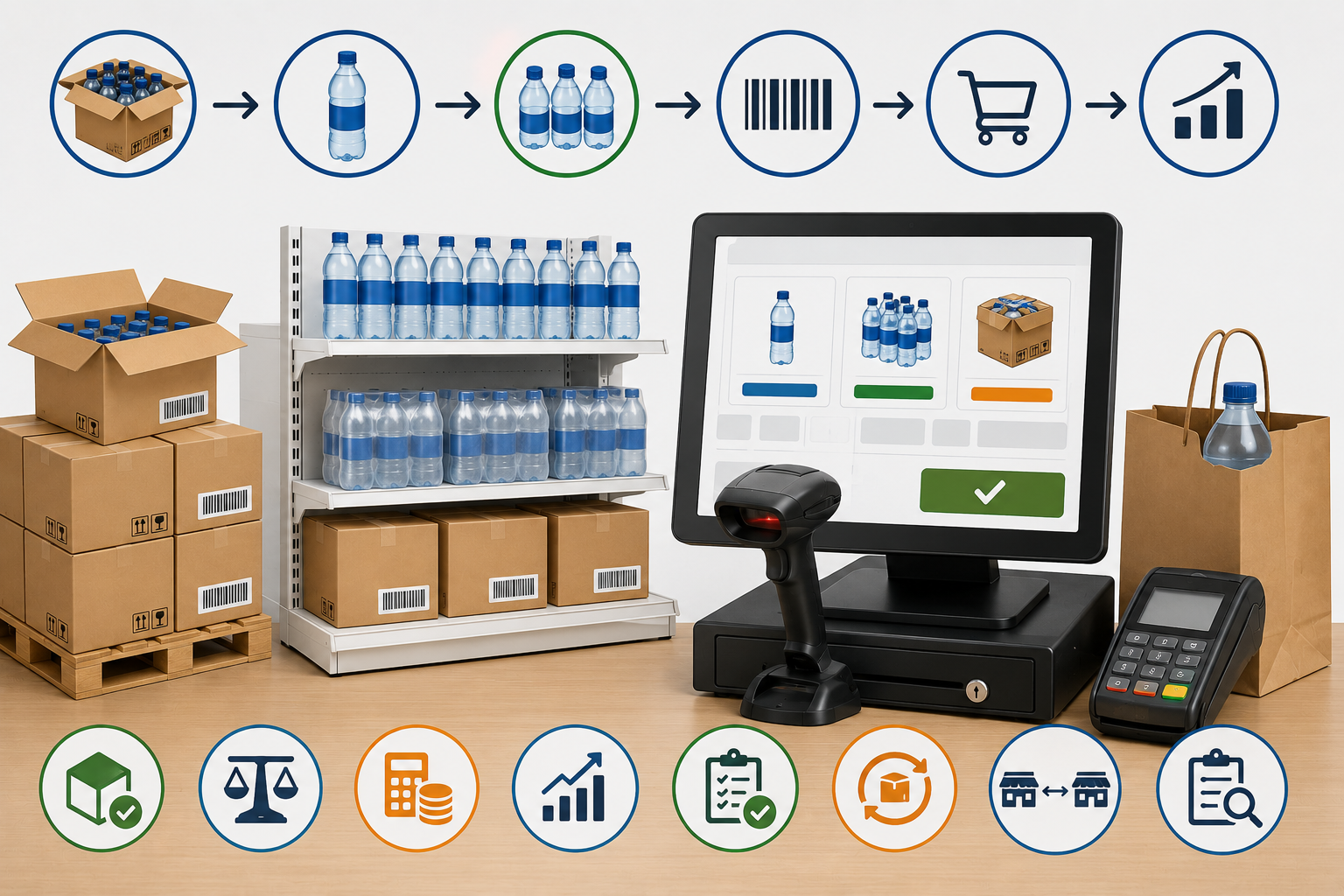
You Bought a Case of 24 but Sold One Bottle: How POS Units of Measure Prevent Inventory and Pricing Errors

You Bought a Case of 24 but Sold One Bottle: How POS Units of Measure Prevent Inventory and Pricing Errors

Retailers often buy products by case, receive them by pack, and sell them individually. Learn how POS unit-of-measure rules, barcode mapping, cost conversion, stock counts, returns, and purchasing controls prevent quantity and margin errors.

Read article
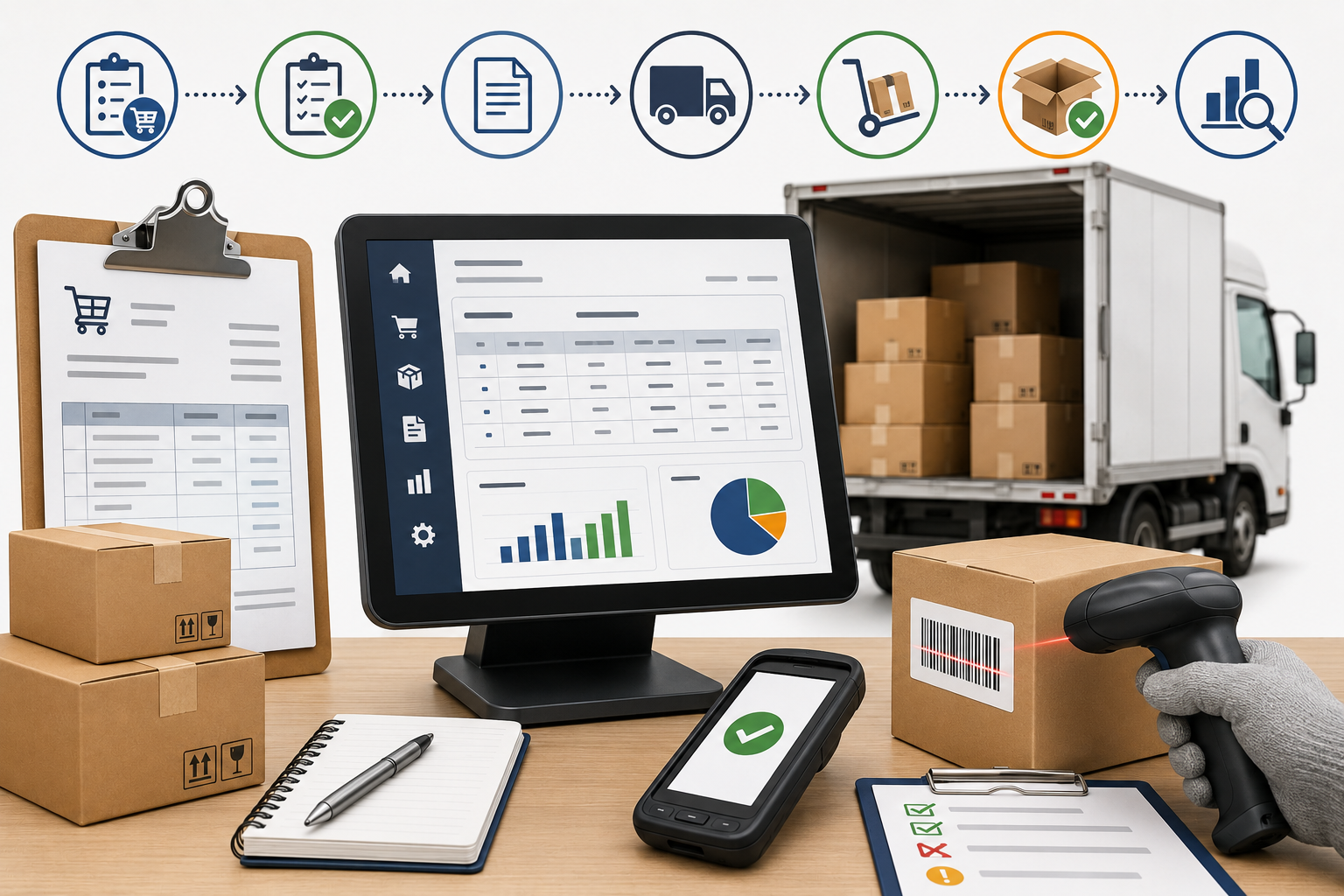
You Ordered 100 Units, but Only 92 Arrived: How POS Purchase Orders Prevent Supplier and Receiving Errors

You Ordered 100 Units, but Only 92 Arrived: How POS Purchase Orders Prevent Supplier and Receiving Errors

Purchase orders should connect planned buying with what physically arrives. Learn how a modern POS handles approvals, partial deliveries, damaged goods, substitutions, cost changes, backorders, supplier claims, and inventory updates without hiding discrepancies.

Read article
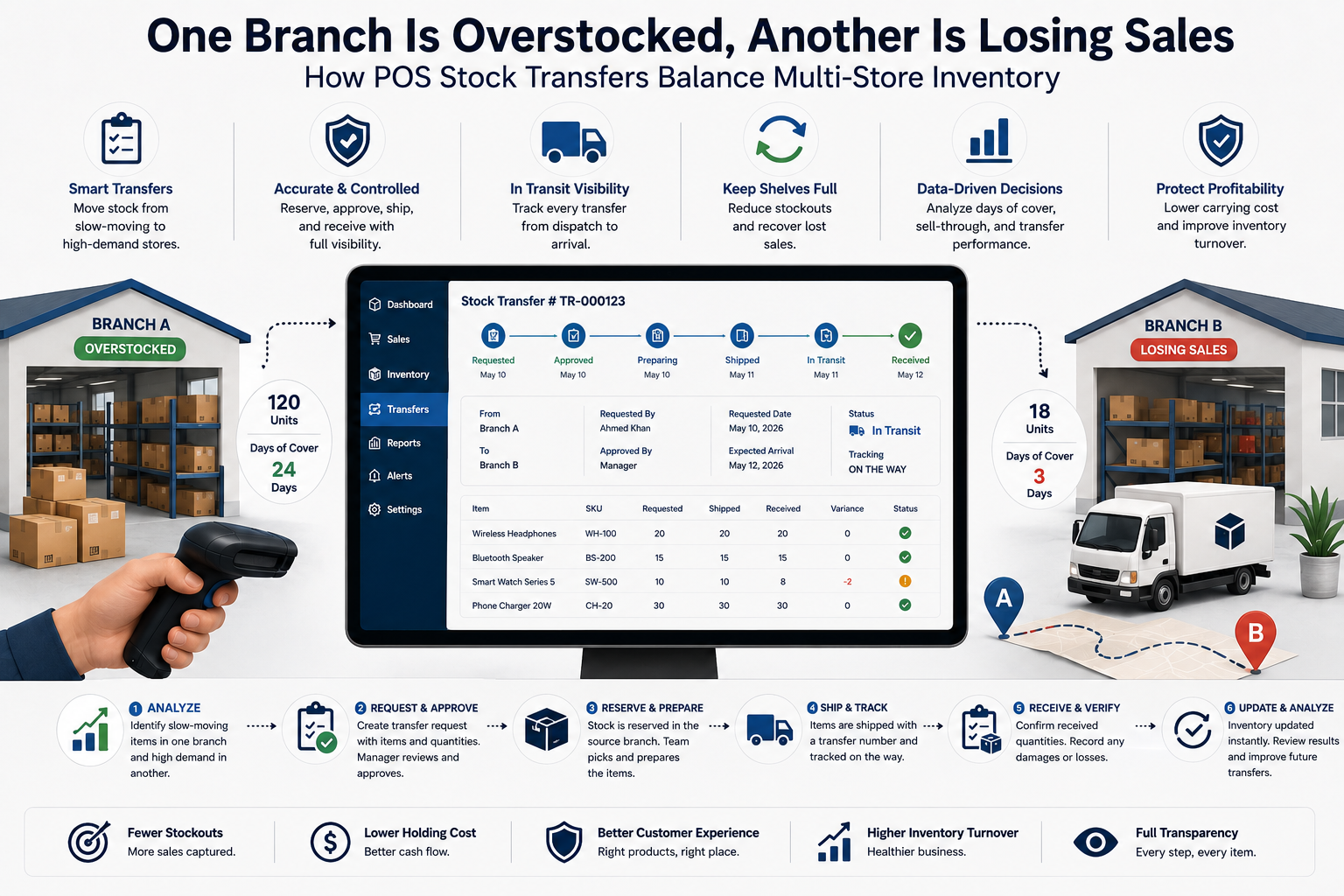
One Branch Is Overstocked, Another Is Losing Sales: How POS Stock Transfers Balance Multi-Store Inventory

One Branch Is Overstocked, Another Is Losing Sales: How POS Stock Transfers Balance Multi-Store Inventory

Moving stock between branches looks simple, but poor transfer control creates phantom inventory, duplicate availability, missing cartons, delayed receiving, and unreliable reports. Learn how a modern POS should request, ship, receive, reconcile, and analyze inter-branch transfers.

Read article
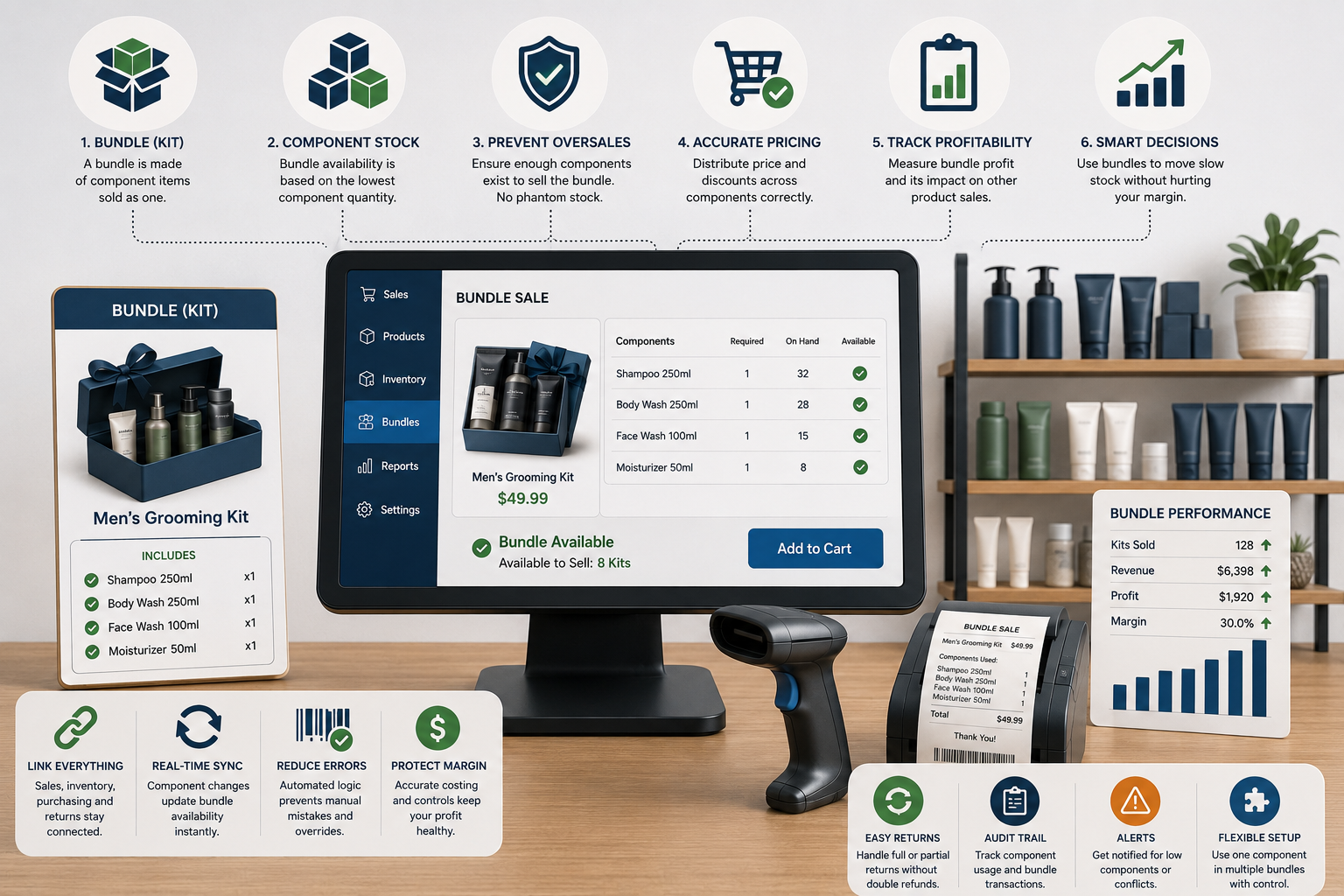
The Bundle Sold Out, but Every Item Is Still on the Shelf: How POS Systems Should Manage Kits, Multipacks, and Component Stock

The Bundle Sold Out, but Every Item Is Still on the Shelf: How POS Systems Should Manage Kits, Multipacks, and Component Stock

Bundles can raise basket value, simplify buying, and move slow stock—but poor setup creates phantom availability, overselling, wrong costs, and confusing returns. Learn how POS systems should manage components, pricing, inventory, purchasing, and profitability.

Read article
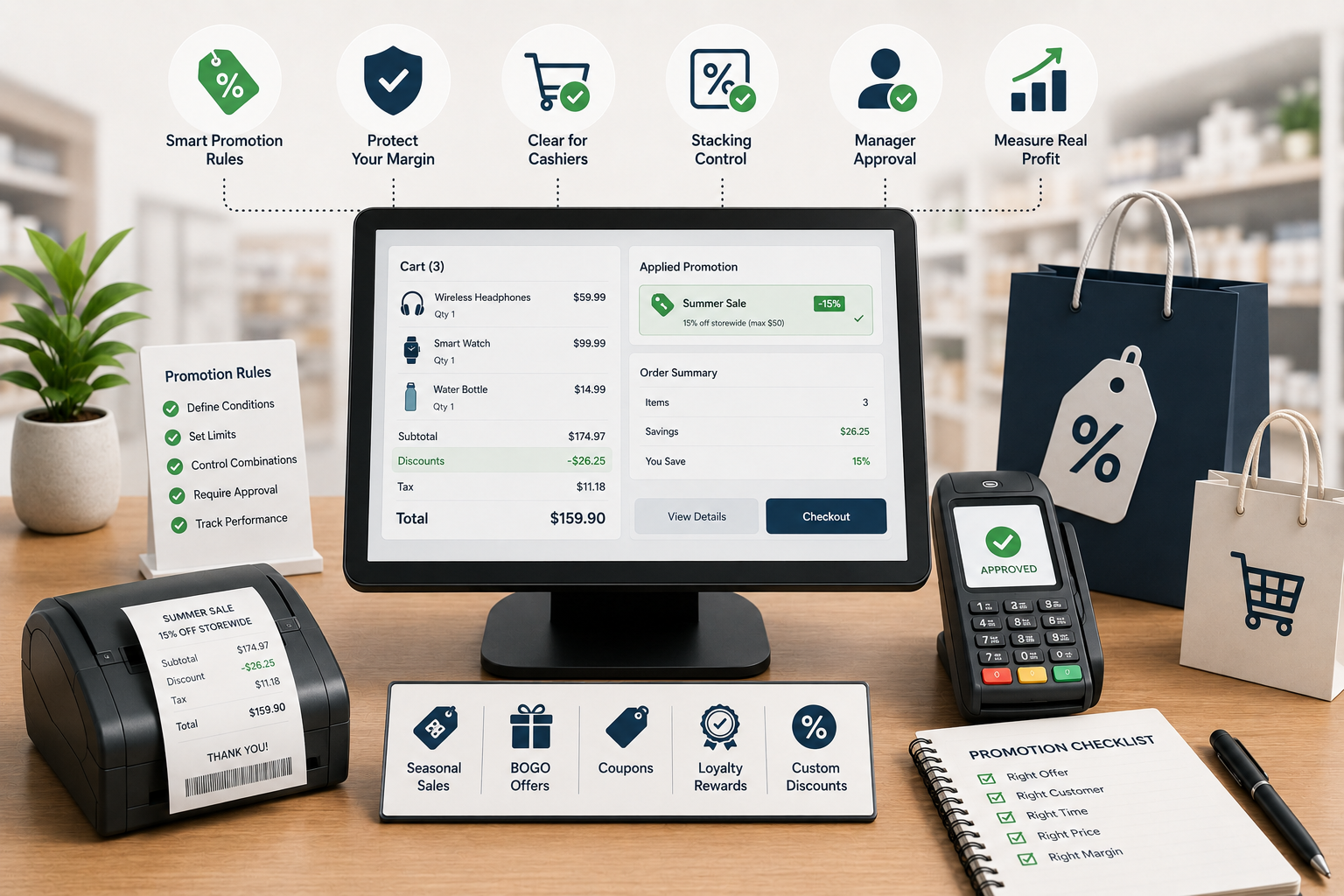
The Discount Worked—But Did the Store Make Money? How POS Promotion Rules Protect Retail Margin

The Discount Worked—But Did the Store Make Money? How POS Promotion Rules Protect Retail Margin

Promotions can increase traffic while quietly damaging margin through discount stacking, wrong eligibility, cashier overrides, returns, and weak reporting. Learn how a modern POS should control offers from setup to post-campaign analysis.

Read article
A New POS Can Fail Before the First Sale: The Real Work Behind a Smooth Retail Rollout

A New POS Can Fail Before the First Sale: The Real Work Behind a Smooth Retail Rollout

Buying POS software is the easy part. This guide explains how retailers should clean data, map workflows, train staff, test hardware, migrate products, plan go-live, and measure adoption without disrupting daily sales.

Read article
Self-Checkout Is Not a Staff Replacement: How to Build Faster, Safer, and More Accessible POS Experiences in 2026

Self-Checkout Is Not a Staff Replacement: How to Build Faster, Safer, and More Accessible POS Experiences in 2026

A practical guide to designing self-checkout, scan-and-go, mobile POS, and assisted checkout around real customer needs, staff workflows, accessibility, fraud controls, and reliable store operations.

Read article
The Customer Bought Online—Is Your Store Ready? How POS Powers Click & Collect and Unified Commerce in 2026

The Customer Bought Online—Is Your Store Ready? How POS Powers Click & Collect and Unified Commerce in 2026

A practical guide to connecting POS, online orders, inventory, branches, pickup, returns, and customer data so retailers can deliver reliable click-and-collect and unified commerce experiences.

Read article
The Stockroom Is Holding Your Cash: How POS Systems Improve Purchasing and Cash Flow in 2026

The Stockroom Is Holding Your Cash: How POS Systems Improve Purchasing and Cash Flow in 2026

A practical guide to using POS sales, inventory, supplier, and margin data to buy smarter, reduce overstock, prevent stockouts, improve cash flow, and make replenishment decisions with confidence.

Read article
PreviousPage 1 / 2Next