
Blog

Dashierly articles

Practical content to improve sales, store operations, and customer experience.

Who Changed the Price? How POS Permissions and Audit Trails Protect Retail Operations

Who Changed the Price? How POS Permissions and Audit Trails Protect Retail Operations

Retail losses and operational mistakes often begin with shared logins, excessive permissions, and actions that cannot be traced. Learn how role-based access, personal accounts, approvals, and POS audit logs create accountability without slowing the store.

Read article

The Website Says “In Stock,” but the Shelf Is Empty: How POS Systems Prevent Omnichannel Inventory Failures

The Website Says “In Stock,” but the Shelf Is Empty: How POS Systems Prevent Omnichannel Inventory Failures

Online orders, store sales, pickup reservations, returns, and transfers compete for the same units. Learn how a connected POS protects inventory accuracy, prevents overselling, and keeps click-and-collect promises realistic.

Read article
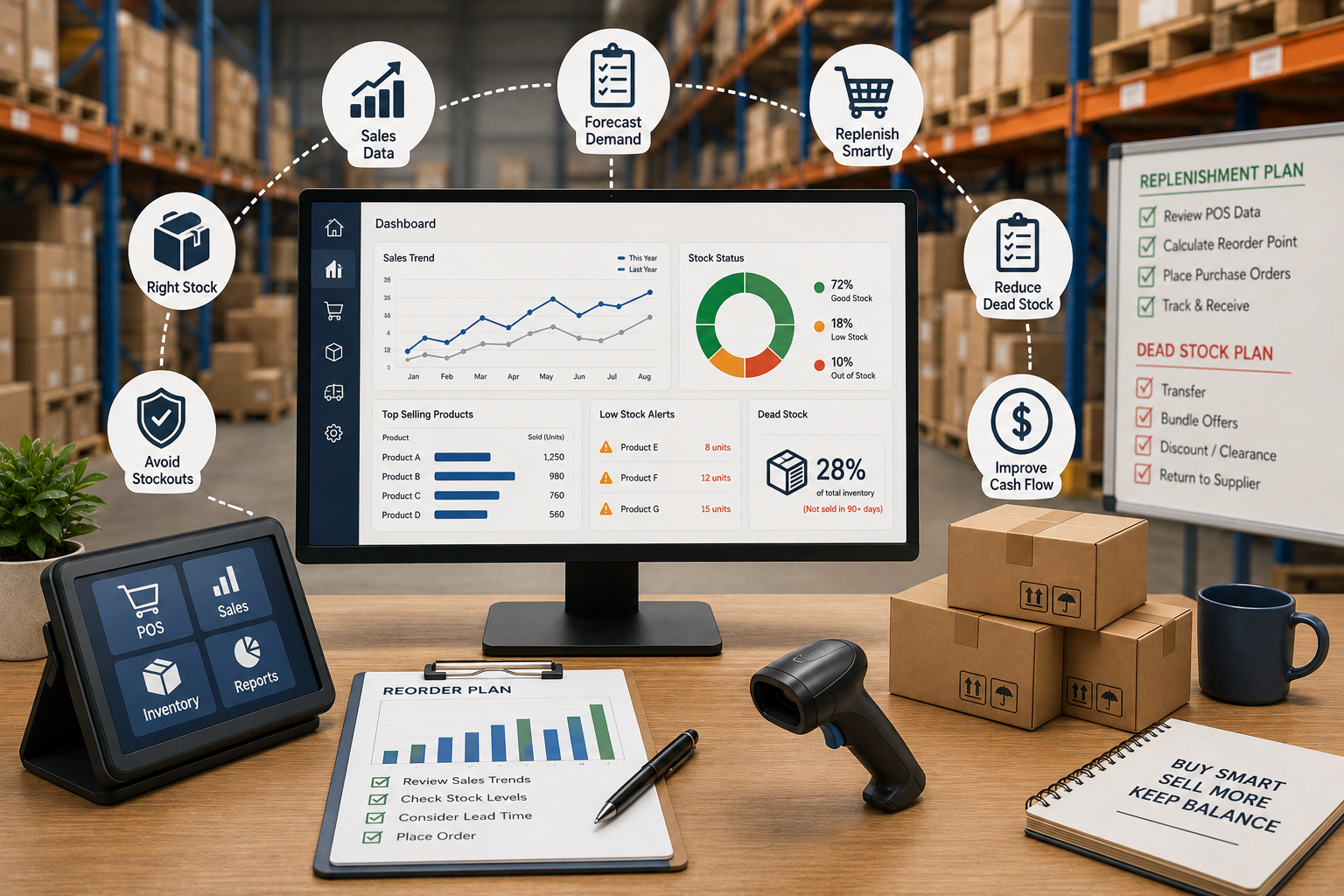
Your Warehouse Is Full, but the Best Sellers Are Missing: How POS Data Fixes Replenishment and Dead Stock

Your Warehouse Is Full, but the Best Sellers Are Missing: How POS Data Fixes Replenishment and Dead Stock

A full warehouse does not mean healthy inventory. Learn how POS sales velocity, lead time, seasonality, reorder points, supplier performance, transfers, and dead-stock analysis help retailers buy the right products at the right time.

Read article
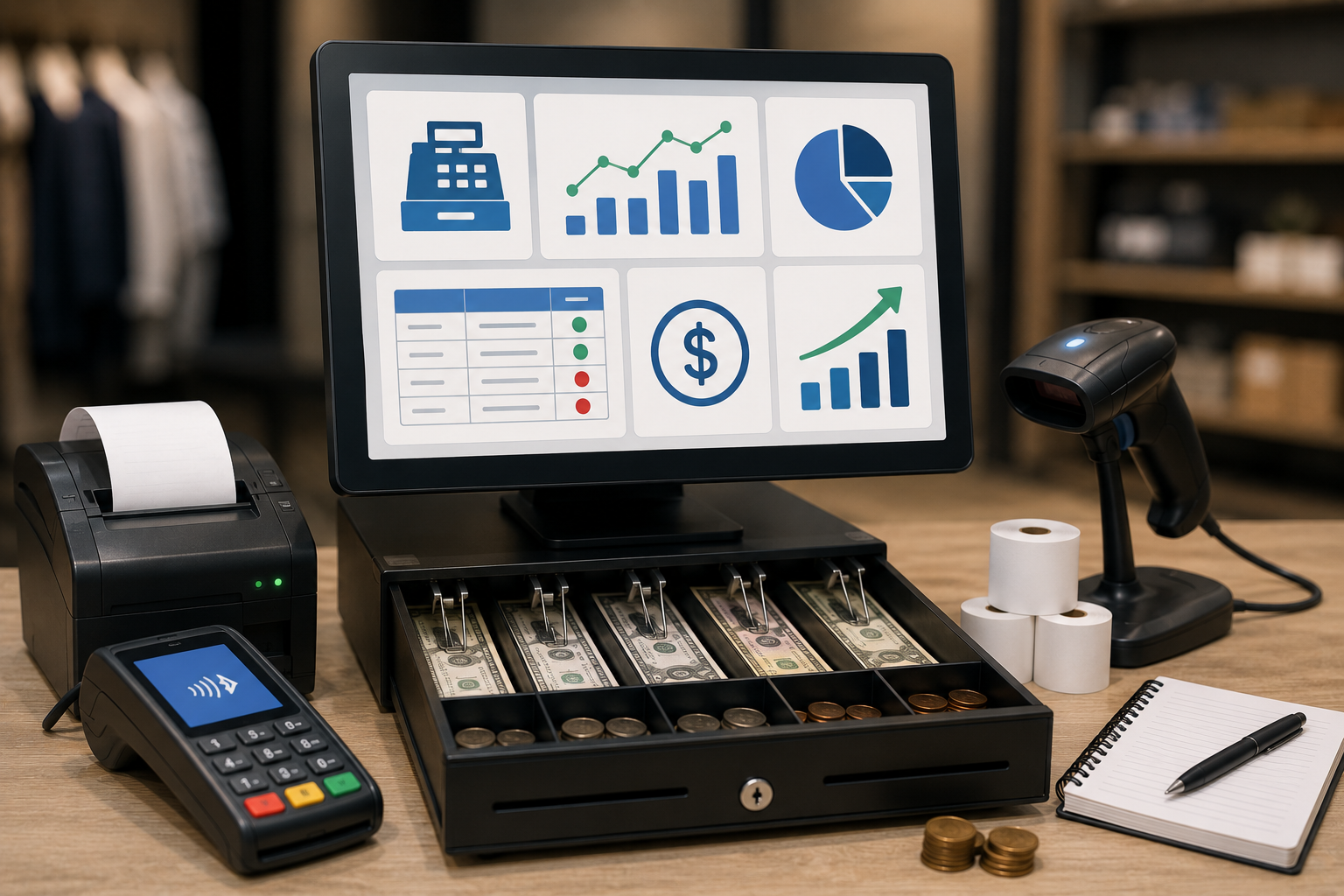
The Register Is Short—But Where Did the Money Go? A Practical POS Guide to Cash Drawers and Payment Reconciliation

The Register Is Short—But Where Did the Money Go? A Practical POS Guide to Cash Drawers and Payment Reconciliation

A cash difference at closing does not automatically mean theft. Learn how POS register sessions, floats, paid-in and paid-out movements, refunds, tips, card settlements, and clear accountability help retailers reconcile every payment method.

Read article
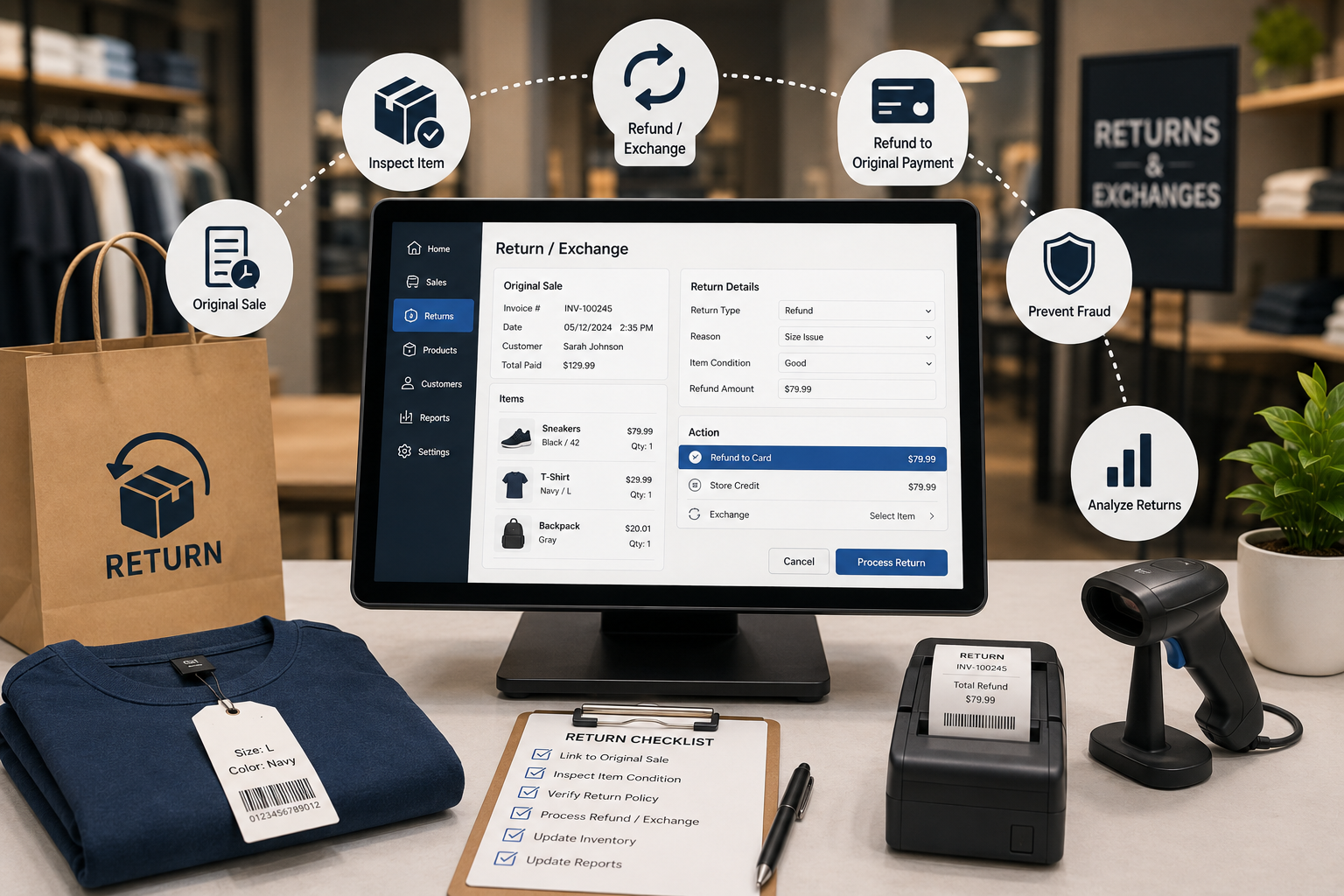
A Return Is Not a Sale in Reverse: How POS Systems Handle Refunds, Exchanges, Restocking, and Return Fraud

A Return Is Not a Sale in Reverse: How POS Systems Handle Refunds, Exchanges, Restocking, and Return Fraud

Returns affect cash, margin, inventory, tax, customer trust, and fraud exposure. Learn how a modern POS should connect every refund or exchange to the original sale, inspect product condition, control approvals, and keep stock accurate.

Read article
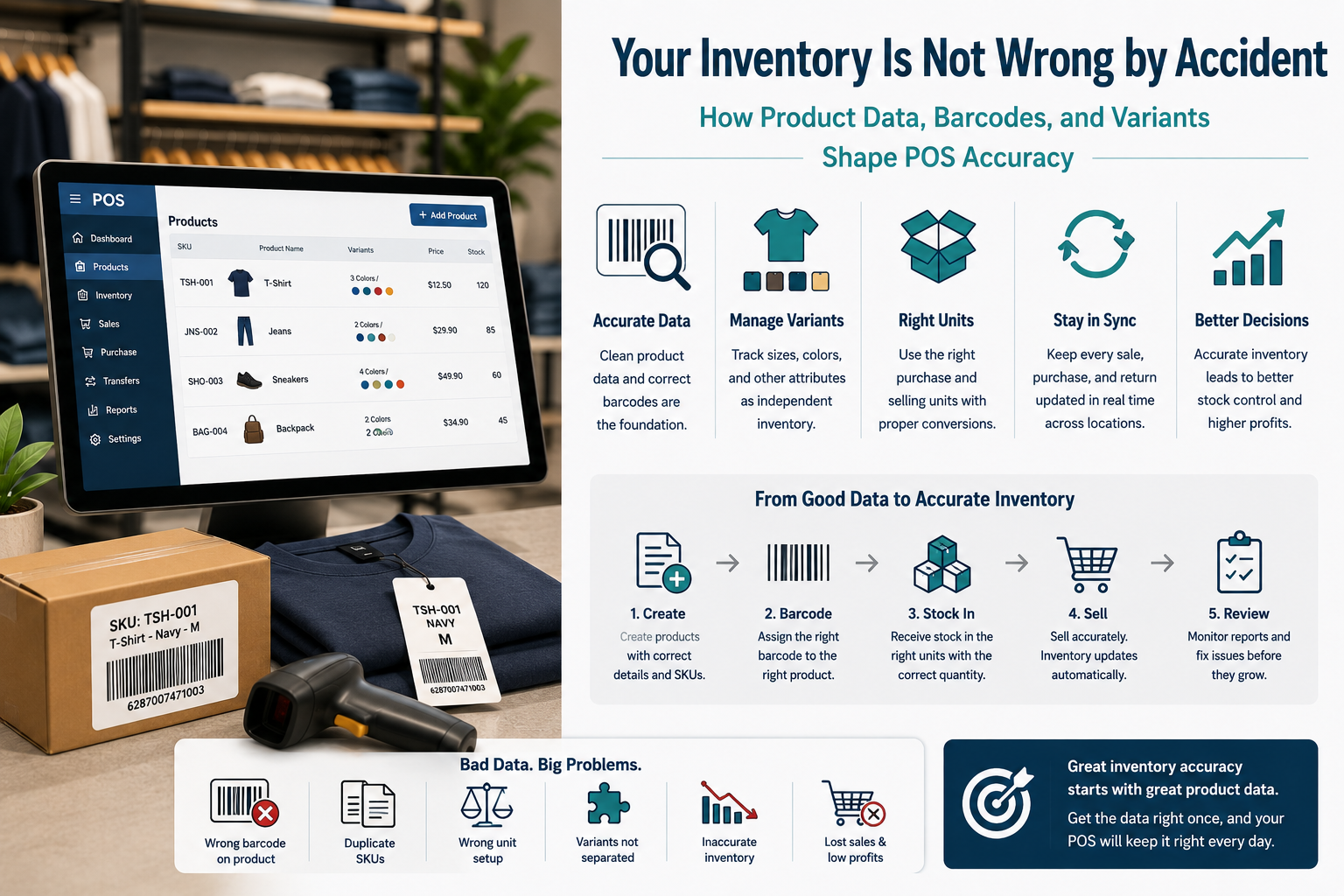
Your Inventory Is Not Wrong by Accident: How Product Data, Barcodes, and Variants Shape POS Accuracy

Your Inventory Is Not Wrong by Accident: How Product Data, Barcodes, and Variants Shape POS Accuracy

Inventory problems often begin before a sale happens. Learn how duplicate SKUs, shared barcodes, wrong units, poorly designed variants, pack sizes, and inconsistent product data create stock errors—and how a modern POS can prevent them.

Read article
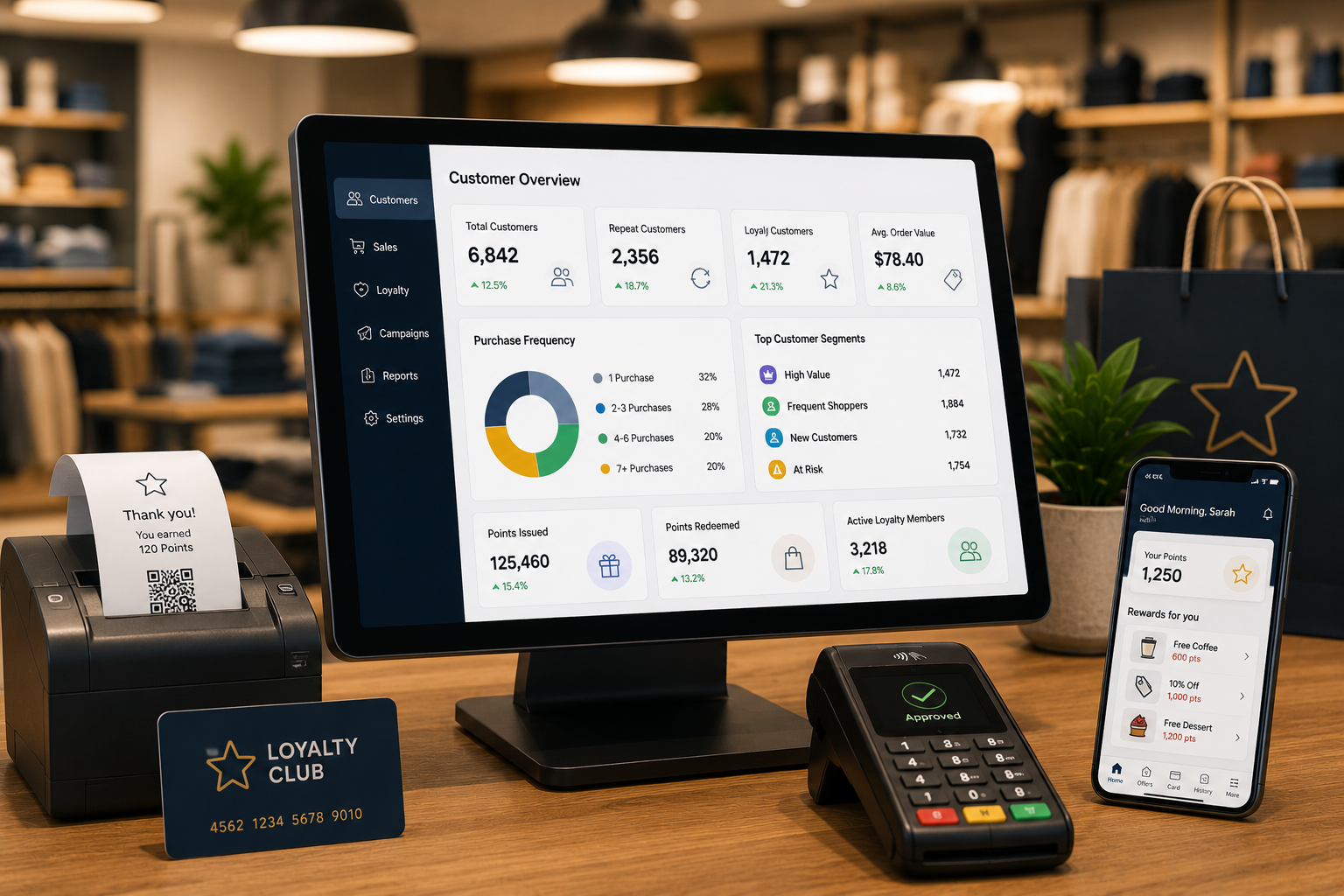
Stop Rewarding Every Sale the Same Way: How POS Data Builds Customer Loyalty Without Destroying Margin

Stop Rewarding Every Sale the Same Way: How POS Data Builds Customer Loyalty Without Destroying Margin

Points and discounts do not automatically create loyalty. Learn how POS customer data, purchase history, visit frequency, product preferences, and relevant rewards can improve retention without training shoppers to wait for promotions.

Read article
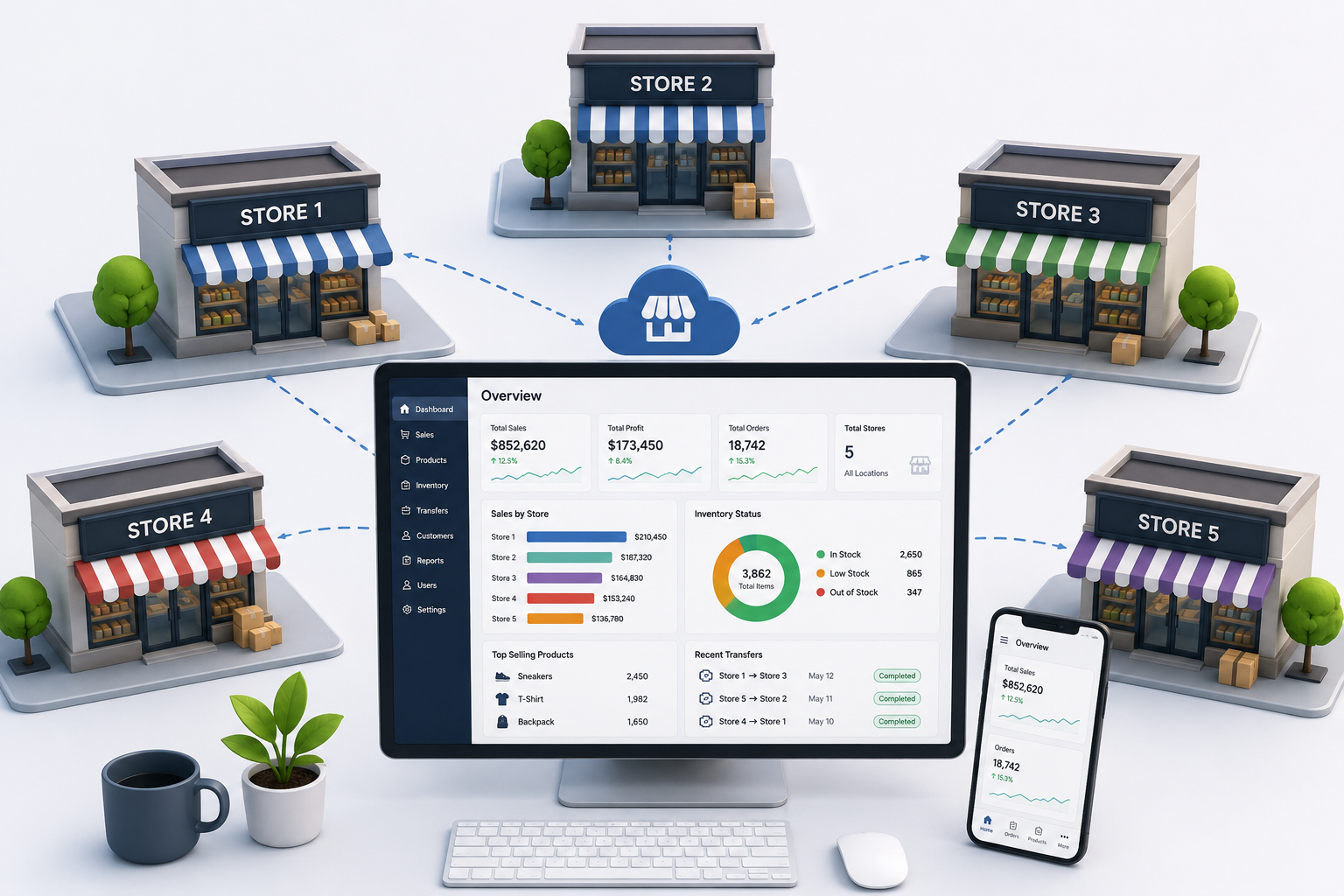
One Brand, Five Stores, Five Different Realities: How a Multi-Location POS Keeps Retail Under Control

One Brand, Five Stores, Five Different Realities: How a Multi-Location POS Keeps Retail Under Control

Opening another branch creates more than another checkout counter. Learn how a multi-location POS should control inventory, pricing, permissions, transfers, reporting, customers, and daily operations without turning every store into a separate business.

Read article
A New POS Can Fail Before the First Sale: The Real Work Behind a Smooth Retail Rollout

A New POS Can Fail Before the First Sale: The Real Work Behind a Smooth Retail Rollout

Buying POS software is the easy part. This guide explains how retailers should clean data, map workflows, train staff, test hardware, migrate products, plan go-live, and measure adoption without disrupting daily sales.

Read article
PreviousPage 3 / 5Next