Blog

Dashierly articles

Practical content to improve sales, store operations, and customer experience.

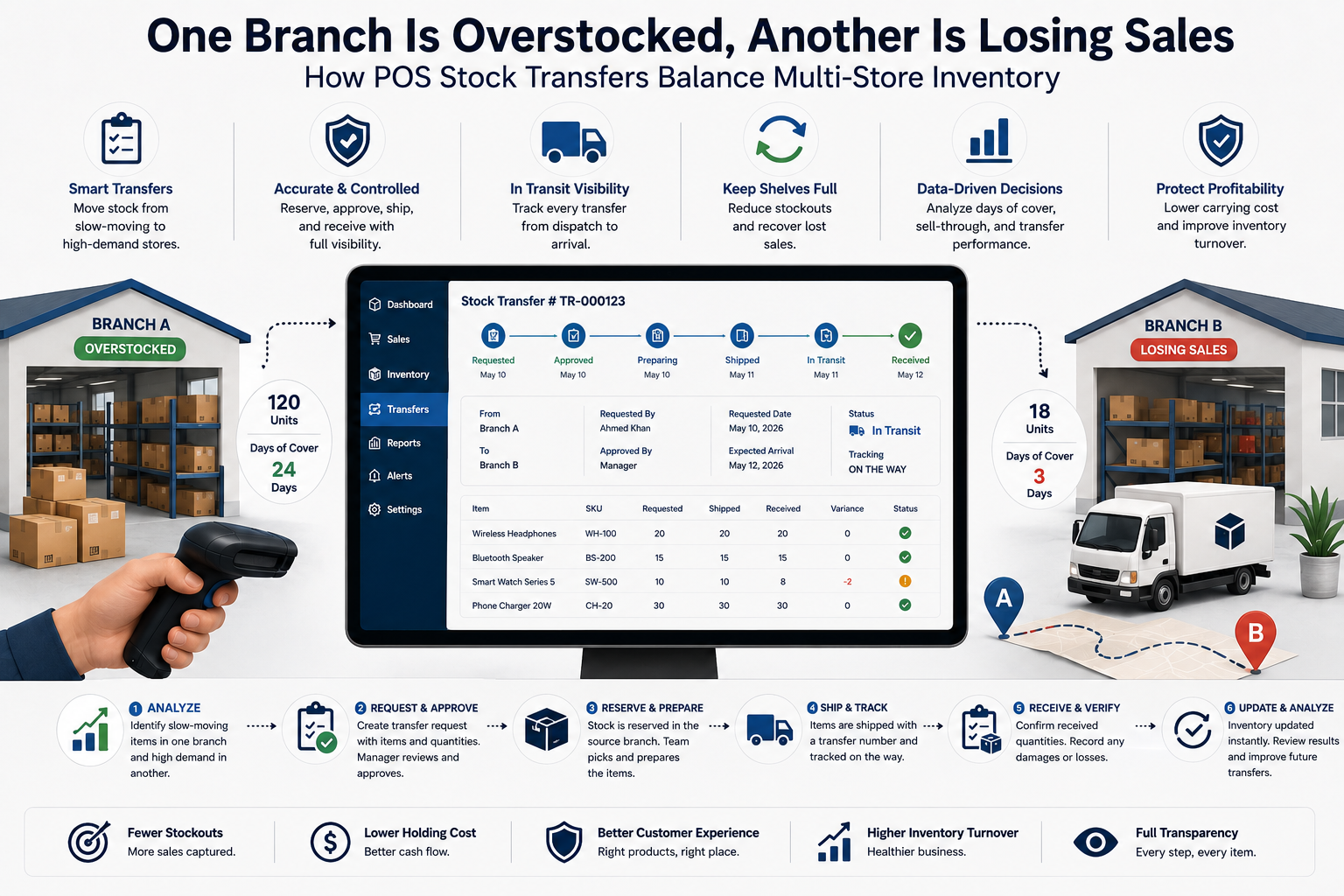
One Branch Is Overstocked, Another Is Losing Sales: How POS Stock Transfers Balance Multi-Store Inventory

One Branch Is Overstocked, Another Is Losing Sales: How POS Stock Transfers Balance Multi-Store Inventory

Moving stock between branches looks simple, but poor transfer control creates phantom inventory, duplicate availability, missing cartons, delayed receiving, and unreliable reports. Learn how a modern POS should request, ship, receive, reconcile, and analyze inter-branch transfers.

Read article
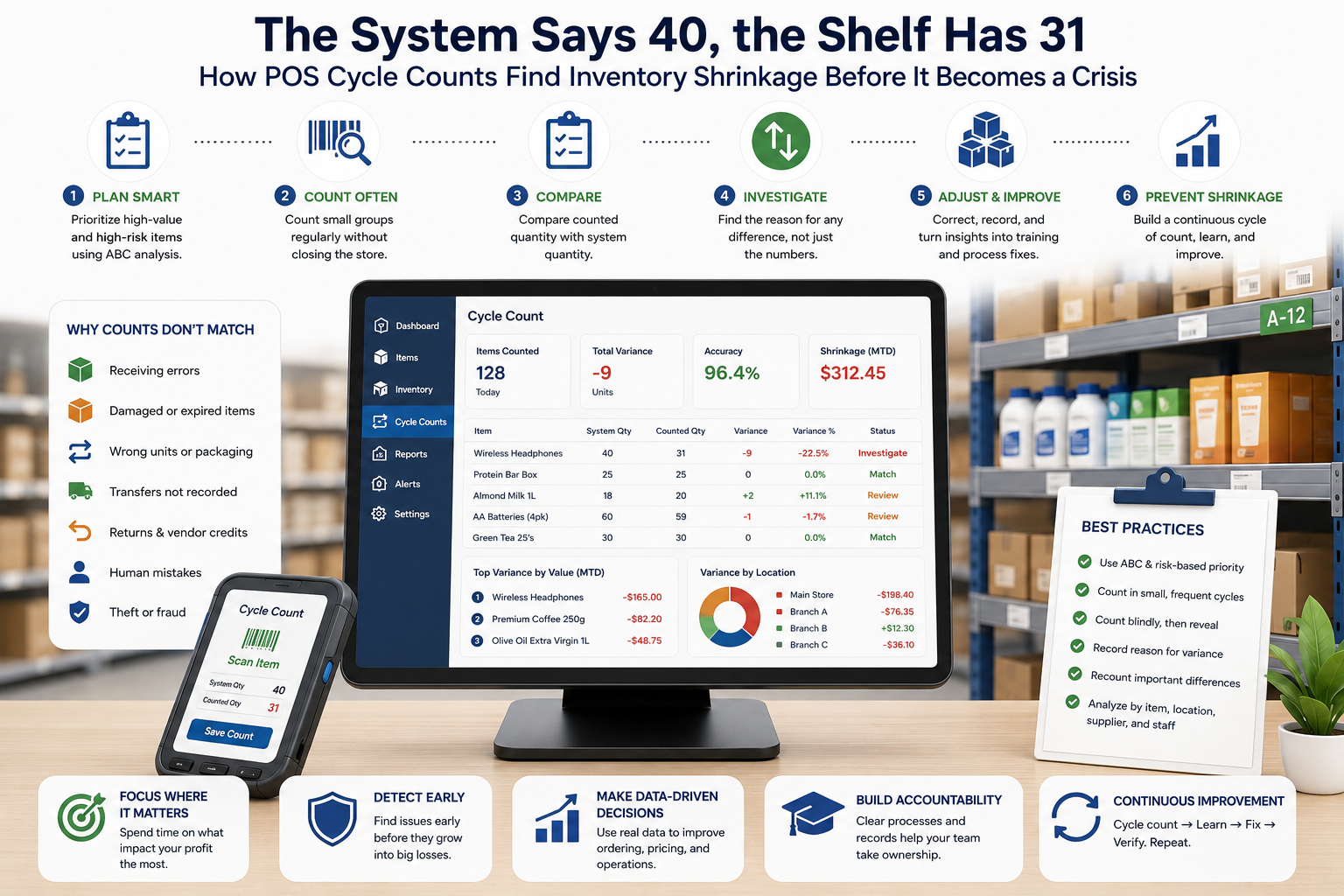
The System Says 40, the Shelf Has 31: How POS Cycle Counts Find Inventory Shrinkage Before It Becomes a Crisis

The System Says 40, the Shelf Has 31: How POS Cycle Counts Find Inventory Shrinkage Before It Becomes a Crisis

Inventory discrepancies rarely appear all at once. They build through receiving mistakes, unrecorded damage, wrong units, theft, transfers, returns, and stock adjustments. Learn how POS cycle counts, variance analysis, and root-cause workflows restore accuracy without closing the entire store.

Read article
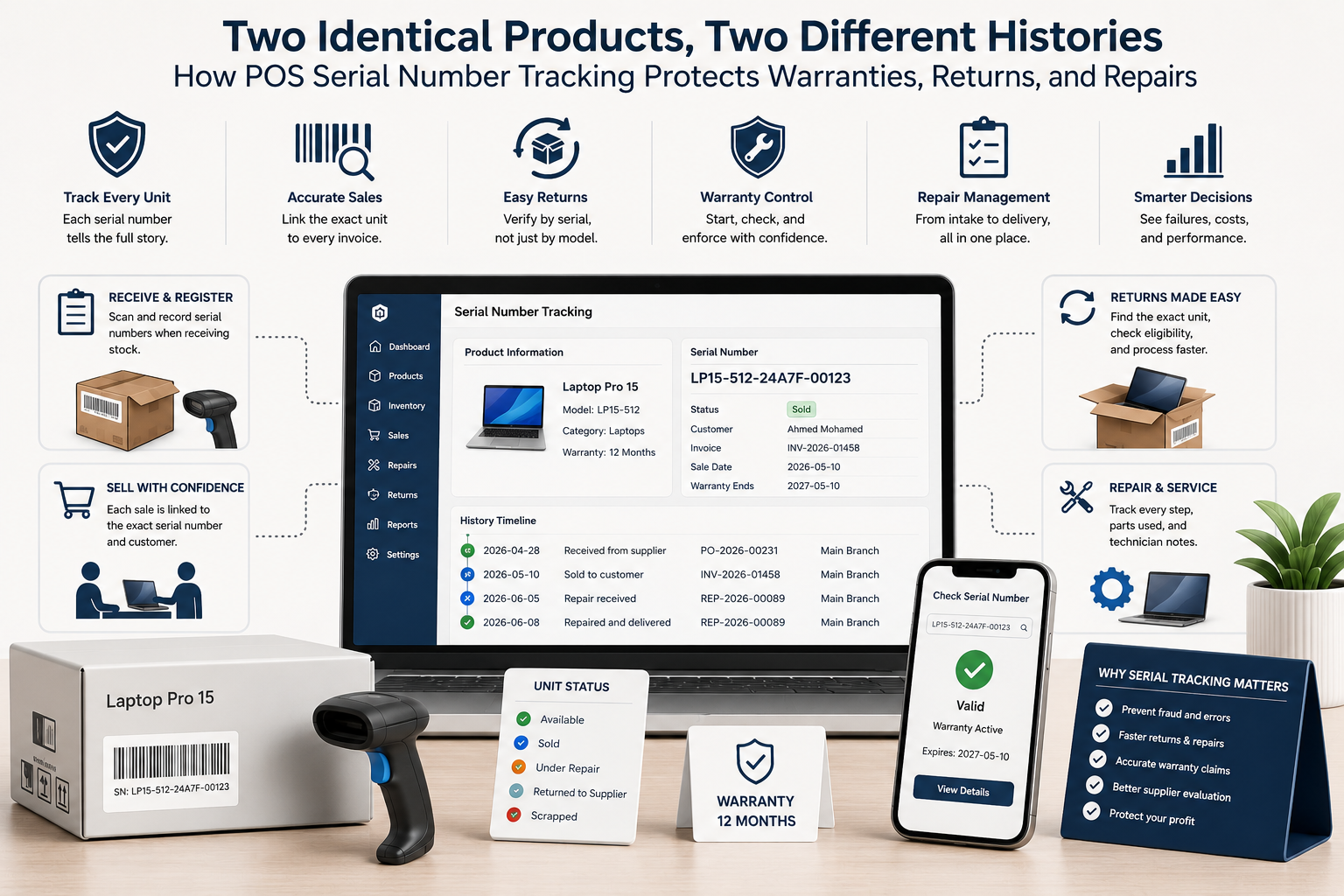
Two Identical Products, Two Different Histories: How POS Serial Number Tracking Protects Warranties, Returns, and Repairs

Two Identical Products, Two Different Histories: How POS Serial Number Tracking Protects Warranties, Returns, and Repairs

Quantity tracking tells you how many units exist. Serial tracking tells you exactly which unit was received, sold, returned, repaired, replaced, or still covered by warranty. Learn how a modern POS should manage serialized inventory from supplier receipt to after-sales service.

Read article
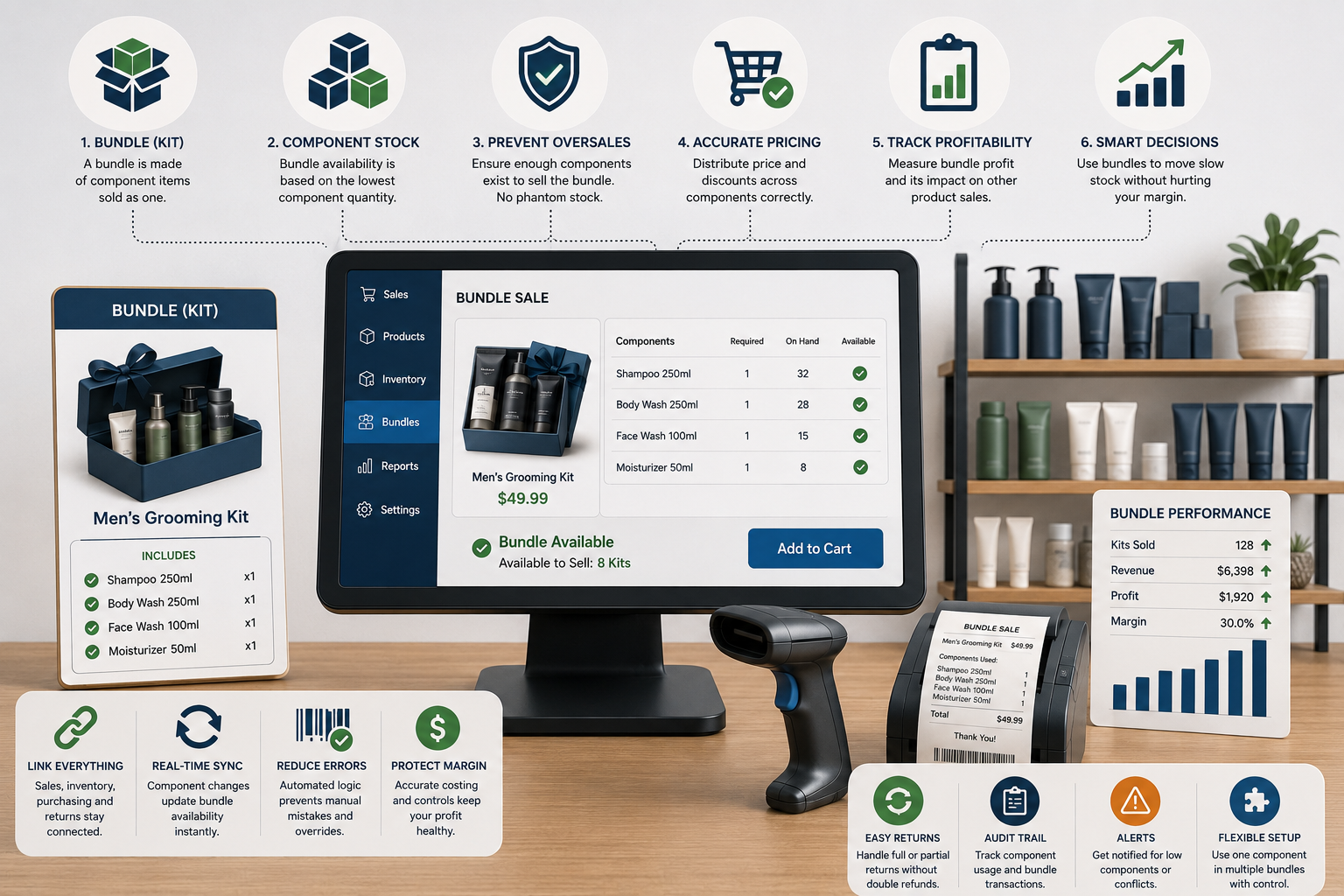
The Bundle Sold Out, but Every Item Is Still on the Shelf: How POS Systems Should Manage Kits, Multipacks, and Component Stock

The Bundle Sold Out, but Every Item Is Still on the Shelf: How POS Systems Should Manage Kits, Multipacks, and Component Stock

Bundles can raise basket value, simplify buying, and move slow stock—but poor setup creates phantom availability, overselling, wrong costs, and confusing returns. Learn how POS systems should manage components, pricing, inventory, purchasing, and profitability.

Read article
Who Changed the Price? How POS Permissions and Audit Trails Protect Retail Operations

Who Changed the Price? How POS Permissions and Audit Trails Protect Retail Operations

Retail losses and operational mistakes often begin with shared logins, excessive permissions, and actions that cannot be traced. Learn how role-based access, personal accounts, approvals, and POS audit logs create accountability without slowing the store.

Read article
The Website Says “In Stock,” but the Shelf Is Empty: How POS Systems Prevent Omnichannel Inventory Failures

The Website Says “In Stock,” but the Shelf Is Empty: How POS Systems Prevent Omnichannel Inventory Failures

Online orders, store sales, pickup reservations, returns, and transfers compete for the same units. Learn how a connected POS protects inventory accuracy, prevents overselling, and keeps click-and-collect promises realistic.

Read article
Your Warehouse Is Full, but the Best Sellers Are Missing: How POS Data Fixes Replenishment and Dead Stock

Your Warehouse Is Full, but the Best Sellers Are Missing: How POS Data Fixes Replenishment and Dead Stock

A full warehouse does not mean healthy inventory. Learn how POS sales velocity, lead time, seasonality, reorder points, supplier performance, transfers, and dead-stock analysis help retailers buy the right products at the right time.

Read article
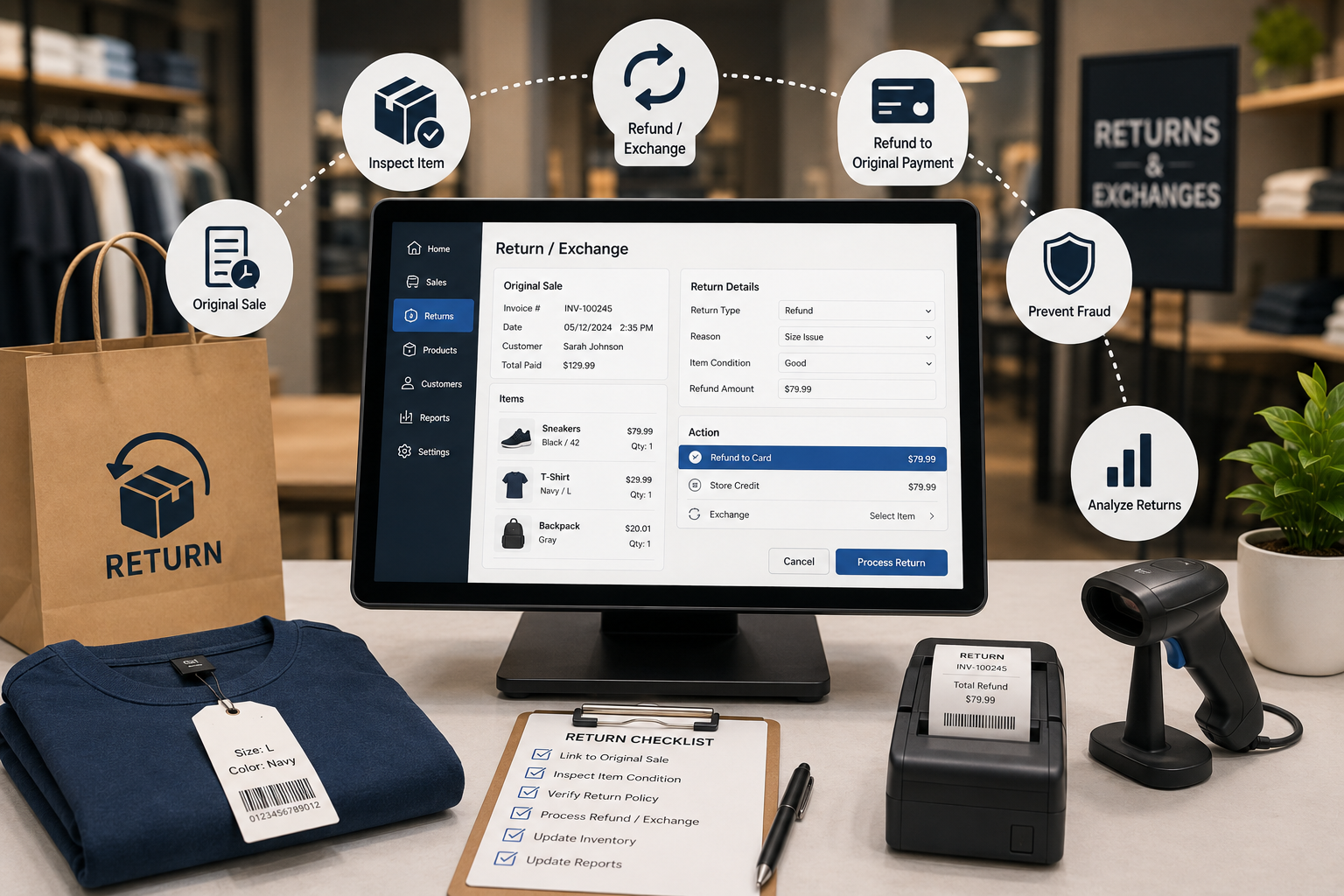
A Return Is Not a Sale in Reverse: How POS Systems Handle Refunds, Exchanges, Restocking, and Return Fraud

A Return Is Not a Sale in Reverse: How POS Systems Handle Refunds, Exchanges, Restocking, and Return Fraud

Returns affect cash, margin, inventory, tax, customer trust, and fraud exposure. Learn how a modern POS should connect every refund or exchange to the original sale, inspect product condition, control approvals, and keep stock accurate.

Read article
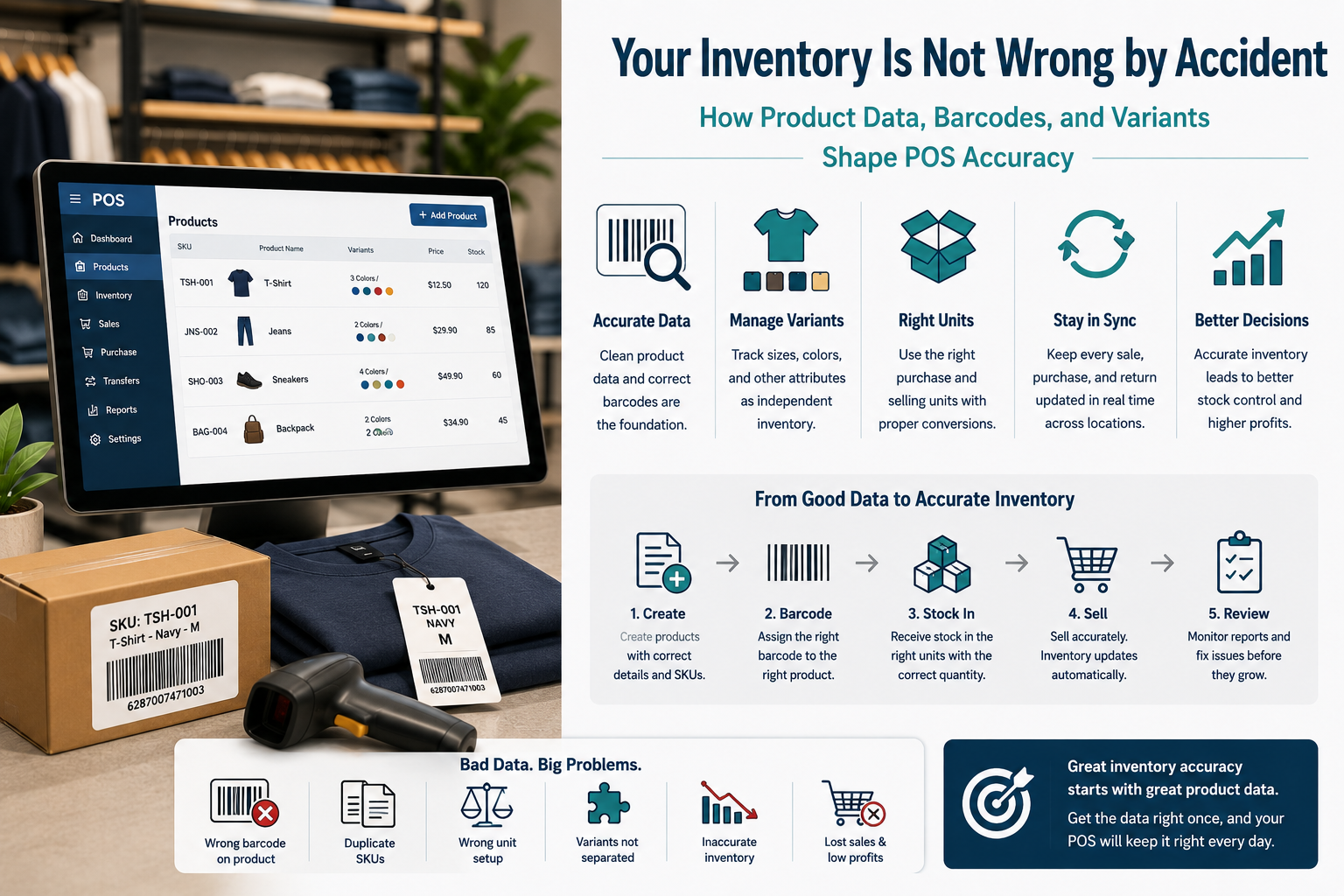
Your Inventory Is Not Wrong by Accident: How Product Data, Barcodes, and Variants Shape POS Accuracy

Your Inventory Is Not Wrong by Accident: How Product Data, Barcodes, and Variants Shape POS Accuracy

Inventory problems often begin before a sale happens. Learn how duplicate SKUs, shared barcodes, wrong units, poorly designed variants, pack sizes, and inconsistent product data create stock errors—and how a modern POS can prevent them.

Read article
PreviousPage 2 / 4Next