
AI-Powered POS Systems in 2026: The Future of Smart Retail Management
Explore the biggest POS trends of 2026, including AI analytics, predictive inventory, mobile checkout, cloud operations, and unified retail data—and learn how Dashierly helps stores build a future-ready foundation.
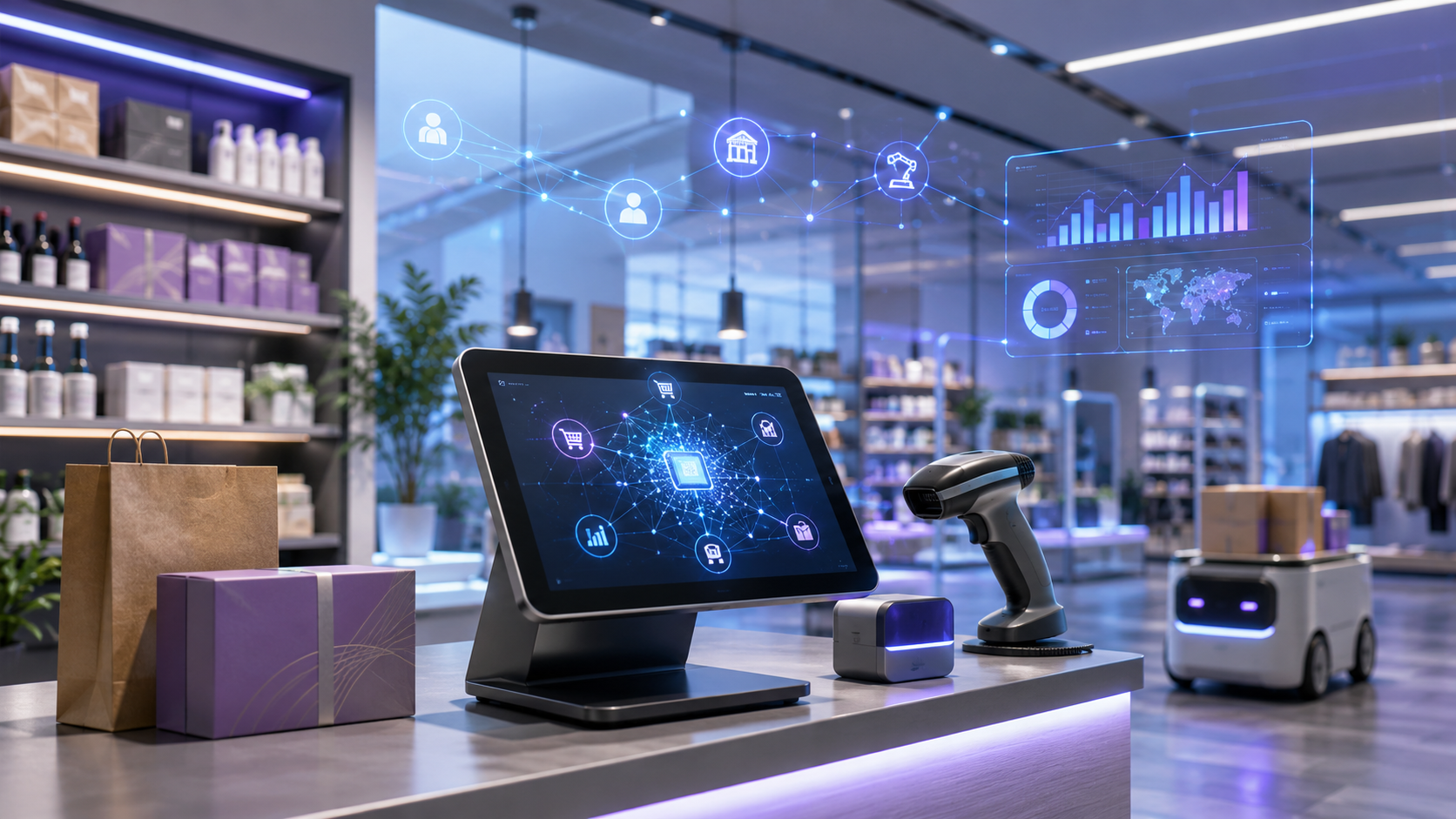
AI-Powered POS Systems in 2026: The Future of Smart Retail Management
Point-of-sale software is entering a new stage in 2026. Retailers no longer ask only whether a system can process a sale or print a receipt. They want a connected platform for checkout, products, inventory, suppliers, customers, expenses, accounting, employees, branches, permissions, notifications, audit history, and reports. Artificial intelligence is accelerating this shift, but every smart feature still depends on accurate operational data. A store cannot forecast demand, detect unusual activity, or automate replenishment when sales and stock records are scattered across spreadsheets and unrelated applications.
Why POS and AI are converging in 2026
Point-of-sale software is entering a new stage in 2026. Retailers no longer ask only whether a system can process a sale or print a receipt. They want a connected platform for checkout, products, inventory, suppliers, customers, expenses, accounting, employees, branches, permissions, notifications, audit history, and reports. Artificial intelligence is accelerating this shift, but every smart feature still depends on accurate operational data. A store cannot forecast demand, detect unusual activity, or automate replenishment when sales and stock records are scattered across spreadsheets and unrelated applications.
Predictive inventory is one of the most practical retail AI use cases. Historical sales, seasonality, promotions, branch differences, and product velocity can help a business reduce stockouts and avoid excess stock that traps cash. Before advanced forecasting can work, the retailer needs reliable stock movements. Dashierly connects barcode sales, supply, receiving, low-stock alerts, and sale returns, creating a structured foundation for better decisions.
Predictive inventory and stock control
Predictive inventory is one of the most practical retail AI use cases. Historical sales, seasonality, promotions, branch differences, and product velocity can help a business reduce stockouts and avoid excess stock that traps cash. Before advanced forecasting can work, the retailer needs reliable stock movements. Dashierly connects barcode sales, supply, receiving, low-stock alerts, and sale returns, creating a structured foundation for better decisions.
Mobile POS is also changing the cost of opening and expanding a store. Android phones and tablets can support selling, product lookup, receiving, and camera-based barcode scanning on supported devices. Dashierly also runs on Windows and macOS, so a business can combine fixed checkout counters with mobile workflows and use devices it already owns.
- POS
- Inventory
- Mobile and cloud operations
- Reports, permissions, and audit
Mobile POS and lower hardware costs
Mobile POS is also changing the cost of opening and expanding a store. Android phones and tablets can support selling, product lookup, receiving, and camera-based barcode scanning on supported devices. Dashierly also runs on Windows and macOS, so a business can combine fixed checkout counters with mobile workflows and use devices it already owns.
Cloud technology matters most when every module uses one source of truth. Dashierly brings POS, inventory, invoices, returns, suppliers, customers, expenses, accounting, HR, branches, dashboards, reports, notifications, roles, and audit logs into one retail workspace. Teams spend less time copying information and managers receive a clearer view across the business.
- POS
- Inventory
- Mobile and cloud operations
- Reports, permissions, and audit
Cloud retail and one source of truth
Cloud technology matters most when every module uses one source of truth. Dashierly brings POS, inventory, invoices, returns, suppliers, customers, expenses, accounting, HR, branches, dashboards, reports, notifications, roles, and audit logs into one retail workspace. Teams spend less time copying information and managers receive a clearer view across the business.
AI analytics should support people rather than hide decisions. Forecasts can be wrong, local events can change demand, and managers may know facts that historical data cannot see. The best model is human-guided automation: software identifies patterns, authorized employees review the underlying invoices, stock movements, suppliers, expenses, and audit records, then decide what action to take.
Dashboards, reports, and smart alerts
Cloud technology matters most when every module uses one source of truth. Dashierly brings POS, inventory, invoices, returns, suppliers, customers, expenses, accounting, HR, branches, dashboards, reports, notifications, roles, and audit logs into one retail workspace. Teams spend less time copying information and managers receive a clearer view across the business.
AI analytics should support people rather than hide decisions. Forecasts can be wrong, local events can change demand, and managers may know facts that historical data cannot see. The best model is human-guided automation: software identifies patterns, authorized employees review the underlying invoices, stock movements, suppliers, expenses, and audit records, then decide what action to take.
- POS
- Inventory
- Mobile and cloud operations
- Reports, permissions, and audit
Roles, permissions, and audit trails
AI analytics should support people rather than hide decisions. Forecasts can be wrong, local events can change demand, and managers may know facts that historical data cannot see. The best model is human-guided automation: software identifies patterns, authorized employees review the underlying invoices, stock movements, suppliers, expenses, and audit records, then decide what action to take.
Dashierly does not claim that every future AI capability is already available. Its current value is the connected retail foundation that intelligent tools require. Plans start from around $2 depending on the selected plan and limits, making modern operations accessible to small stores as well as growing multi-branch businesses.
- POS
- Inventory
- Mobile and cloud operations
- Reports, permissions, and audit
Fast checkout still matters
Mobile POS is also changing the cost of opening and expanding a store. Android phones and tablets can support selling, product lookup, receiving, and camera-based barcode scanning on supported devices. Dashierly also runs on Windows and macOS, so a business can combine fixed checkout counters with mobile workflows and use devices it already owns.
Cloud technology matters most when every module uses one source of truth. Dashierly brings POS, inventory, invoices, returns, suppliers, customers, expenses, accounting, HR, branches, dashboards, reports, notifications, roles, and audit logs into one retail workspace. Teams spend less time copying information and managers receive a clearer view across the business.
Affordable technology for small retailers
Dashierly does not claim that every future AI capability is already available. Its current value is the connected retail foundation that intelligent tools require. Plans start from around $2 depending on the selected plan and limits, making modern operations accessible to small stores as well as growing multi-branch businesses.
Point-of-sale software is entering a new stage in 2026. Retailers no longer ask only whether a system can process a sale or print a receipt. They want a connected platform for checkout, products, inventory, suppliers, customers, expenses, accounting, employees, branches, permissions, notifications, audit history, and reports. Artificial intelligence is accelerating this shift, but every smart feature still depends on accurate operational data. A store cannot forecast demand, detect unusual activity, or automate replenishment when sales and stock records are scattered across spreadsheets and unrelated applications.
Human-guided automation
AI analytics should support people rather than hide decisions. Forecasts can be wrong, local events can change demand, and managers may know facts that historical data cannot see. The best model is human-guided automation: software identifies patterns, authorized employees review the underlying invoices, stock movements, suppliers, expenses, and audit records, then decide what action to take.
Dashierly does not claim that every future AI capability is already available. Its current value is the connected retail foundation that intelligent tools require. Plans start from around $2 depending on the selected plan and limits, making modern operations accessible to small stores as well as growing multi-branch businesses.
How Dashierly fits the trend
Dashierly does not claim that every future AI capability is already available. Its current value is the connected retail foundation that intelligent tools require. Plans start from around $2 depending on the selected plan and limits, making modern operations accessible to small stores as well as growing multi-branch businesses.
Point-of-sale software is entering a new stage in 2026. Retailers no longer ask only whether a system can process a sale or print a receipt. They want a connected platform for checkout, products, inventory, suppliers, customers, expenses, accounting, employees, branches, permissions, notifications, audit history, and reports. Artificial intelligence is accelerating this shift, but every smart feature still depends on accurate operational data. A store cannot forecast demand, detect unusual activity, or automate replenishment when sales and stock records are scattered across spreadsheets and unrelated applications.
Checklist for a future-ready POS
Point-of-sale software is entering a new stage in 2026. Retailers no longer ask only whether a system can process a sale or print a receipt. They want a connected platform for checkout, products, inventory, suppliers, customers, expenses, accounting, employees, branches, permissions, notifications, audit history, and reports. Artificial intelligence is accelerating this shift, but every smart feature still depends on accurate operational data. A store cannot forecast demand, detect unusual activity, or automate replenishment when sales and stock records are scattered across spreadsheets and unrelated applications.
Predictive inventory is one of the most practical retail AI use cases. Historical sales, seasonality, promotions, branch differences, and product velocity can help a business reduce stockouts and avoid excess stock that traps cash. Before advanced forecasting can work, the retailer needs reliable stock movements. Dashierly connects barcode sales, supply, receiving, low-stock alerts, and sale returns, creating a structured foundation for better decisions.
- POS
- Inventory
- Mobile and cloud operations
- Reports, permissions, and audit
FAQ
Why POS and AI are converging in 2026?
Point-of-sale software is entering a new stage in 2026. Retailers no longer ask only whether a system can process a sale or print a receipt. They want a connected platform for checkout, products, inventory, suppliers, customers, expenses, accounting, employees, branches, permissions, notifications, audit history, and reports. Artificial intelligence is accelerating this shift, but every smart feature still depends on accurate operational data. A store cannot forecast demand, detect unusual activity, or automate replenishment when sales and stock records are scattered across spreadsheets and unrelated applications.
Dashierly?
Dashierly does not claim that every future AI capability is already available. Its current value is the connected retail foundation that intelligent tools require. Plans start from around $2 depending on the selected plan and limits, making modern operations accessible to small stores as well as growing multi-branch businesses.
Checklist for a future-ready POS
AI analytics should support people rather than hide decisions. Forecasts can be wrong, local events can change demand, and managers may know facts that historical data cannot see. The best model is human-guided automation: software identifies patterns, authorized employees review the underlying invoices, stock movements, suppliers, expenses, and audit records, then decide what action to take. Dashierly does not claim that every future AI capability is already available. Its current value is the connected retail foundation that intelligent tools require. Plans start from around $2 depending on the selected plan and limits, making modern operations accessible to small stores as well as growing multi-branch businesses.
Keep reading
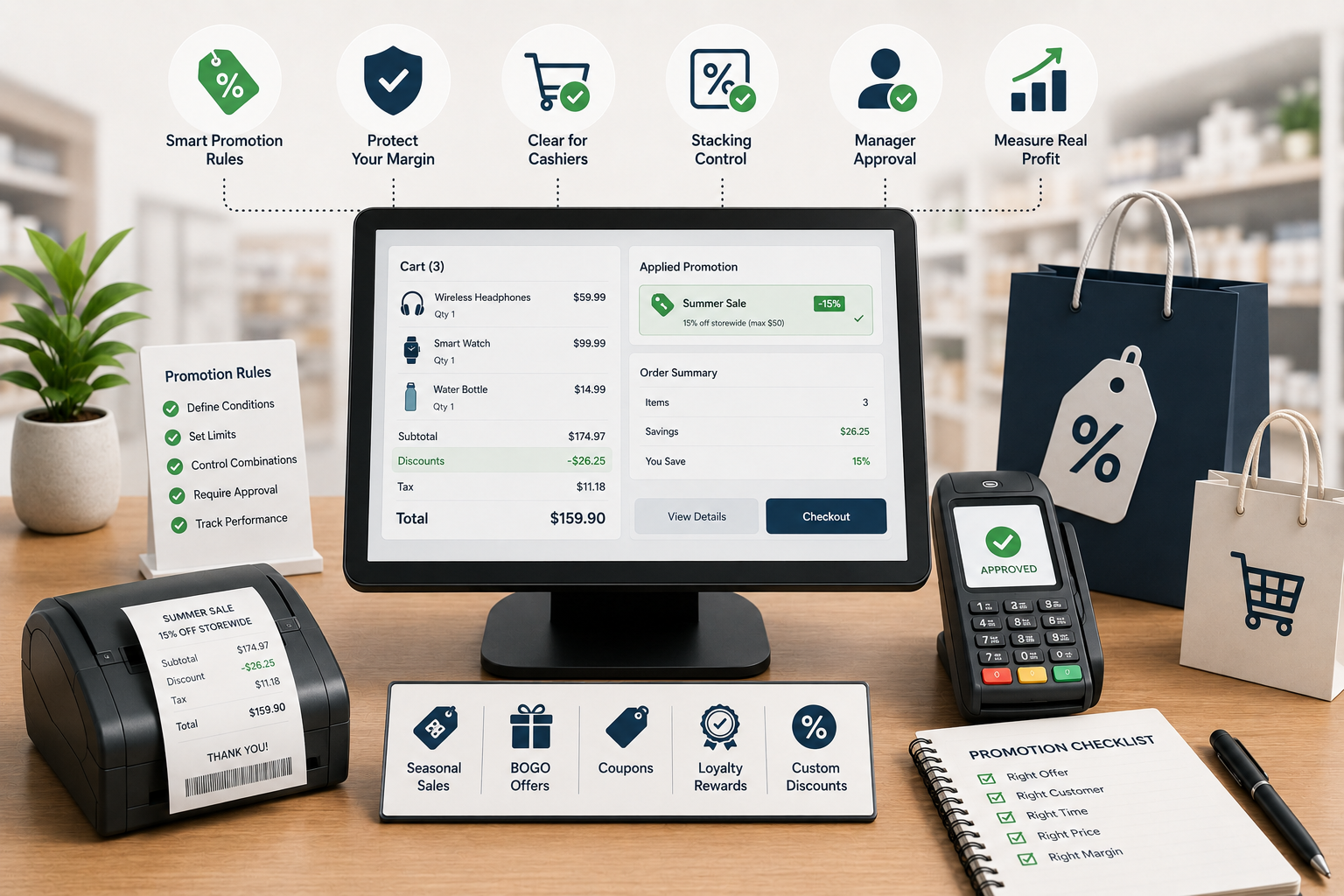
The Discount Worked—But Did the Store Make Money? How POS Promotion Rules Protect Retail Margin
Promotions can increase traffic while quietly damaging margin through discount stacking, wrong eligibility, cashier overrides, returns, and weak reporting. Learn how a modern POS should control offers from setup to post-campaign analysis.
Read article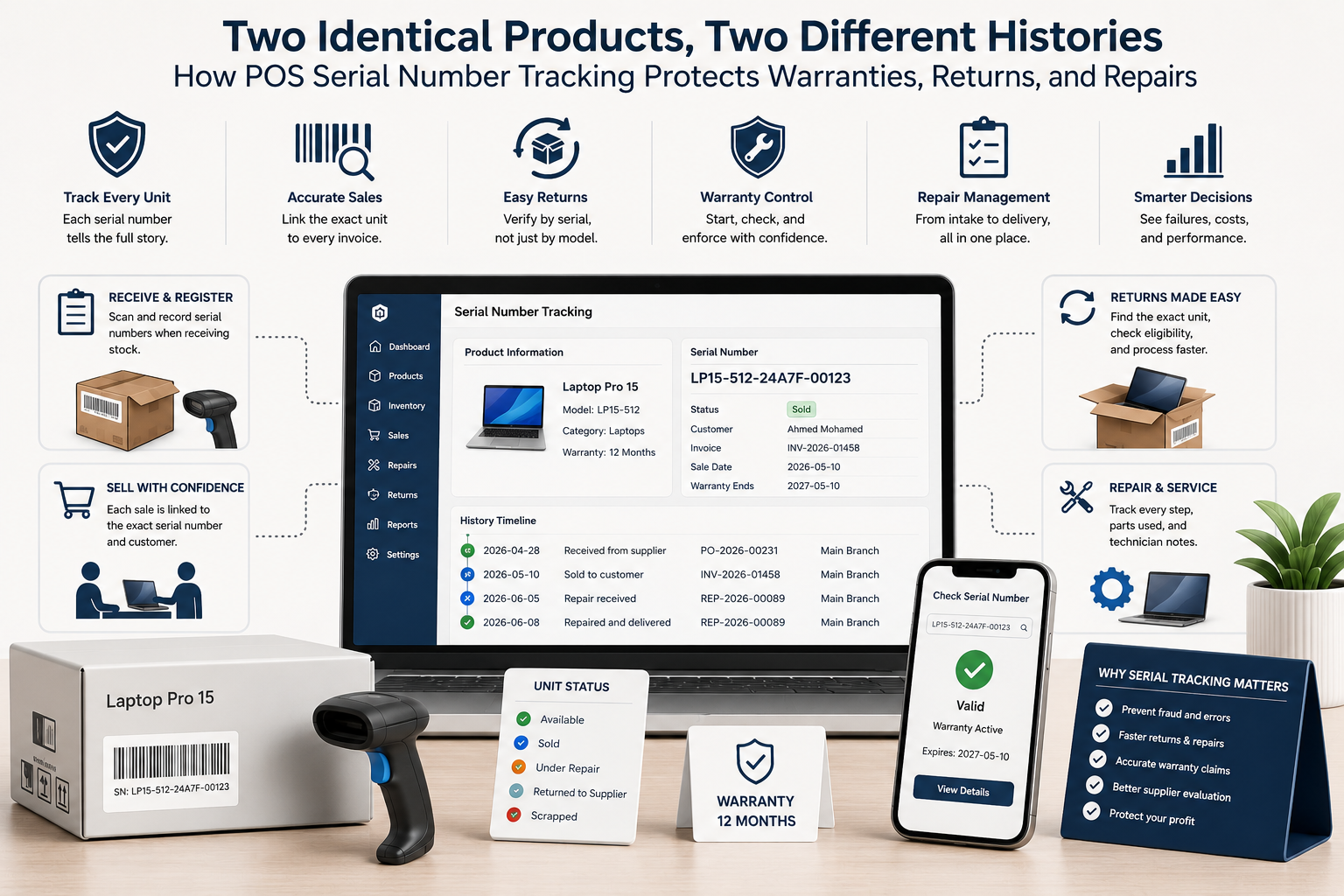
Two Identical Products, Two Different Histories: How POS Serial Number Tracking Protects Warranties, Returns, and Repairs
Quantity tracking tells you how many units exist. Serial tracking tells you exactly which unit was received, sold, returned, repaired, replaced, or still covered by warranty. Learn how a modern POS should manage serialized inventory from supplier receipt to after-sales service.
Read article
The Gift Card Was Sold Months Ago—Why Is It Still Money You Owe? How POS Systems Manage Stored Value
Gift cards and store credit bring cash in early, but they also create balances, redemption obligations, fraud risks, expiry questions, split payments, refunds, and accounting work. Learn how a modern POS should manage stored value from issue to final redemption.
Read article