
The Price on the Shelf Must Match the Price at Checkout: How POS Systems Fix Pricing and Promotion Errors in 2026
A practical guide to connecting POS pricing, promotions, inventory, and electronic shelf labels so retailers reduce checkout disputes, protect margins, and keep customer trust.
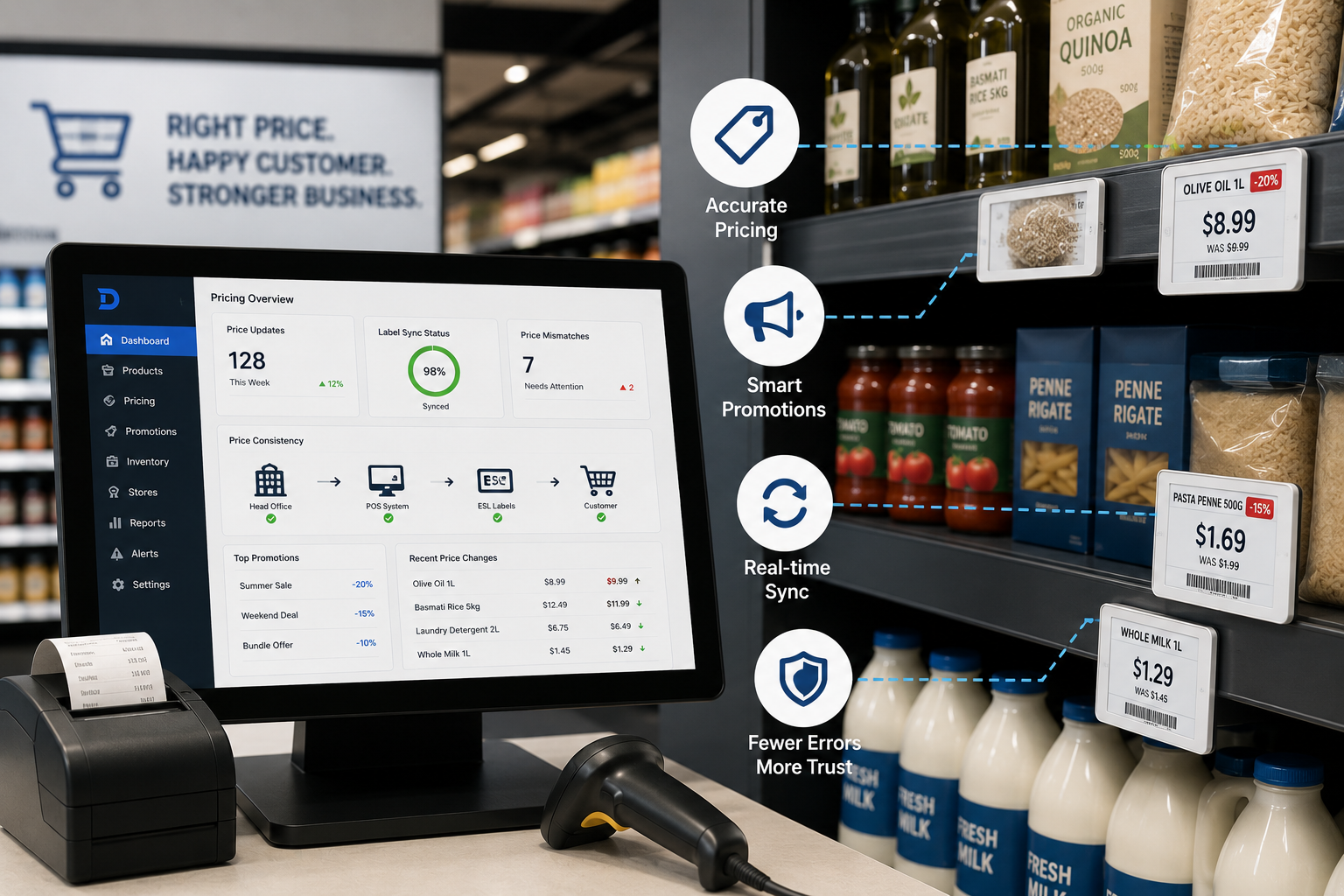
The Price on the Shelf Must Match the Price at Checkout: How POS Systems Fix Pricing and Promotion Errors in 2026
A practical guide to connecting POS pricing, promotions, inventory, and electronic shelf labels so retailers reduce checkout disputes, protect margins, and keep customer trust.
The Argument at Checkout Starts Long Before the Customer Reaches the Till
A customer picks up a product marked at one price, reaches the counter, and sees another amount on the screen. The difference may be small, but the damage is not. The cashier must stop the line, call a supervisor, check the shelf, and decide which price to honor. The customer leaves wondering whether the mistake was accidental.
Most price disputes are not created by the cashier. They begin with a promotion that expired in one system but not another, a paper label that was not replaced, a branch that received the update late, a product mapped to the wrong variant, or a discount rule that was never tested with real baskets.
One Source of Truth for Every Price
A retailer needs one approved price record that feeds the POS, product catalogue, promotion engine, website, mobile app, branch systems, and shelf labels. If every channel keeps a separate copy, synchronization becomes a daily gamble.
The record should include regular price, cost, tax treatment, branch scope, start and end time, promotion priority, eligible customer group, bundle conditions, and approval history. A price is not merely a number; it is a rule with a lifecycle.
Promotions Fail When Pricing and Inventory Work Separately
A promotion can be mathematically correct and operationally disastrous. The product may be unavailable, the discount may apply to the wrong size, the supplier funding may not be recorded, or two offers may combine and erase the margin.
Before launch, the POS should simulate example baskets, confirm stock by branch, validate start and end times, check conflicts with other offers, and show the expected margin. Promotion management is not finished when the banner is designed. It is finished when the right customer receives the right price on an available product.
Electronic Shelf Labels Solve Execution—Not Bad Data
Electronic shelf labels remove printing and replacement delays. They can update thousands of shelf prices from a central source, improve shelf-to-checkout consistency, display unit prices, highlight promotions, and help staff locate products.
But an electronic label can publish the wrong price faster than paper if the master data, product mapping, approval flow, or network status is wrong. Retailers need device health monitoring, failed-update reports, location mapping, battery plans, and a clear fallback process.
Dynamic Pricing Needs Rules, Transparency, and Human Judgment
Dynamic pricing can help retailers reduce waste, clear seasonal inventory, respond to supplier cost changes, or lower prices during quiet periods. It can also create distrust when customers believe prices change unpredictably or personally.
Use boundaries: approved price floors and ceilings, limited change frequency, clear reasons, no customer-specific shelf price, complete audit history, and human review for sensitive categories. Fast technology should not remove accountability.
A Practical Price-Control Routine for Growing Retailers
Create a daily exception report: shelf-label updates that failed, products with multiple active prices, expired promotions still selling, discounts below margin rules, and branches that have not acknowledged an update.
Review price changes before peak hours. Test a basket in each promotion type. Give cashiers a fast way to report mismatches without improvising. Track mismatch rate, overrides, customer complaints, failed label updates, promotion margin, and time required to correct errors.
Dashierly or any POS should be evaluated by how well it connects product data, prices, promotions, stock, branches, roles, notifications, and audit history. The goal is not to change prices faster. It is to make every price accurate, explainable, and trusted.
Price accuracy is a customer-service metric, not only an IT metric. A technically correct database means little if the shelf, app, receipt, and cashier screen disagree.
Every manual price override should capture a reason. Over time, the reasons reveal whether the problem is labeling, training, promotion design, product mapping, or delayed synchronization.
Promotion priority needs explicit rules. Decide whether a coupon can combine with a bundle, whether loyalty discounts stack, and which offer wins when two rules target the same line.
Unit pricing matters in categories where package sizes differ. Showing the price per kilogram, litre, or item helps customers compare value and reduces misleading promotion claims.
Do not schedule large price updates immediately before peak trading. Leave enough time for validation, label synchronization, and a targeted walk of high-risk aisles.
Trust grows when pricing is predictable and explainable. Retailers may change prices, but customers should not feel that the store is experimenting on them.
Price accuracy is a customer-service metric, not only an IT metric. A technically correct database means little if the shelf, app, receipt, and cashier screen disagree.
Every manual price override should capture a reason. Over time, the reasons reveal whether the problem is labeling, training, promotion design, product mapping, or delayed synchronization.
Promotion priority needs explicit rules. Decide whether a coupon can combine with a bundle, whether loyalty discounts stack, and which offer wins when two rules target the same line.
Unit pricing matters in categories where package sizes differ. Showing the price per kilogram, litre, or item helps customers compare value and reduces misleading promotion claims.
Do not schedule large price updates immediately before peak trading. Leave enough time for validation, label synchronization, and a targeted walk of high-risk aisles.
Trust grows when pricing is predictable and explainable. Retailers may change prices, but customers should not feel that the store is experimenting on them.
Price accuracy is a customer-service metric, not only an IT metric. A technically correct database means little if the shelf, app, receipt, and cashier screen disagree.
Every manual price override should capture a reason. Over time, the reasons reveal whether the problem is labeling, training, promotion design, product mapping, or delayed synchronization.
Promotion priority needs explicit rules. Decide whether a coupon can combine with a bundle, whether loyalty discounts stack, and which offer wins when two rules target the same line.
Keep reading
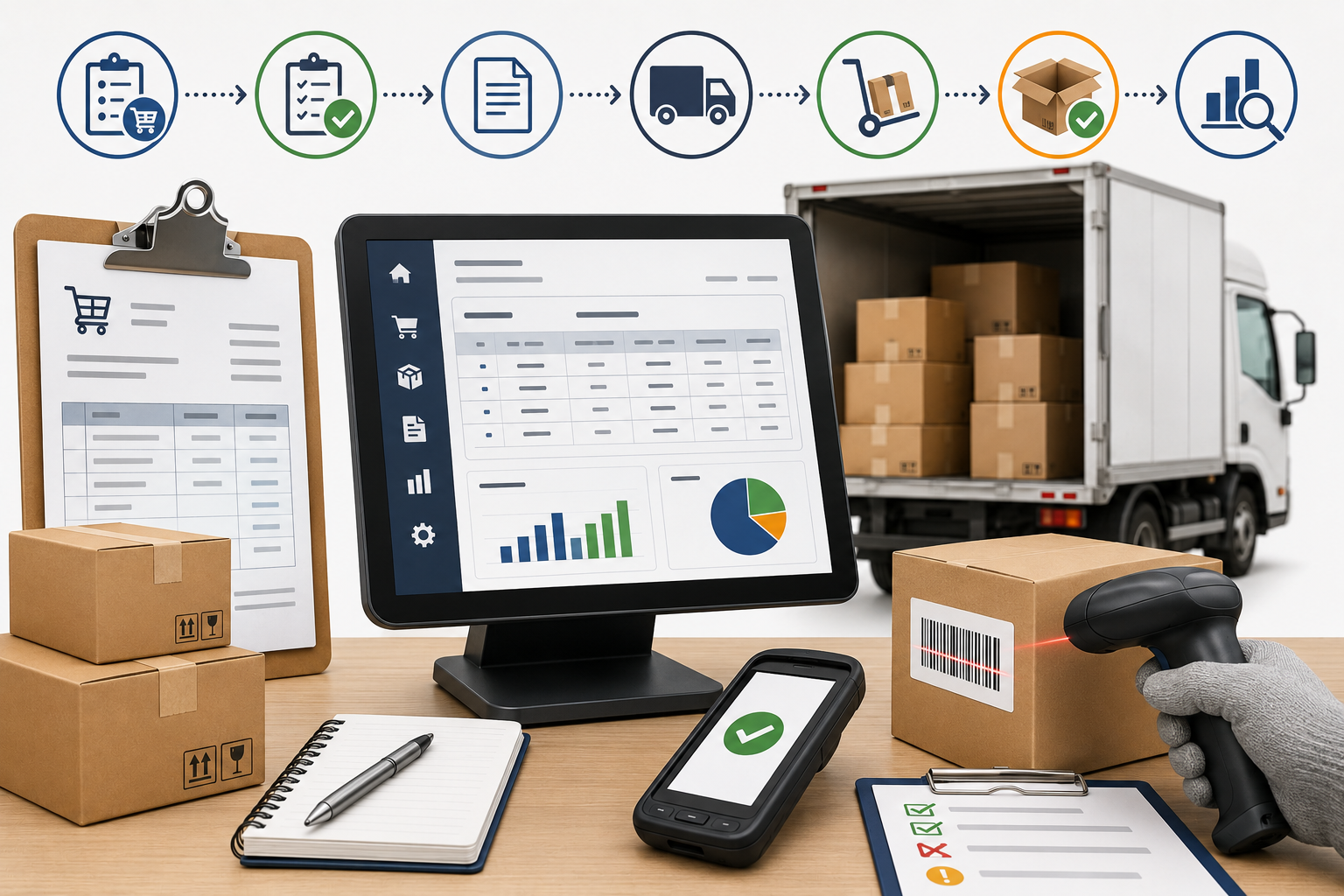
You Ordered 100 Units, but Only 92 Arrived: How POS Purchase Orders Prevent Supplier and Receiving Errors
Purchase orders should connect planned buying with what physically arrives. Learn how a modern POS handles approvals, partial deliveries, damaged goods, substitutions, cost changes, backorders, supplier claims, and inventory updates without hiding discrepancies.
Read article
Your POS Can Recommend the Next Move—But Should It Make the Decision? A Practical Guide to AI in Retail Operations
AI is moving from dashboards into daily retail decisions: forecasting demand, suggesting reorders, detecting anomalies, predicting churn, and summarizing performance. Learn where AI adds value, where human approval still matters, and how to build reliable controls around an intelligent POS.
Read article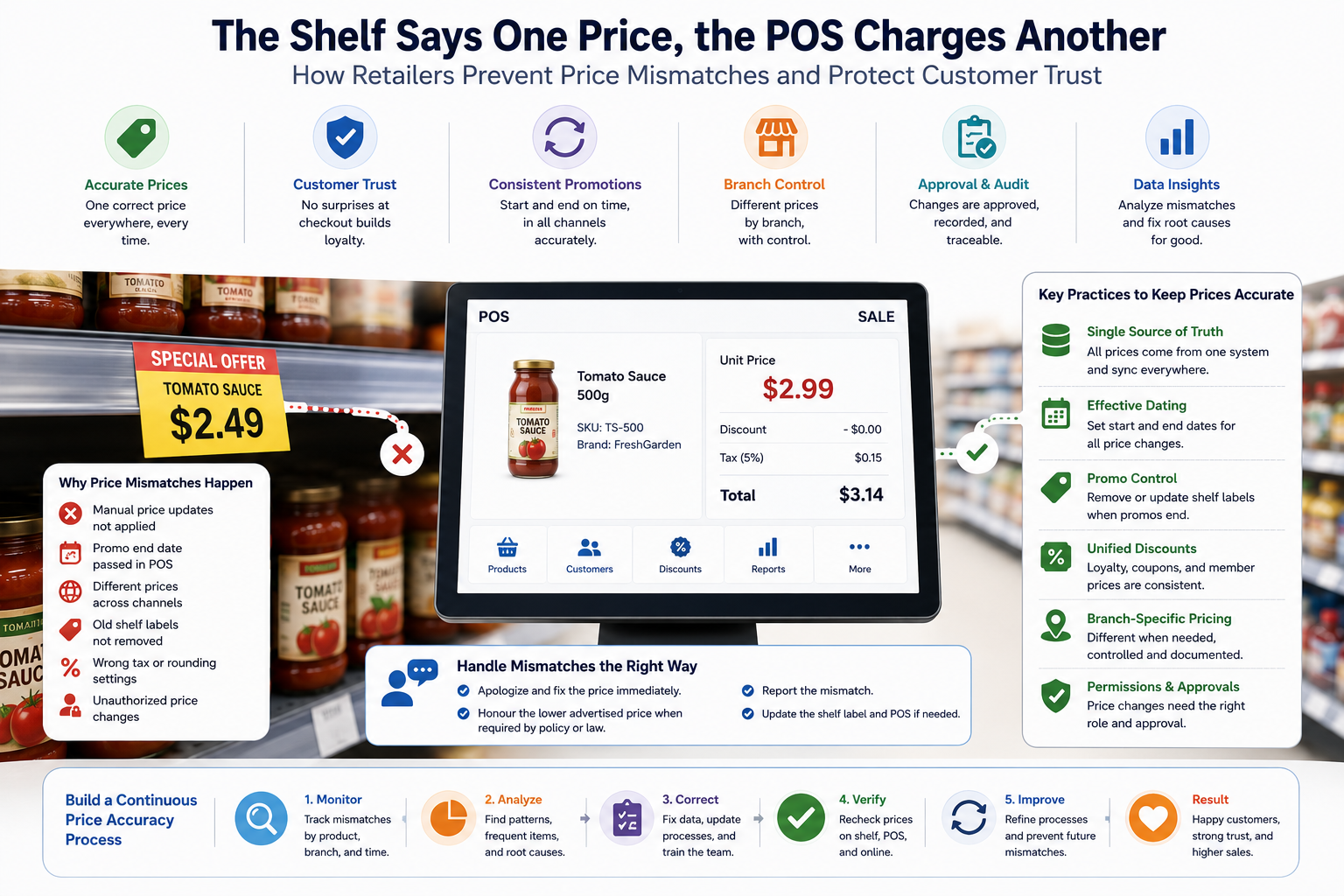
The Shelf Says One Price, the POS Charges Another: How Retailers Prevent Price Mismatches and Protect Customer Trust
Price mismatches are more than an awkward checkout moment. They create refunds, complaints, margin leakage, regulatory risk, and lost trust. Learn how a modern POS should synchronize price lists, shelf labels, promotions, branches, taxes, and approvals.
Read article