
The Day Wi-Fi Dies: Can Your POS Keep Selling in 2026?
A practical guide to offline POS, payment outages, local data, secure synchronization, and retail business continuity. Learn how stores can keep selling when the internet, cloud, or payment terminal fails.

The Day Wi-Fi Dies: Can Your POS Keep Selling in 2026?
A practical guide to offline POS, payment outages, local data, secure synchronization, and retail business continuity. Learn how stores can keep selling when the internet, cloud, or payment terminal fails.
8:42 PM, Saturday: The Screen Stops
The queue is seven customers deep. A cashier scans a basket, but the price never appears. The Wi-Fi icon has disappeared, the payment terminal is searching for a connection, and the cloud dashboard cannot load. At that moment, the quality of a POS system is no longer measured by its charts or interface. It is measured by one question: can the store continue trading safely? Retail technology in 2026 is increasingly cloud-connected, but connection should not be confused with dependency.
Cloud Convenience Created a New Single Point of Failure
Cloud POS systems simplified updates, remote access, centralized reporting, and multi-branch control. Those benefits are real. The hidden risk appears when every scan, price check, payment request, permission check, and invoice depends on a remote service responding immediately. A local router failure, overloaded mobile network, cloud incident, damaged cable, expired certificate, or third-party API problem can turn a modern counter into an expensive decoration.
Offline Does Not Mean Completely Disconnected
A useful offline POS does not recreate the entire cloud on one device. It keeps a carefully selected working set locally: authorized users, product names, barcodes, prices, taxes, essential settings, recent stock context, and a protected queue of unsynchronized transactions. The system must clearly show which information is current, which actions are limited, and which transactions still need to reach the server.
The Hardest Question Is Payment
Cash can usually continue when the network fails, but card and wallet payments depend on terminals, processors, risk rules, and authorization networks. Some payment setups may support limited offline authorization under strict rules; others must decline. Retailers should never assume that 'offline POS' automatically means 'offline card payment.' The payment provider, region, transaction value, card rules, risk tolerance, and compliance requirements determine what is possible.
Design a Degraded Mode, Not a Fake Normal Mode
During an outage, the interface should not pretend everything is normal. A good degraded mode is obvious. It may allow product scanning, cash sales, receipt creation, and transaction queuing while disabling sensitive actions such as large returns, account changes, unusual discounts, or stock transfers. Employees should know the current limits without reading a technical error message. Honesty prevents duplicate sales and false confidence.
Synchronization Is Where Offline Systems Fail
Selling offline is only half of the problem. The difficult part begins when the connection returns. Transactions may have been created on several devices. Product prices may have changed online. The same customer account may have been edited at another branch. Stock may already be negative. A reliable POS needs ordered synchronization, unique transaction identifiers, conflict rules, retry logic, and a visible status for anything that could not merge automatically.
Never Let a Retry Create a Second Sale
Network uncertainty creates a dangerous question: did the payment or invoice succeed before the screen timed out? If a cashier presses the button again, the customer may be charged twice or the stock may be reduced twice. Systems need idempotent operations—requests that can be safely repeated without creating duplicates. Staff also need a simple transaction lookup so they can verify the result before retrying.
Local Data Must Still Be Protected
Offline capability places business data on the device. That creates responsibilities: encryption at rest, protected credentials, automatic session locking, least-privilege roles, secure device storage, and remote revocation when a device is lost. The local transaction queue should not be a readable file that anyone can copy. Resilience without security merely exchanges one business risk for another.
Inventory During an Outage Is an Estimate
If several counters or branches sell while disconnected, no device has the complete live stock picture. The quantity shown locally is a last-known value adjusted by that device's own sales. Retailers should define rules for scarce, expensive, regulated, serialized, or easily oversold products. Some items can continue normally; others may require a manager check or temporary suspension.
Receipts and Customer Expectations
Customers need proof of purchase even when central services are unavailable. The POS should create a locally unique receipt reference, show the payment status accurately, and make later retrieval possible after synchronization. Digital receipt delivery can be queued, but staff should explain that it will arrive when service returns. Clear language is better than promising an email that may not be sent for hours.
The Outage Playbook Matters More Than the Feature Checkbox
A retailer can own a technically capable system and still fail during an outage because employees do not know what to do. Every store needs a short playbook: how to recognize the outage, switch to approved mode, choose permitted payments, record exceptions, communicate with customers, contact support, check service recovery, and reconcile queued transactions. The playbook should be tested during quiet hours.
Questions to Ask Any POS Provider
Ask what works when the internet is unavailable, how long devices can remain offline, which data is stored locally, whether prices and taxes are available, how card payments behave, which actions are blocked, how conflicts are resolved, whether queues are encrypted, how duplicate transactions are prevented, and what managers see after reconnection. Request a live demonstration by physically disconnecting the network.
Where Dashierly Belongs in the Conversation
Dashierly focuses on connecting sales, inventory, invoices, returns, users, branches, reports, notifications, and audit records across retail operations. When evaluating Dashierly or any modern POS, retailers should also examine resilience requirements for their own environment, connectivity quality, payment providers, and acceptable outage procedures. Business continuity is not one button; it is a combination of product design, infrastructure, policies, and training.
A Reliable POS Is Honest About Failure
The strongest retail system is not the one that claims nothing will ever break. It is the one that fails predictably, protects data, explains its limits, keeps safe operations moving, and recovers without duplicates or hidden gaps. In 2026, offline readiness is not an old-fashioned feature. It is part of the trust contract between the store, its employees, and every customer waiting at the counter.
A 30-Minute Resilience Test
Disconnect the store network during a quiet period. Scan products, attempt approved payment types, print or save a receipt, restart the application, reconnect, and verify every queued transaction. Record what employees saw, where they hesitated, and how long reconciliation took.
Build an Outage Matrix
List failures separately: local Wi-Fi, internet provider, cloud API, payment terminal, payment processor, printer, database, and power. For each one, define what still works, what stops, who decides, and how recovery is confirmed.
Reconciliation After Recovery
Managers should compare transaction counts, payment totals, receipt sequences, stock movements, user activity, and synchronization errors. Anything unresolved should remain visible until a responsible person closes it.
The Business Case
Offline readiness protects more than immediate revenue. It reduces panic, avoids duplicated charges, protects customer trust, shortens support calls, and gives management a repeatable response instead of improvisation.
Keep reading
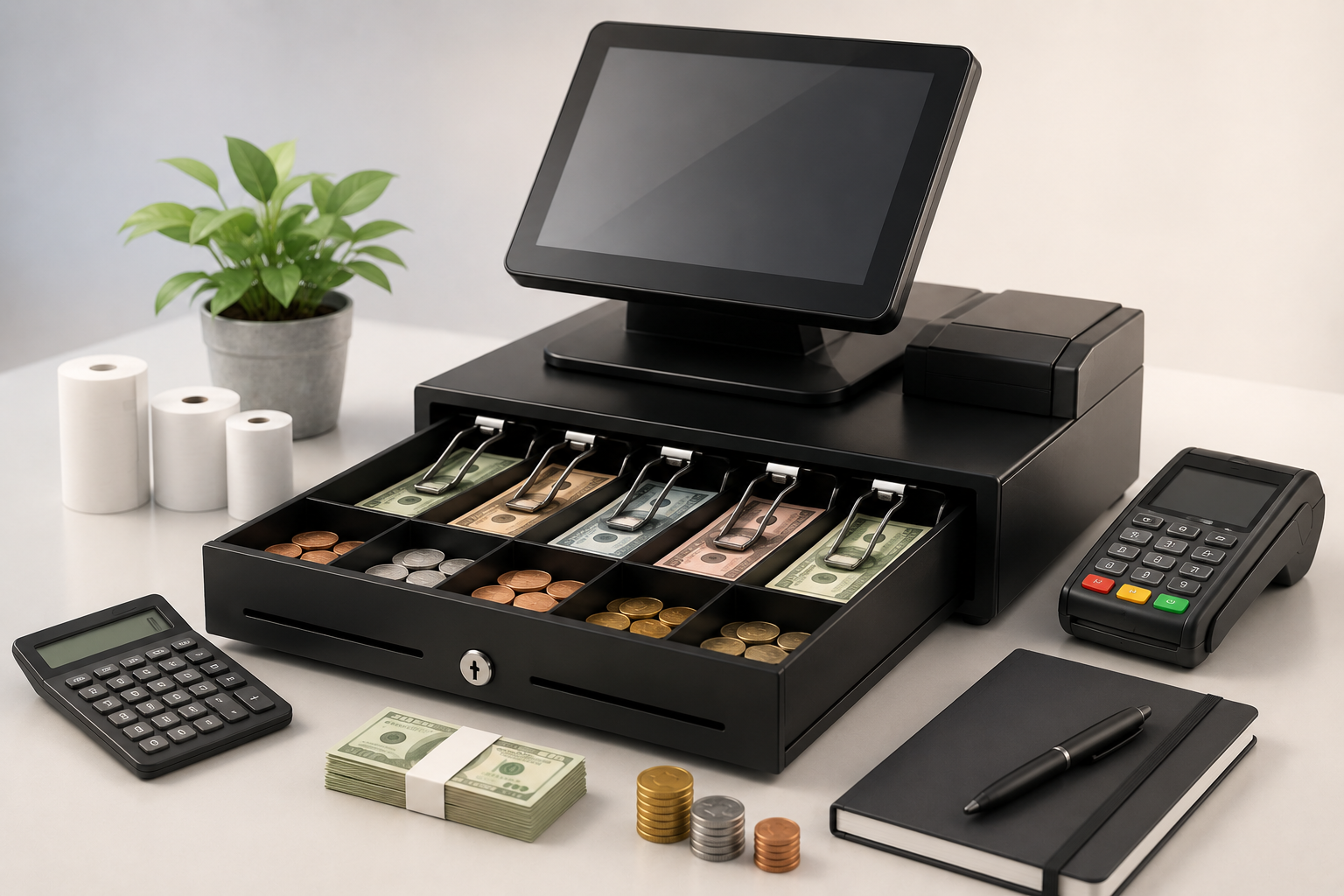
The Drawer Is Short at Closing—What Happened? How POS Shift Reconciliation Finds Cash Errors Before They Repeat
Cash shortages and overages are rarely solved by simply blaming the cashier. A reliable POS should connect opening floats, cash sales, refunds, payouts, drops, tips, drawer access, shift handovers, and closing counts. Learn how to reconcile every shift and turn differences into process improvements.
Read article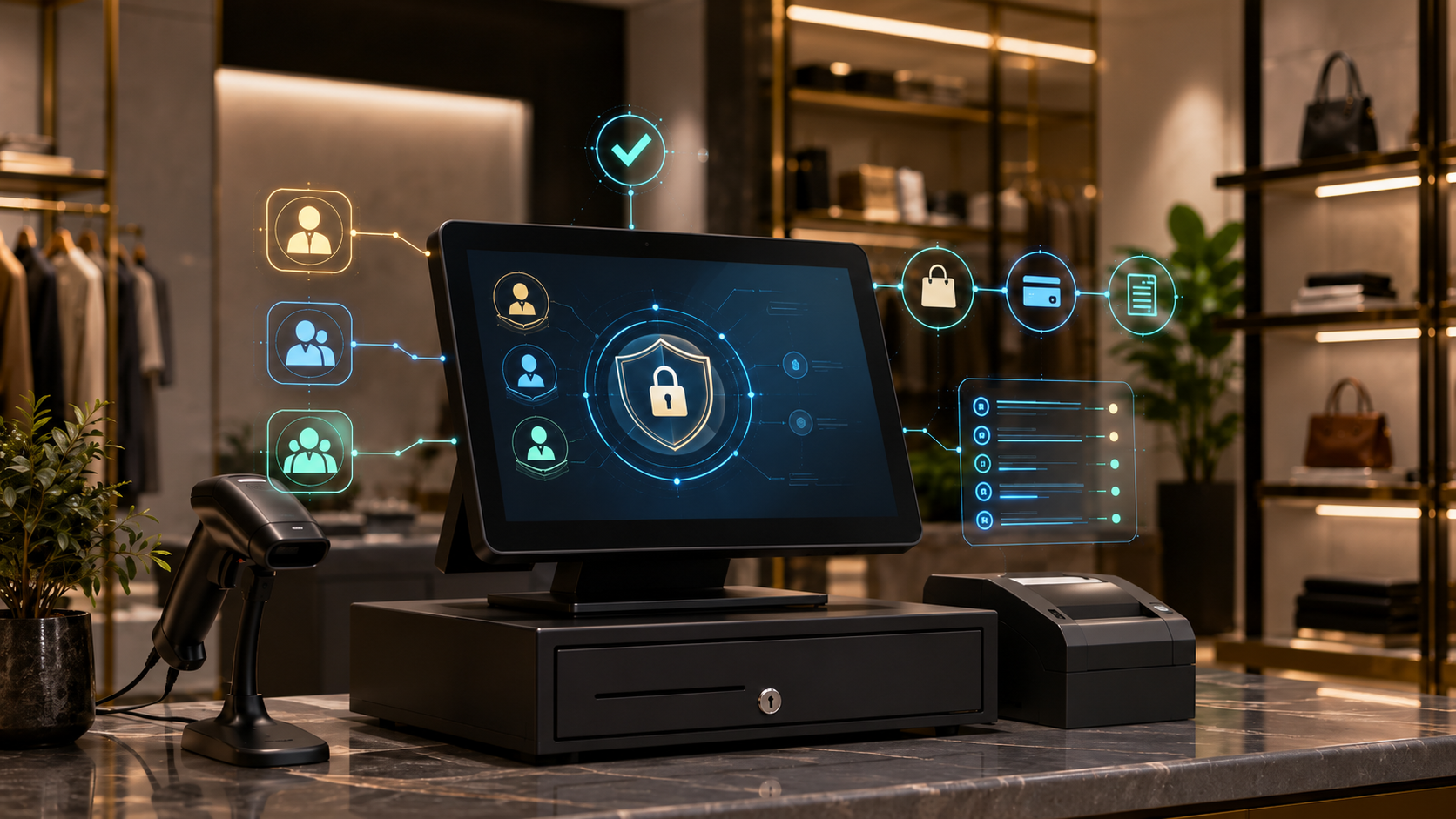
Who Changed the Price? How POS Permissions and Audit Trails Protect Retail Operations
Retail losses and operational mistakes often begin with shared logins, excessive permissions, and actions that cannot be traced. Learn how role-based access, personal accounts, approvals, and POS audit logs create accountability without slowing the store.
Read article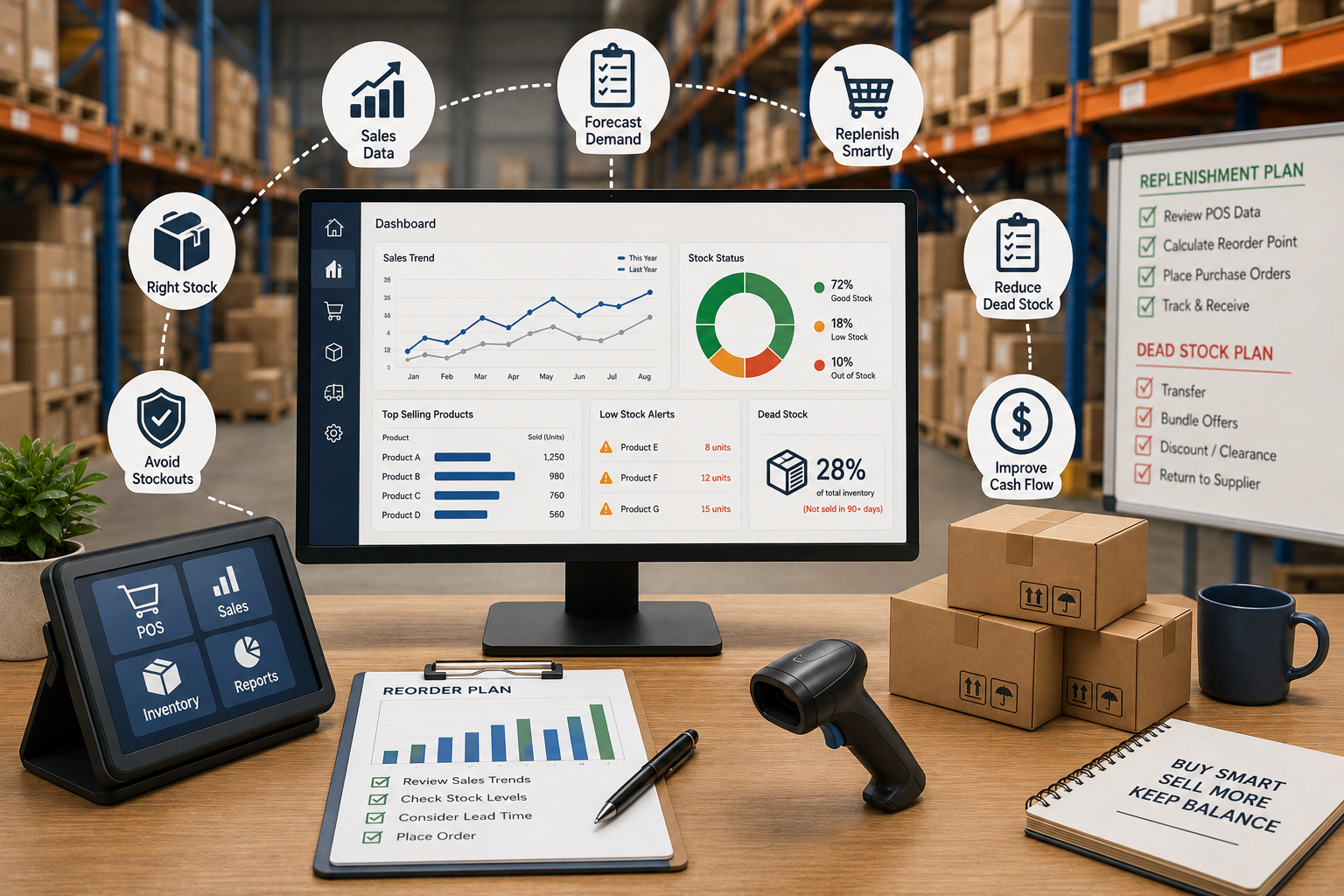
Your Warehouse Is Full, but the Best Sellers Are Missing: How POS Data Fixes Replenishment and Dead Stock
A full warehouse does not mean healthy inventory. Learn how POS sales velocity, lead time, seasonality, reorder points, supplier performance, transfers, and dead-stock analysis help retailers buy the right products at the right time.
Read article