
Khách không có hóa đơn—có nên nhận trả hàng? POS giảm gian lận mà không làm khó khách trung thực
Trả hàng không hóa đơn, đổi hàng, hàng hỏng, quà tặng và đơn online tạo quyết định khó. Tìm hiểu xác minh mua, chính sách công bằng, kiểm soát hoàn tiền và mẫu đáng ngờ.

Khách không có hóa đơn—có nên nhận trả hàng? POS giảm gian lận mà không làm khó khách trung thực
Trả hàng không hóa đơn, đổi hàng, hàng hỏng, quà tặng và đơn online tạo quyết định khó. Tìm hiểu xác minh mua, chính sách công bằng, kiểm soát hoàn tiền và mẫu đáng ngờ.
Trả hàng phải đảo một giao dịch cụ thể
A return should locate the original sale, including item, price, discount, tax, branch, employee, payment method, and date.
Isolated negative transactions weaken tax correction, commission reversal, margin reporting, reconciliation, and fraud analysis.
Hãy xét một tình huống trả hàng thật: A return should locate the original sale, including item, price, discount, tax, branch, employee, payment method, and date. If no sale is verified, policy should clearly define exchange, store credit, lowest recent price, manager review, or refusal. Exceptions when the original card is unavailable should be controlled, approved, and fully logged. Thử có hóa đơn, không hóa đơn, quà tặng, thiếu thẻ gốc, hàng hỏng, lệch serial, đổi hàng và ngoại lệ quản lý.
Hãy xét một tình huống trả hàng thật: Risk signals include repeated no-receipt returns, activity below approval limits, cross-branch behaviour, serial mismatch, and fast purchase-return cycles. Returned inventory needs a condition such as sellable, opened, damaged, defective, expired, incomplete, inspection, supplier return, or write-off. Isolated negative transactions weaken tax correction, commission reversal, margin reporting, reconciliation, and fraud analysis. Thử có hóa đơn, không hóa đơn, quà tặng, thiếu thẻ gốc, hàng hỏng, lệch serial, đổi hàng và ngoại lệ quản lý.
Hãy xét một tình huống trả hàng thật: Refunding to the original payment method reduces cash fraud and keeps processor reconciliation clear. A strong POS applies a consistent policy while protecting inventory, margin, and honest customers. Risk signals should trigger review and verification rather than automatic accusations. Thử có hóa đơn, không hóa đơn, quà tặng, thiếu thẻ gốc, hàng hỏng, lệch serial, đổi hàng và ngoại lệ quản lý.
Không hóa đơn cần xác minh thay thế
A missing paper receipt can sometimes be replaced by card reference, customer account, order number, loyalty history, gift receipt, serial, or online record.
If no sale is verified, policy should clearly define exchange, store credit, lowest recent price, manager review, or refusal.
Hãy xét một tình huống trả hàng thật: If no sale is verified, policy should clearly define exchange, store credit, lowest recent price, manager review, or refusal. An exchange combines a return and a new sale, including price difference, tax, discount logic, and inventory movement. A missing paper receipt can sometimes be replaced by card reference, customer account, order number, loyalty history, gift receipt, serial, or online record. Thử có hóa đơn, không hóa đơn, quà tặng, thiếu thẻ gốc, hàng hỏng, lệch serial, đổi hàng và ngoại lệ quản lý.
Hãy xét một tình huống trả hàng thật: A strong POS applies a consistent policy while protecting inventory, margin, and honest customers. Measure return rate, reason, condition, branch, employee, supplier, resale recovery, processing time, and false alerts. Measure return rate, reason, condition, branch, employee, supplier, resale recovery, processing time, and false alerts. Thử có hóa đơn, không hóa đơn, quà tặng, thiếu thẻ gốc, hàng hỏng, lệch serial, đổi hàng và ngoại lệ quản lý.
Hãy xét một tình huống trả hàng thật: Returned inventory needs a condition such as sellable, opened, damaged, defective, expired, incomplete, inspection, supplier return, or write-off. A missing paper receipt can sometimes be replaced by card reference, customer account, order number, loyalty history, gift receipt, serial, or online record. An exchange combines a return and a new sale, including price difference, tax, discount logic, and inventory movement. Thử có hóa đơn, không hóa đơn, quà tặng, thiếu thẻ gốc, hàng hỏng, lệch serial, đổi hàng và ngoại lệ quản lý.
Hoàn tiền theo phương thức gốc
Refunding to the original payment method reduces cash fraud and keeps processor reconciliation clear.
Exceptions when the original card is unavailable should be controlled, approved, and fully logged.
Hãy xét một tình huống trả hàng thật: Isolated negative transactions weaken tax correction, commission reversal, margin reporting, reconciliation, and fraud analysis. Risk signals include repeated no-receipt returns, activity below approval limits, cross-branch behaviour, serial mismatch, and fast purchase-return cycles. A return should locate the original sale, including item, price, discount, tax, branch, employee, payment method, and date. Thử có hóa đơn, không hóa đơn, quà tặng, thiếu thẻ gốc, hàng hỏng, lệch serial, đổi hàng và ngoại lệ quản lý.
Hãy xét một tình huống trả hàng thật: Returned inventory needs a condition such as sellable, opened, damaged, defective, expired, incomplete, inspection, supplier return, or write-off. A missing paper receipt can sometimes be replaced by card reference, customer account, order number, loyalty history, gift receipt, serial, or online record. An exchange combines a return and a new sale, including price difference, tax, discount logic, and inventory movement. Thử có hóa đơn, không hóa đơn, quà tặng, thiếu thẻ gốc, hàng hỏng, lệch serial, đổi hàng và ngoại lệ quản lý.
Hãy xét một tình huống trả hàng thật: Risk signals should trigger review and verification rather than automatic accusations. A return should locate the original sale, including item, price, discount, tax, branch, employee, payment method, and date. Risk signals include repeated no-receipt returns, activity below approval limits, cross-branch behaviour, serial mismatch, and fast purchase-return cycles. Thử có hóa đơn, không hóa đơn, quà tặng, thiếu thẻ gốc, hàng hỏng, lệch serial, đổi hàng và ngoại lệ quản lý.
Hãy xét một tình huống trả hàng thật: If no sale is verified, policy should clearly define exchange, store credit, lowest recent price, manager review, or refusal. An exchange combines a return and a new sale, including price difference, tax, discount logic, and inventory movement. A missing paper receipt can sometimes be replaced by card reference, customer account, order number, loyalty history, gift receipt, serial, or online record. Thử có hóa đơn, không hóa đơn, quà tặng, thiếu thẻ gốc, hàng hỏng, lệch serial, đổi hàng và ngoại lệ quản lý.
Hãy xét một tình huống trả hàng thật: Exceptions when the original card is unavailable should be controlled, approved, and fully logged. Refunding to the original payment method reduces cash fraud and keeps processor reconciliation clear. Refunding to the original payment method reduces cash fraud and keeps processor reconciliation clear. Thử có hóa đơn, không hóa đơn, quà tặng, thiếu thẻ gốc, hàng hỏng, lệch serial, đổi hàng và ngoại lệ quản lý.
Đổi hàng phải giữ lịch sử giá, thuế và tồn
An exchange combines a return and a new sale, including price difference, tax, discount logic, and inventory movement.
Returned inventory needs a condition such as sellable, opened, damaged, defective, expired, incomplete, inspection, supplier return, or write-off.
Hãy xét một tình huống trả hàng thật: Refunding to the original payment method reduces cash fraud and keeps processor reconciliation clear. A strong POS applies a consistent policy while protecting inventory, margin, and honest customers. Risk signals should trigger review and verification rather than automatic accusations. Thử có hóa đơn, không hóa đơn, quà tặng, thiếu thẻ gốc, hàng hỏng, lệch serial, đổi hàng và ngoại lệ quản lý.
Hãy xét một tình huống trả hàng thật: A return should locate the original sale, including item, price, discount, tax, branch, employee, payment method, and date. If no sale is verified, policy should clearly define exchange, store credit, lowest recent price, manager review, or refusal. Exceptions when the original card is unavailable should be controlled, approved, and fully logged. Thử có hóa đơn, không hóa đơn, quà tặng, thiếu thẻ gốc, hàng hỏng, lệch serial, đổi hàng và ngoại lệ quản lý.
Hãy xét một tình huống trả hàng thật: Risk signals include repeated no-receipt returns, activity below approval limits, cross-branch behaviour, serial mismatch, and fast purchase-return cycles. Returned inventory needs a condition such as sellable, opened, damaged, defective, expired, incomplete, inspection, supplier return, or write-off. Isolated negative transactions weaken tax correction, commission reversal, margin reporting, reconciliation, and fraud analysis. Thử có hóa đơn, không hóa đơn, quà tặng, thiếu thẻ gốc, hàng hỏng, lệch serial, đổi hàng và ngoại lệ quản lý.
Tín hiệu rủi ro mở rà soát
Risk signals include repeated no-receipt returns, activity below approval limits, cross-branch behaviour, serial mismatch, and fast purchase-return cycles.
Risk signals should trigger review and verification rather than automatic accusations.
Hãy xét một tình huống trả hàng thật: A missing paper receipt can sometimes be replaced by card reference, customer account, order number, loyalty history, gift receipt, serial, or online record. Isolated negative transactions weaken tax correction, commission reversal, margin reporting, reconciliation, and fraud analysis. Returned inventory needs a condition such as sellable, opened, damaged, defective, expired, incomplete, inspection, supplier return, or write-off. Thử có hóa đơn, không hóa đơn, quà tặng, thiếu thẻ gốc, hàng hỏng, lệch serial, đổi hàng và ngoại lệ quản lý.
Hãy xét một tình huống trả hàng thật: An exchange combines a return and a new sale, including price difference, tax, discount logic, and inventory movement. Risk signals should trigger review and verification rather than automatic accusations. A strong POS applies a consistent policy while protecting inventory, margin, and honest customers. Thử có hóa đơn, không hóa đơn, quà tặng, thiếu thẻ gốc, hàng hỏng, lệch serial, đổi hàng và ngoại lệ quản lý.
Hãy xét một tình huống trả hàng thật: Measure return rate, reason, condition, branch, employee, supplier, resale recovery, processing time, and false alerts. Exceptions when the original card is unavailable should be controlled, approved, and fully logged. If no sale is verified, policy should clearly define exchange, store credit, lowest recent price, manager review, or refusal. Thử có hóa đơn, không hóa đơn, quà tặng, thiếu thẻ gốc, hàng hỏng, lệch serial, đổi hàng và ngoại lệ quản lý.
Hãy xét một tình huống trả hàng thật: A missing paper receipt can sometimes be replaced by card reference, customer account, order number, loyalty history, gift receipt, serial, or online record. Isolated negative transactions weaken tax correction, commission reversal, margin reporting, reconciliation, and fraud analysis. Returned inventory needs a condition such as sellable, opened, damaged, defective, expired, incomplete, inspection, supplier return, or write-off. Thử có hóa đơn, không hóa đơn, quà tặng, thiếu thẻ gốc, hàng hỏng, lệch serial, đổi hàng và ngoại lệ quản lý.
Hãy xét một tình huống trả hàng thật: An exchange combines a return and a new sale, including price difference, tax, discount logic, and inventory movement. Risk signals should trigger review and verification rather than automatic accusations. A strong POS applies a consistent policy while protecting inventory, margin, and honest customers. Thử có hóa đơn, không hóa đơn, quà tặng, thiếu thẻ gốc, hàng hỏng, lệch serial, đổi hàng và ngoại lệ quản lý.
Đo chất lượng, không chỉ số lượng
Measure return rate, reason, condition, branch, employee, supplier, resale recovery, processing time, and false alerts.
A strong POS applies a consistent policy while protecting inventory, margin, and honest customers.
Hãy xét một tình huống trả hàng thật: Exceptions when the original card is unavailable should be controlled, approved, and fully logged. Refunding to the original payment method reduces cash fraud and keeps processor reconciliation clear. Refunding to the original payment method reduces cash fraud and keeps processor reconciliation clear. Thử có hóa đơn, không hóa đơn, quà tặng, thiếu thẻ gốc, hàng hỏng, lệch serial, đổi hàng và ngoại lệ quản lý.
Hãy xét một tình huống trả hàng thật: Isolated negative transactions weaken tax correction, commission reversal, margin reporting, reconciliation, and fraud analysis. Risk signals include repeated no-receipt returns, activity below approval limits, cross-branch behaviour, serial mismatch, and fast purchase-return cycles. A return should locate the original sale, including item, price, discount, tax, branch, employee, payment method, and date. Thử có hóa đơn, không hóa đơn, quà tặng, thiếu thẻ gốc, hàng hỏng, lệch serial, đổi hàng và ngoại lệ quản lý.
Hãy xét một tình huống trả hàng thật: Risk signals should trigger review and verification rather than automatic accusations. A return should locate the original sale, including item, price, discount, tax, branch, employee, payment method, and date. Risk signals include repeated no-receipt returns, activity below approval limits, cross-branch behaviour, serial mismatch, and fast purchase-return cycles. Thử có hóa đơn, không hóa đơn, quà tặng, thiếu thẻ gốc, hàng hỏng, lệch serial, đổi hàng và ngoại lệ quản lý.
Keep reading

Đặt 100 đơn vị nhưng chỉ nhận 92: POS ngăn lỗi mua hàng và nhận hàng thế nào
Đơn mua phải nối kế hoạch với hàng thực nhận. Tìm hiểu phê duyệt, giao một phần, hàng hỏng, thay thế, đổi giá vốn, backorder và khiếu nại nhà cung cấp.
Đọc bài viết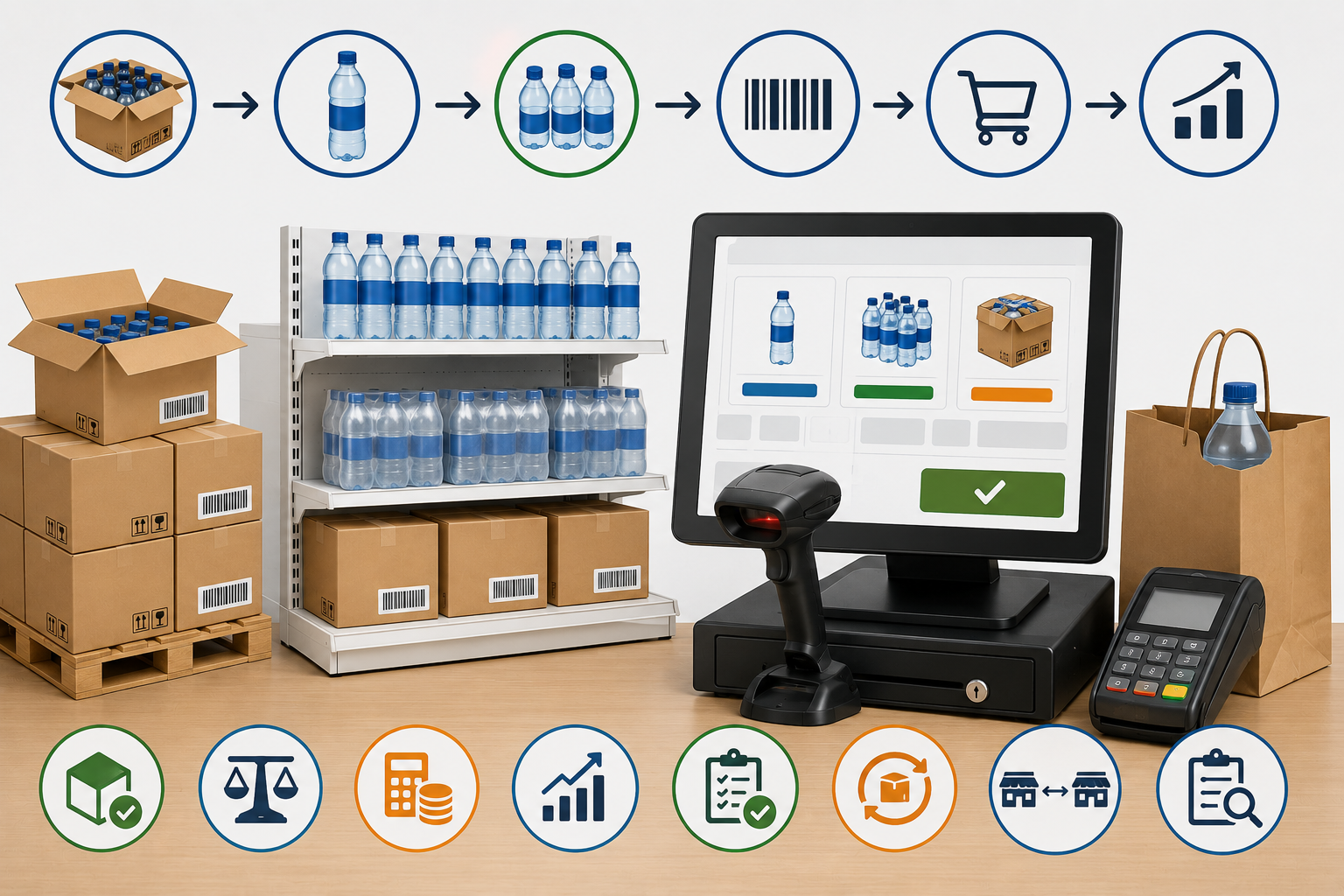
Mua thùng 24 nhưng bán từng chai: POS quản lý đơn vị đo để tránh sai tồn kho
Nhà bán lẻ mua theo thùng, nhận theo gói và bán lẻ từng đơn vị. Tìm hiểu quy đổi, barcode, giá vốn đơn vị, kiểm đếm, trả hàng và mua hàng.
Đọc bài viết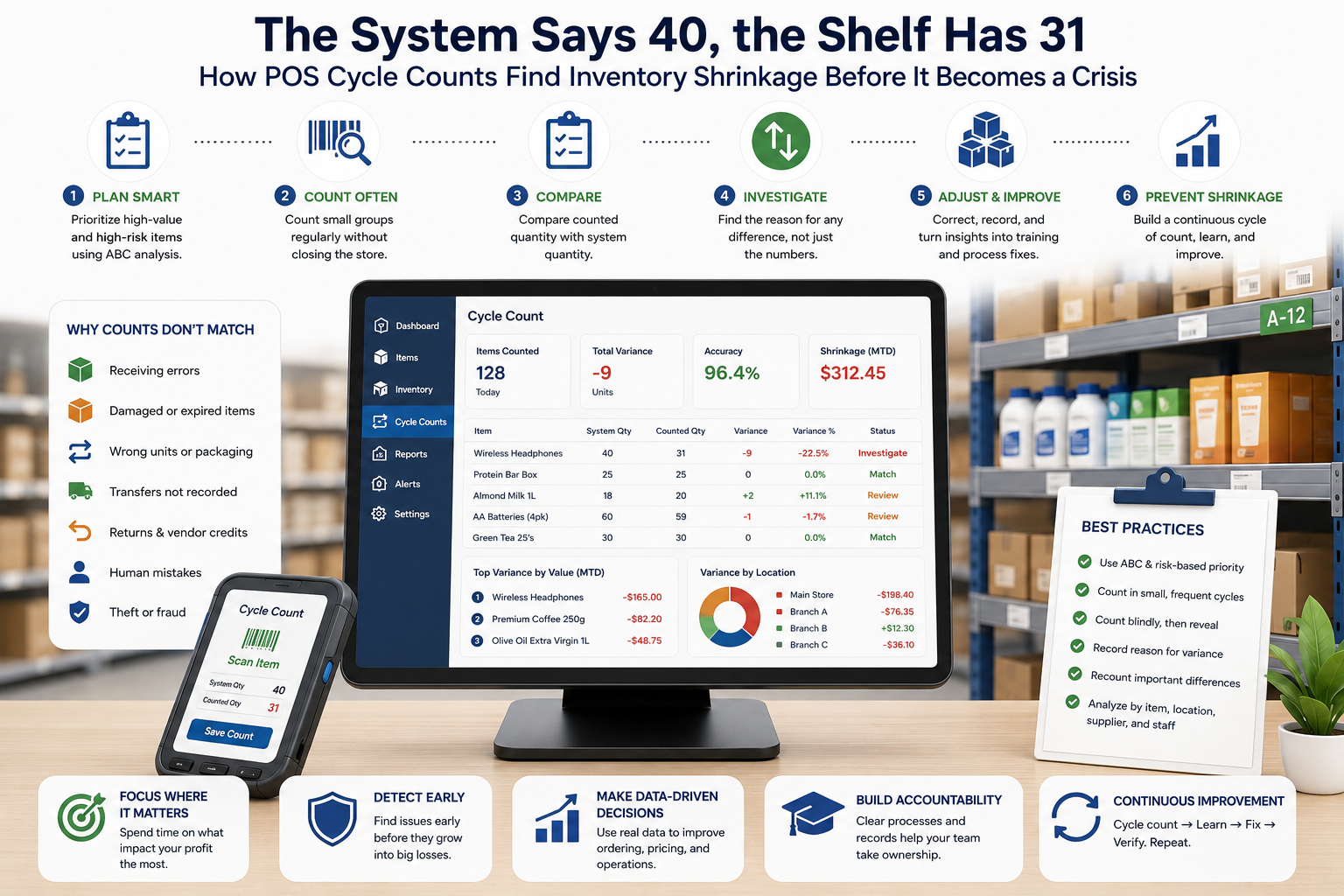
Hệ thống báo 40, kệ chỉ có 31: POS dùng kiểm đếm chu kỳ để phát hiện thất thoát sớm
Chênh lệch tích lũy từ nhận hàng sai, hư hỏng chưa ghi, sai đơn vị, trộm cắp, điều chuyển, trả hàng và điều chỉnh. Tìm hiểu kiểm đếm chu kỳ và nguyên nhân gốc.
Đọc bài viết