
Hệ thống báo 18 nhưng kệ chỉ có 11: kiểm đếm chu kỳ POS phát hiện thất thoát tồn kho
Chênh lệch không phải lúc nào cũng là trộm cắp. Nguyên nhân có thể từ nhận hàng, đơn vị, hỏng, chuyển kho, trả hàng, barcode hoặc giao dịch chậm.

Hệ thống báo 18 nhưng kệ chỉ có 11: kiểm đếm chu kỳ POS phát hiện thất thoát tồn kho
Chênh lệch không phải lúc nào cũng là trộm cắp. Nguyên nhân có thể từ nhận hàng, đơn vị, hỏng, chuyển kho, trả hàng, barcode hoặc giao dịch chậm.
Chênh lệch là triệu chứng
An inventory variance shows disagreement between recorded and physical quantity but does not identify the cause.
Possible causes include receiving errors, unit conversion, damage, transfers, returns, barcode mapping, delayed transactions, and theft.
Hãy xét một lần kiểm đếm thật: An inventory variance shows disagreement between recorded and physical quantity but does not identify the cause. Cycle counting checks smaller groups frequently and finds problems while evidence is still available. A count should define location, zone, items, start time, counters, and rules for inventory movement during the count. Thử đếm mù, bán trong lúc đếm, chênh lệch lớn, người đếm thứ hai, lỗi đơn vị, chuyển kho chờ, hỏng và điều chỉnh được duyệt.
Hãy xét một lần kiểm đếm thật: Large or repeated adjustments may require manager review based on value and frequency. Adjustments should record previous quantity, counted quantity, variance, value, reason, evidence, counter, reviewer, and approval. Possible causes include receiving errors, unit conversion, damage, transfers, returns, barcode mapping, delayed transactions, and theft. Thử đếm mù, bán trong lúc đếm, chênh lệch lớn, người đếm thứ hai, lỗi đơn vị, chuyển kho chờ, hỏng và điều chỉnh được duyệt.
Hãy xét một lần kiểm đếm thật: High-value, fast-moving, theft-prone, negative-stock, and frequently adjusted products should be counted more often. A strong POS uses counting to improve the process rather than simply overwrite the system quantity. Root-cause analysis should compare receiving, supplier differences, sales, returns, damage, transfers, barcodes, units, users, and timing. Thử đếm mù, bán trong lúc đếm, chênh lệch lớn, người đếm thứ hai, lỗi đơn vị, chuyển kho chờ, hỏng và điều chỉnh được duyệt.
Kiểm đếm theo rủi ro và chuyển động
Every stock movement should create a dated event with location, user, device, quantity, and reason.
Cycle counting checks smaller groups frequently and finds problems while evidence is still available.
Hãy xét một lần kiểm đếm thật: Cycle counting checks smaller groups frequently and finds problems while evidence is still available. Blind counts reduce bias, and material differences should be recounted by another person. Every stock movement should create a dated event with location, user, device, quantity, and reason. Thử đếm mù, bán trong lúc đếm, chênh lệch lớn, người đếm thứ hai, lỗi đơn vị, chuyển kho chờ, hỏng và điều chỉnh được duyệt.
Hãy xét một lần kiểm đếm thật: A strong POS uses counting to improve the process rather than simply overwrite the system quantity. Track inventory accuracy, variance value, repeated SKUs, repeated locations, count age, approval delay, and confirmed causes. Track inventory accuracy, variance value, repeated SKUs, repeated locations, count age, approval delay, and confirmed causes. Thử đếm mù, bán trong lúc đếm, chênh lệch lớn, người đếm thứ hai, lỗi đơn vị, chuyển kho chờ, hỏng và điều chỉnh được duyệt.
Hãy xét một lần kiểm đếm thật: Adjustments should record previous quantity, counted quantity, variance, value, reason, evidence, counter, reviewer, and approval. Every stock movement should create a dated event with location, user, device, quantity, and reason. Blind counts reduce bias, and material differences should be recounted by another person. Thử đếm mù, bán trong lúc đếm, chênh lệch lớn, người đếm thứ hai, lỗi đơn vị, chuyển kho chờ, hỏng và điều chỉnh được duyệt.
Đếm phải giữ bằng chứng
High-value, fast-moving, theft-prone, negative-stock, and frequently adjusted products should be counted more often.
A count should define location, zone, items, start time, counters, and rules for inventory movement during the count.
Hãy xét một lần kiểm đếm thật: Possible causes include receiving errors, unit conversion, damage, transfers, returns, barcode mapping, delayed transactions, and theft. Large or repeated adjustments may require manager review based on value and frequency. An inventory variance shows disagreement between recorded and physical quantity but does not identify the cause. Thử đếm mù, bán trong lúc đếm, chênh lệch lớn, người đếm thứ hai, lỗi đơn vị, chuyển kho chờ, hỏng và điều chỉnh được duyệt.
Hãy xét một lần kiểm đếm thật: Adjustments should record previous quantity, counted quantity, variance, value, reason, evidence, counter, reviewer, and approval. Every stock movement should create a dated event with location, user, device, quantity, and reason. Blind counts reduce bias, and material differences should be recounted by another person. Thử đếm mù, bán trong lúc đếm, chênh lệch lớn, người đếm thứ hai, lỗi đơn vị, chuyển kho chờ, hỏng và điều chỉnh được duyệt.
Hãy xét một lần kiểm đếm thật: Root-cause analysis should compare receiving, supplier differences, sales, returns, damage, transfers, barcodes, units, users, and timing. An inventory variance shows disagreement between recorded and physical quantity but does not identify the cause. Large or repeated adjustments may require manager review based on value and frequency. Thử đếm mù, bán trong lúc đếm, chênh lệch lớn, người đếm thứ hai, lỗi đơn vị, chuyển kho chờ, hỏng và điều chỉnh được duyệt.
Hãy xét một lần kiểm đếm thật: Cycle counting checks smaller groups frequently and finds problems while evidence is still available. Blind counts reduce bias, and material differences should be recounted by another person. Every stock movement should create a dated event with location, user, device, quantity, and reason. Thử đếm mù, bán trong lúc đếm, chênh lệch lớn, người đếm thứ hai, lỗi đơn vị, chuyển kho chờ, hỏng và điều chỉnh được duyệt.
Hãy xét một lần kiểm đếm thật: A count should define location, zone, items, start time, counters, and rules for inventory movement during the count. High-value, fast-moving, theft-prone, negative-stock, and frequently adjusted products should be counted more often. High-value, fast-moving, theft-prone, negative-stock, and frequently adjusted products should be counted more often. Thử đếm mù, bán trong lúc đếm, chênh lệch lớn, người đếm thứ hai, lỗi đơn vị, chuyển kho chờ, hỏng và điều chỉnh được duyệt.
Điều chỉnh cần lý do và phê duyệt
Blind counts reduce bias, and material differences should be recounted by another person.
Adjustments should record previous quantity, counted quantity, variance, value, reason, evidence, counter, reviewer, and approval.
Hãy xét một lần kiểm đếm thật: High-value, fast-moving, theft-prone, negative-stock, and frequently adjusted products should be counted more often. A strong POS uses counting to improve the process rather than simply overwrite the system quantity. Root-cause analysis should compare receiving, supplier differences, sales, returns, damage, transfers, barcodes, units, users, and timing. Thử đếm mù, bán trong lúc đếm, chênh lệch lớn, người đếm thứ hai, lỗi đơn vị, chuyển kho chờ, hỏng và điều chỉnh được duyệt.
Hãy xét một lần kiểm đếm thật: An inventory variance shows disagreement between recorded and physical quantity but does not identify the cause. Cycle counting checks smaller groups frequently and finds problems while evidence is still available. A count should define location, zone, items, start time, counters, and rules for inventory movement during the count. Thử đếm mù, bán trong lúc đếm, chênh lệch lớn, người đếm thứ hai, lỗi đơn vị, chuyển kho chờ, hỏng và điều chỉnh được duyệt.
Hãy xét một lần kiểm đếm thật: Large or repeated adjustments may require manager review based on value and frequency. Adjustments should record previous quantity, counted quantity, variance, value, reason, evidence, counter, reviewer, and approval. Possible causes include receiving errors, unit conversion, damage, transfers, returns, barcode mapping, delayed transactions, and theft. Thử đếm mù, bán trong lúc đếm, chênh lệch lớn, người đếm thứ hai, lỗi đơn vị, chuyển kho chờ, hỏng và điều chỉnh được duyệt.
Chênh lệch lặp lại cần tìm nguyên nhân gốc
Large or repeated adjustments may require manager review based on value and frequency.
Root-cause analysis should compare receiving, supplier differences, sales, returns, damage, transfers, barcodes, units, users, and timing.
Hãy xét một lần kiểm đếm thật: Every stock movement should create a dated event with location, user, device, quantity, and reason. Possible causes include receiving errors, unit conversion, damage, transfers, returns, barcode mapping, delayed transactions, and theft. Adjustments should record previous quantity, counted quantity, variance, value, reason, evidence, counter, reviewer, and approval. Thử đếm mù, bán trong lúc đếm, chênh lệch lớn, người đếm thứ hai, lỗi đơn vị, chuyển kho chờ, hỏng và điều chỉnh được duyệt.
Hãy xét một lần kiểm đếm thật: Blind counts reduce bias, and material differences should be recounted by another person. Root-cause analysis should compare receiving, supplier differences, sales, returns, damage, transfers, barcodes, units, users, and timing. A strong POS uses counting to improve the process rather than simply overwrite the system quantity. Thử đếm mù, bán trong lúc đếm, chênh lệch lớn, người đếm thứ hai, lỗi đơn vị, chuyển kho chờ, hỏng và điều chỉnh được duyệt.
Hãy xét một lần kiểm đếm thật: Track inventory accuracy, variance value, repeated SKUs, repeated locations, count age, approval delay, and confirmed causes. A count should define location, zone, items, start time, counters, and rules for inventory movement during the count. Cycle counting checks smaller groups frequently and finds problems while evidence is still available. Thử đếm mù, bán trong lúc đếm, chênh lệch lớn, người đếm thứ hai, lỗi đơn vị, chuyển kho chờ, hỏng và điều chỉnh được duyệt.
Hãy xét một lần kiểm đếm thật: Every stock movement should create a dated event with location, user, device, quantity, and reason. Possible causes include receiving errors, unit conversion, damage, transfers, returns, barcode mapping, delayed transactions, and theft. Adjustments should record previous quantity, counted quantity, variance, value, reason, evidence, counter, reviewer, and approval. Thử đếm mù, bán trong lúc đếm, chênh lệch lớn, người đếm thứ hai, lỗi đơn vị, chuyển kho chờ, hỏng và điều chỉnh được duyệt.
Hãy xét một lần kiểm đếm thật: Blind counts reduce bias, and material differences should be recounted by another person. Root-cause analysis should compare receiving, supplier differences, sales, returns, damage, transfers, barcodes, units, users, and timing. A strong POS uses counting to improve the process rather than simply overwrite the system quantity. Thử đếm mù, bán trong lúc đếm, chênh lệch lớn, người đếm thứ hai, lỗi đơn vị, chuyển kho chờ, hỏng và điều chỉnh được duyệt.
Hãy xét một lần kiểm đếm thật: Track inventory accuracy, variance value, repeated SKUs, repeated locations, count age, approval delay, and confirmed causes. A count should define location, zone, items, start time, counters, and rules for inventory movement during the count. Cycle counting checks smaller groups frequently and finds problems while evidence is still available. Thử đếm mù, bán trong lúc đếm, chênh lệch lớn, người đếm thứ hai, lỗi đơn vị, chuyển kho chờ, hỏng và điều chỉnh được duyệt.
Đo độ chính xác trước khi thất thoát thành bình thường
Track inventory accuracy, variance value, repeated SKUs, repeated locations, count age, approval delay, and confirmed causes.
A strong POS uses counting to improve the process rather than simply overwrite the system quantity.
Hãy xét một lần kiểm đếm thật: A count should define location, zone, items, start time, counters, and rules for inventory movement during the count. High-value, fast-moving, theft-prone, negative-stock, and frequently adjusted products should be counted more often. High-value, fast-moving, theft-prone, negative-stock, and frequently adjusted products should be counted more often. Thử đếm mù, bán trong lúc đếm, chênh lệch lớn, người đếm thứ hai, lỗi đơn vị, chuyển kho chờ, hỏng và điều chỉnh được duyệt.
Hãy xét một lần kiểm đếm thật: Possible causes include receiving errors, unit conversion, damage, transfers, returns, barcode mapping, delayed transactions, and theft. Large or repeated adjustments may require manager review based on value and frequency. An inventory variance shows disagreement between recorded and physical quantity but does not identify the cause. Thử đếm mù, bán trong lúc đếm, chênh lệch lớn, người đếm thứ hai, lỗi đơn vị, chuyển kho chờ, hỏng và điều chỉnh được duyệt.
Hãy xét một lần kiểm đếm thật: Root-cause analysis should compare receiving, supplier differences, sales, returns, damage, transfers, barcodes, units, users, and timing. An inventory variance shows disagreement between recorded and physical quantity but does not identify the cause. Large or repeated adjustments may require manager review based on value and frequency. Thử đếm mù, bán trong lúc đếm, chênh lệch lớn, người đếm thứ hai, lỗi đơn vị, chuyển kho chờ, hỏng và điều chỉnh được duyệt.
Keep reading
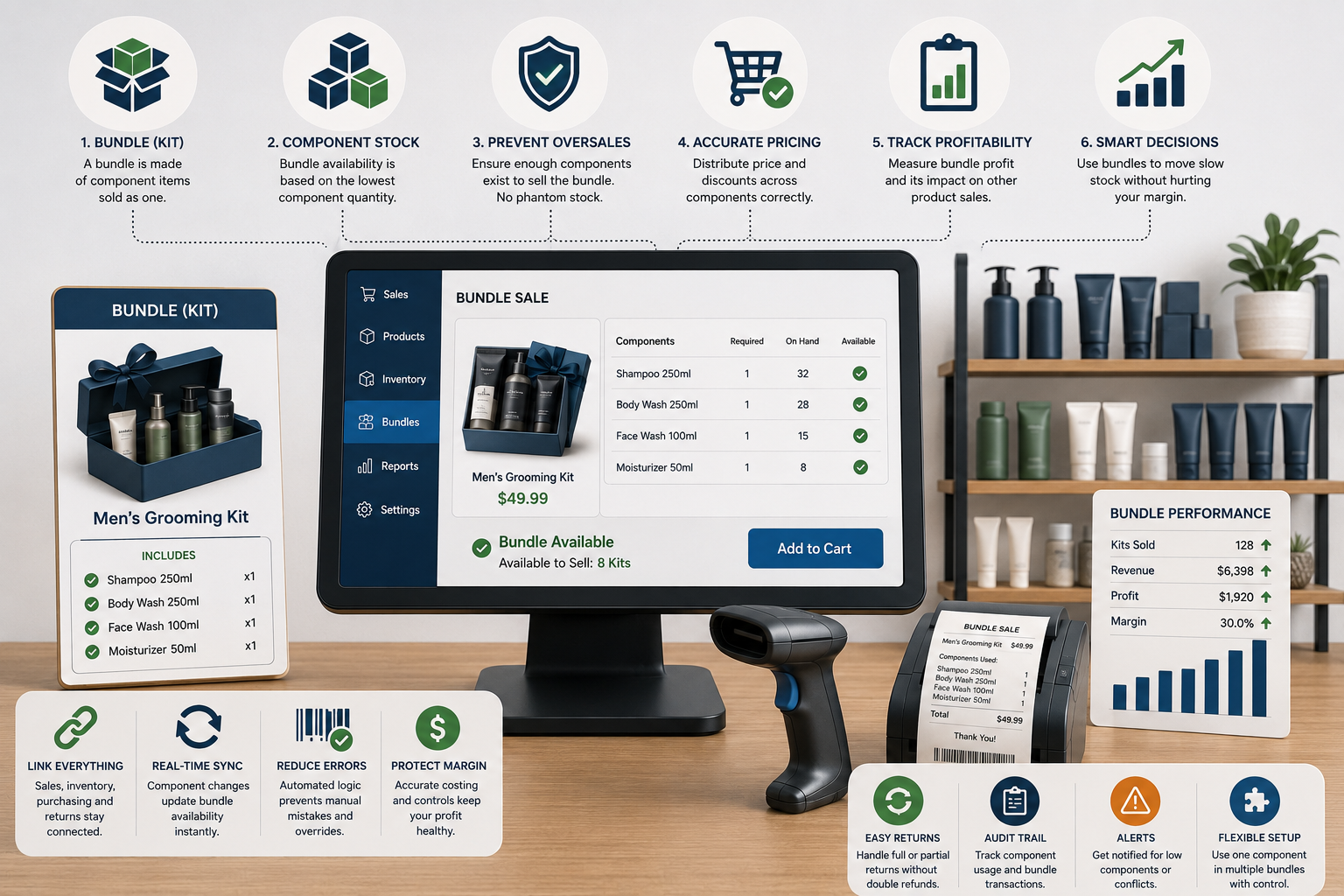
Bundle hết hàng nhưng mọi thành phần vẫn còn trên kệ: POS quản lý kit, multipack và tồn kho thành phần
Bundle tăng giá trị giỏ và đẩy hàng chậm, nhưng thiết lập sai tạo tồn khả dụng ảo, bán vượt, sai giá vốn và trả hàng phức tạp.
Đọc bài viết
Quầy thu ngân thiếu tiền—tiền đã đi đâu? Hướng dẫn POS đối soát tiền mặt và thanh toán
Chênh lệch cuối ca không tự động là trộm cắp. Tìm hiểu phiên quầy, tiền đầu ca, thu chi, hoàn tiền, đối soát thẻ và trách nhiệm.
Đọc bài viết
Kho đầy nhưng hàng bán chạy lại thiếu: POS cải thiện bổ sung và tồn kho chết thế nào
Kho đầy không có nghĩa tồn kho khỏe. Dùng tốc độ bán, lead time, mùa vụ, điểm đặt hàng và hiệu suất nhà cung cấp.
Đọc bài viết