
Cuối ca thiếu tiền mặt—đã xảy ra chuyện gì? POS đối soát ca để tìm nguyên nhân
Chênh lệch tiền không được giải quyết bằng cách đổ lỗi cho thu ngân. POS phải nối tiền đầu ca, bán tiền mặt, hoàn, chi, nộp, tip, mở ngăn, bàn giao và đếm cuối.
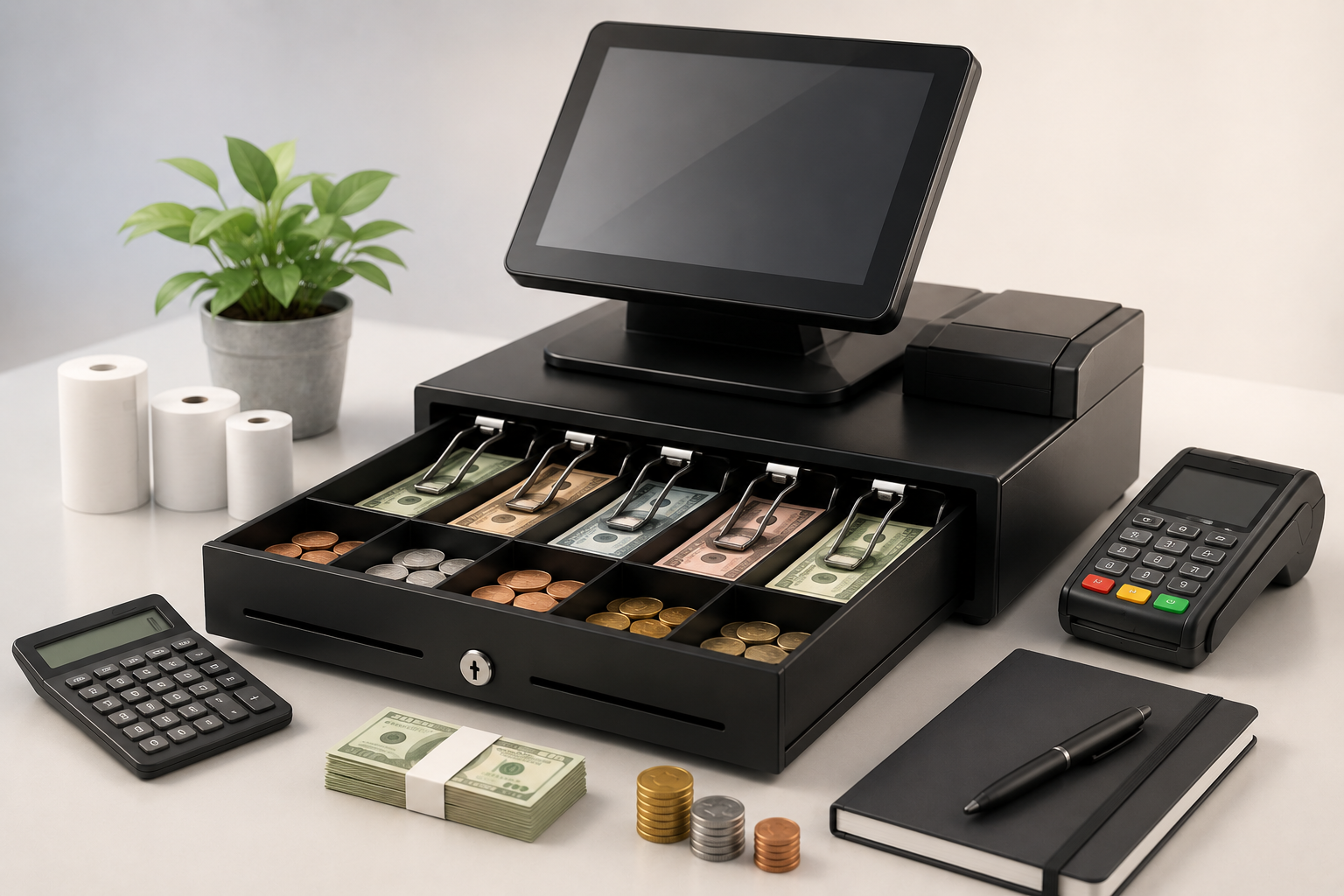
Cuối ca thiếu tiền mặt—đã xảy ra chuyện gì? POS đối soát ca để tìm nguyên nhân
Chênh lệch tiền không được giải quyết bằng cách đổ lỗi cho thu ngân. POS phải nối tiền đầu ca, bán tiền mặt, hoàn, chi, nộp, tip, mở ngăn, bàn giao và đếm cuối.
Tiền dự kiến phải tính từ mọi chuyển động
Cash reconciliation should begin with expected cash, calculated from opening float, cash sales, cash refunds, payouts, drops, added change, tips, deposits, and corrections.
Every cash movement must be recorded in the POS or the closing difference becomes difficult to explain.
Hãy xét một ca đóng thật: Cash reconciliation should begin with expected cash, calculated from opening float, cash sales, cash refunds, payouts, drops, added change, tips, deposits, and corrections. Assign one cashier per drawer where possible, or record every user session, ownership change, and handover count. At handover, the outgoing cashier should stop activity, finish pending transactions, count, and transfer responsibility through a documented process. Thử hoàn tiền mặt, chi, nộp, mở không bán, bàn giao, đếm mù và đếm lại.
Hãy xét một ca đóng thật: Overages can also reveal a process failure such as an unrecorded sale or incomplete customer refund. Shortages may come from wrong change, wrong tender, unrecorded expenses, duplicate payouts, forgotten drops, counterfeit cash, or theft. Every cash movement must be recorded in the POS or the closing difference becomes difficult to explain. Thử hoàn tiền mặt, chi, nộp, mở không bán, bàn giao, đếm mù và đếm lại.
Hãy xét một ca đóng thật: No-sale opens, cash refunds, payouts, and manual corrections need reasons and, for high-risk events, approval or evidence. Strong reconciliation replaces suspicion with evidence and turns each difference into a process improvement. Investigations should compare timeline, transactions, drawer openings, refunds, payouts, voids, user changes, and handovers. Thử hoàn tiền mặt, chi, nộp, mở không bán, bàn giao, đếm mù và đếm lại.
Hãy xét một ca đóng thật: Cash reconciliation should begin with expected cash, calculated from opening float, cash sales, cash refunds, payouts, drops, added change, tips, deposits, and corrections. Assign one cashier per drawer where possible, or record every user session, ownership change, and handover count. At handover, the outgoing cashier should stop activity, finish pending transactions, count, and transfer responsibility through a documented process. Thử hoàn tiền mặt, chi, nộp, mở không bán, bàn giao, đếm mù và đếm lại.
Mỗi ngăn kéo cần trách nhiệm rõ
Shared drawers weaken accountability because several users can sell, refund, remove cash, or open the drawer.
Assign one cashier per drawer where possible, or record every user session, ownership change, and handover count.
Hãy xét một ca đóng thật: Assign one cashier per drawer where possible, or record every user session, ownership change, and handover count. Blind counts reduce bias because employees enter the physical amount before seeing the expected balance. Shared drawers weaken accountability because several users can sell, refund, remove cash, or open the drawer. Thử hoàn tiền mặt, chi, nộp, mở không bán, bàn giao, đếm mù và đếm lại.
Hãy xét một ca đóng thật: Strong reconciliation replaces suspicion with evidence and turns each difference into a process improvement. Track frequency, average difference, repeated users, drawers, branches, times, no-sale opens, refund patterns, and delayed closings. Track frequency, average difference, repeated users, drawers, branches, times, no-sale opens, refund patterns, and delayed closings. Thử hoàn tiền mặt, chi, nộp, mở không bán, bàn giao, đếm mù và đếm lại.
Hãy xét một ca đóng thật: Shortages may come from wrong change, wrong tender, unrecorded expenses, duplicate payouts, forgotten drops, counterfeit cash, or theft. Shared drawers weaken accountability because several users can sell, refund, remove cash, or open the drawer. Blind counts reduce bias because employees enter the physical amount before seeing the expected balance. Thử hoàn tiền mặt, chi, nộp, mở không bán, bàn giao, đếm mù và đếm lại.
Mở ngăn, hoàn và chi cần lý do
No-sale opens, cash refunds, payouts, and manual corrections need reasons and, for high-risk events, approval or evidence.
At handover, the outgoing cashier should stop activity, finish pending transactions, count, and transfer responsibility through a documented process.
Hãy xét một ca đóng thật: Every cash movement must be recorded in the POS or the closing difference becomes difficult to explain. Overages can also reveal a process failure such as an unrecorded sale or incomplete customer refund. Cash reconciliation should begin with expected cash, calculated from opening float, cash sales, cash refunds, payouts, drops, added change, tips, deposits, and corrections. Thử hoàn tiền mặt, chi, nộp, mở không bán, bàn giao, đếm mù và đếm lại.
Hãy xét một ca đóng thật: Shortages may come from wrong change, wrong tender, unrecorded expenses, duplicate payouts, forgotten drops, counterfeit cash, or theft. Shared drawers weaken accountability because several users can sell, refund, remove cash, or open the drawer. Blind counts reduce bias because employees enter the physical amount before seeing the expected balance. Thử hoàn tiền mặt, chi, nộp, mở không bán, bàn giao, đếm mù và đếm lại.
Hãy xét một ca đóng thật: Investigations should compare timeline, transactions, drawer openings, refunds, payouts, voids, user changes, and handovers. Cash reconciliation should begin with expected cash, calculated from opening float, cash sales, cash refunds, payouts, drops, added change, tips, deposits, and corrections. Overages can also reveal a process failure such as an unrecorded sale or incomplete customer refund. Thử hoàn tiền mặt, chi, nộp, mở không bán, bàn giao, đếm mù và đếm lại.
Hãy xét một ca đóng thật: Assign one cashier per drawer where possible, or record every user session, ownership change, and handover count. Blind counts reduce bias because employees enter the physical amount before seeing the expected balance. Shared drawers weaken accountability because several users can sell, refund, remove cash, or open the drawer. Thử hoàn tiền mặt, chi, nộp, mở không bán, bàn giao, đếm mù và đếm lại.
Hãy xét một ca đóng thật: At handover, the outgoing cashier should stop activity, finish pending transactions, count, and transfer responsibility through a documented process. No-sale opens, cash refunds, payouts, and manual corrections need reasons and, for high-risk events, approval or evidence. No-sale opens, cash refunds, payouts, and manual corrections need reasons and, for high-risk events, approval or evidence. Thử hoàn tiền mặt, chi, nộp, mở không bán, bàn giao, đếm mù và đếm lại.
Hãy xét một ca đóng thật: Strong reconciliation replaces suspicion with evidence and turns each difference into a process improvement. Track frequency, average difference, repeated users, drawers, branches, times, no-sale opens, refund patterns, and delayed closings. Track frequency, average difference, repeated users, drawers, branches, times, no-sale opens, refund patterns, and delayed closings. Thử hoàn tiền mặt, chi, nộp, mở không bán, bàn giao, đếm mù và đếm lại.
Bàn giao ca phải giữ bằng chứng
Blind counts reduce bias because employees enter the physical amount before seeing the expected balance.
Shortages may come from wrong change, wrong tender, unrecorded expenses, duplicate payouts, forgotten drops, counterfeit cash, or theft.
Hãy xét một ca đóng thật: No-sale opens, cash refunds, payouts, and manual corrections need reasons and, for high-risk events, approval or evidence. Strong reconciliation replaces suspicion with evidence and turns each difference into a process improvement. Investigations should compare timeline, transactions, drawer openings, refunds, payouts, voids, user changes, and handovers. Thử hoàn tiền mặt, chi, nộp, mở không bán, bàn giao, đếm mù và đếm lại.
Hãy xét một ca đóng thật: Cash reconciliation should begin with expected cash, calculated from opening float, cash sales, cash refunds, payouts, drops, added change, tips, deposits, and corrections. Assign one cashier per drawer where possible, or record every user session, ownership change, and handover count. At handover, the outgoing cashier should stop activity, finish pending transactions, count, and transfer responsibility through a documented process. Thử hoàn tiền mặt, chi, nộp, mở không bán, bàn giao, đếm mù và đếm lại.
Hãy xét một ca đóng thật: Overages can also reveal a process failure such as an unrecorded sale or incomplete customer refund. Shortages may come from wrong change, wrong tender, unrecorded expenses, duplicate payouts, forgotten drops, counterfeit cash, or theft. Every cash movement must be recorded in the POS or the closing difference becomes difficult to explain. Thử hoàn tiền mặt, chi, nộp, mở không bán, bàn giao, đếm mù và đếm lại.
Chênh lệch cần điều tra
Overages can also reveal a process failure such as an unrecorded sale or incomplete customer refund.
Investigations should compare timeline, transactions, drawer openings, refunds, payouts, voids, user changes, and handovers.
Hãy xét một ca đóng thật: Shared drawers weaken accountability because several users can sell, refund, remove cash, or open the drawer. Every cash movement must be recorded in the POS or the closing difference becomes difficult to explain. Shortages may come from wrong change, wrong tender, unrecorded expenses, duplicate payouts, forgotten drops, counterfeit cash, or theft. Thử hoàn tiền mặt, chi, nộp, mở không bán, bàn giao, đếm mù và đếm lại.
Hãy xét một ca đóng thật: Blind counts reduce bias because employees enter the physical amount before seeing the expected balance. Investigations should compare timeline, transactions, drawer openings, refunds, payouts, voids, user changes, and handovers. Strong reconciliation replaces suspicion with evidence and turns each difference into a process improvement. Thử hoàn tiền mặt, chi, nộp, mở không bán, bàn giao, đếm mù và đếm lại.
Hãy xét một ca đóng thật: Track frequency, average difference, repeated users, drawers, branches, times, no-sale opens, refund patterns, and delayed closings. At handover, the outgoing cashier should stop activity, finish pending transactions, count, and transfer responsibility through a documented process. Assign one cashier per drawer where possible, or record every user session, ownership change, and handover count. Thử hoàn tiền mặt, chi, nộp, mở không bán, bàn giao, đếm mù và đếm lại.
Hãy xét một ca đóng thật: Shared drawers weaken accountability because several users can sell, refund, remove cash, or open the drawer. Every cash movement must be recorded in the POS or the closing difference becomes difficult to explain. Shortages may come from wrong change, wrong tender, unrecorded expenses, duplicate payouts, forgotten drops, counterfeit cash, or theft. Thử hoàn tiền mặt, chi, nộp, mở không bán, bàn giao, đếm mù và đếm lại.
Hãy xét một ca đóng thật: Blind counts reduce bias because employees enter the physical amount before seeing the expected balance. Investigations should compare timeline, transactions, drawer openings, refunds, payouts, voids, user changes, and handovers. Strong reconciliation replaces suspicion with evidence and turns each difference into a process improvement. Thử hoàn tiền mặt, chi, nộp, mở không bán, bàn giao, đếm mù và đếm lại.
Hãy xét một ca đóng thật: Track frequency, average difference, repeated users, drawers, branches, times, no-sale opens, refund patterns, and delayed closings. At handover, the outgoing cashier should stop activity, finish pending transactions, count, and transfer responsibility through a documented process. Assign one cashier per drawer where possible, or record every user session, ownership change, and handover count. Thử hoàn tiền mặt, chi, nộp, mở không bán, bàn giao, đếm mù và đếm lại.
Dùng xu hướng để cải thiện vận hành
Track frequency, average difference, repeated users, drawers, branches, times, no-sale opens, refund patterns, and delayed closings.
Strong reconciliation replaces suspicion with evidence and turns each difference into a process improvement.
Hãy xét một ca đóng thật: At handover, the outgoing cashier should stop activity, finish pending transactions, count, and transfer responsibility through a documented process. No-sale opens, cash refunds, payouts, and manual corrections need reasons and, for high-risk events, approval or evidence. No-sale opens, cash refunds, payouts, and manual corrections need reasons and, for high-risk events, approval or evidence. Thử hoàn tiền mặt, chi, nộp, mở không bán, bàn giao, đếm mù và đếm lại.
Hãy xét một ca đóng thật: Every cash movement must be recorded in the POS or the closing difference becomes difficult to explain. Overages can also reveal a process failure such as an unrecorded sale or incomplete customer refund. Cash reconciliation should begin with expected cash, calculated from opening float, cash sales, cash refunds, payouts, drops, added change, tips, deposits, and corrections. Thử hoàn tiền mặt, chi, nộp, mở không bán, bàn giao, đếm mù và đếm lại.
Hãy xét một ca đóng thật: Investigations should compare timeline, transactions, drawer openings, refunds, payouts, voids, user changes, and handovers. Cash reconciliation should begin with expected cash, calculated from opening float, cash sales, cash refunds, payouts, drops, added change, tips, deposits, and corrections. Overages can also reveal a process failure such as an unrecorded sale or incomplete customer refund. Thử hoàn tiền mặt, chi, nộp, mở không bán, bàn giao, đếm mù và đếm lại.
Keep reading
Quầy thu ngân thiếu tiền—tiền đã đi đâu? Hướng dẫn POS đối soát tiền mặt và thanh toán
Chênh lệch cuối ca không tự động là trộm cắp. Tìm hiểu phiên quầy, tiền đầu ca, thu chi, hoàn tiền, đối soát thẻ và trách nhiệm.
Đọc bài viết
Giảm giá đã hiệu quả, nhưng cửa hàng có lãi không? Quy tắc khuyến mãi POS bảo vệ biên lợi nhuận
Khuyến mãi có thể tăng bán nhưng làm mất biên do cộng dồn, sai điều kiện, sửa tay, trả hàng và báo cáo yếu.
Đọc bài viết
POS có thể đề xuất bước tiếp theo, nhưng có nên tự quyết định? Hướng dẫn AI thực tế cho bán lẻ
AI đang đi từ dashboard vào quyết định hằng ngày: dự báo nhu cầu, đề xuất bổ sung, phát hiện bất thường, nguy cơ mất khách và tóm tắt hiệu suất. Tìm hiểu giá trị, giới hạn và kiểm soát.
Đọc bài viết