
倉庫は満杯なのに売れ筋がない:POSで補充と滞留在庫を改善する方法
倉庫が満杯でも在庫が健全とは限りません。販売速度、リードタイム、季節性、発注点、仕入先実績を活用します。

倉庫は満杯なのに売れ筋がない:POSで補充と滞留在庫を改善する方法
倉庫が満杯でも在庫が健全とは限りません。販売速度、リードタイム、季節性、発注点、仕入先実績を活用します。
在庫量が多くても構成が間違っていることがある
A retailer can hold too much inventory and still run out of the products customers actually want.
Healthy inventory means the right item is available in the right place and time without trapping too much cash.
例えば、A retailer can hold too much inventory and still run out of the products customers actually want. Use sales velocity, days of cover, available stock, reservations, incoming orders, transfers, lead time, minimum order, and service target. 粗利、拘束資金、サービス水準、再欠品リスクで判断します。
例えば、Track promised and actual delivery, fill rate, quantity differences, quality, price variance, minimum orders, and communication. A reorder point should combine expected demand during supplier lead time with a safety buffer. 粗利、拘束資金、サービス水準、再欠品リスクで判断します。
発注点には需要とリードタイムが必要
A reorder point should combine expected demand during supplier lead time with a safety buffer.
Use sales velocity, days of cover, available stock, reservations, incoming orders, transfers, lead time, minimum order, and service target.
例えば、Use sales velocity, days of cover, available stock, reservations, incoming orders, transfers, lead time, minimum order, and service target. Purchase planning must use actual supplier performance, not only promised lead time. 粗利、拘束資金、サービス水準、再欠品リスクで判断します。
例えば、Review weekly exceptions: low cover, rising velocity, delayed orders, possible transfers, weak suppliers, and ageing items. Compare with relevant prior periods and separate normal demand from promotional or stockout effects. 粗利、拘束資金、サービス水準、再欠品リスクで判断します。
季節性が平均販売の意味を変える
Average sales can mislead when demand changes with season, weekday, weather, holidays, events, or promotions.
Compare with relevant prior periods and separate normal demand from promotional or stockout effects.
例えば、Healthy inventory means the right item is available in the right place and time without trapping too much cash. Dead stock consumes space, handling, counting time, insurance, and working capital. 粗利、拘束資金、サービス水準、再欠品リスクで判断します。
例えば、Dead stock consumes space, handling, counting time, insurance, and working capital. Track promised and actual delivery, fill rate, quantity differences, quality, price variance, minimum orders, and communication. 粗利、拘束資金、サービス水準、再欠品リスクで判断します。
仕入れは取引先実績から学ぶ
Purchase planning must use actual supplier performance, not only promised lead time.
Track promised and actual delivery, fill rate, quantity differences, quality, price variance, minimum orders, and communication.
例えば、Average sales can mislead when demand changes with season, weekday, weather, holidays, events, or promotions. A strong POS links sales, branch stock, purchasing, suppliers, transfers, returns, costs, and reporting. 粗利、拘束資金、サービス水準、再欠品リスクで判断します。
例えば、A strong POS links sales, branch stock, purchasing, suppliers, transfers, returns, costs, and reporting. Review weekly exceptions: low cover, rising velocity, delayed orders, possible transfers, weak suppliers, and ageing items. 粗利、拘束資金、サービス水準、再欠品リスクで判断します。
滞留在庫には出口計画が必要
Dead stock consumes space, handling, counting time, insurance, and working capital.
Choose an exit such as transfer, bundle, markdown, loyalty reward, supplier return, clearance, donation, liquidation, or write-off.
例えば、A reorder point should combine expected demand during supplier lead time with a safety buffer. Healthy inventory means the right item is available in the right place and time without trapping too much cash. 粗利、拘束資金、サービス水準、再欠品リスクで判断します。
例えば、Purchase planning must use actual supplier performance, not only promised lead time. Choose an exit such as transfer, bundle, markdown, loyalty reward, supplier return, clearance, donation, liquidation, or write-off. 粗利、拘束資金、サービス水準、再欠品リスクで判断します。
例えば、Choose an exit such as transfer, bundle, markdown, loyalty reward, supplier return, clearance, donation, liquidation, or write-off. A retailer can hold too much inventory and still run out of the products customers actually want. 粗利、拘束資金、サービス水準、再欠品リスクで判断します。
POSデータを週次仕入れルーチンにする
Review weekly exceptions: low cover, rising velocity, delayed orders, possible transfers, weak suppliers, and ageing items.
A strong POS links sales, branch stock, purchasing, suppliers, transfers, returns, costs, and reporting.
例えば、Compare with relevant prior periods and separate normal demand from promotional or stockout effects. Average sales can mislead when demand changes with season, weekday, weather, holidays, events, or promotions. 粗利、拘束資金、サービス水準、再欠品リスクで判断します。
例えば、A retailer can hold too much inventory and still run out of the products customers actually want. Use sales velocity, days of cover, available stock, reservations, incoming orders, transfers, lead time, minimum order, and service target. 粗利、拘束資金、サービス水準、再欠品リスクで判断します。
Keep reading
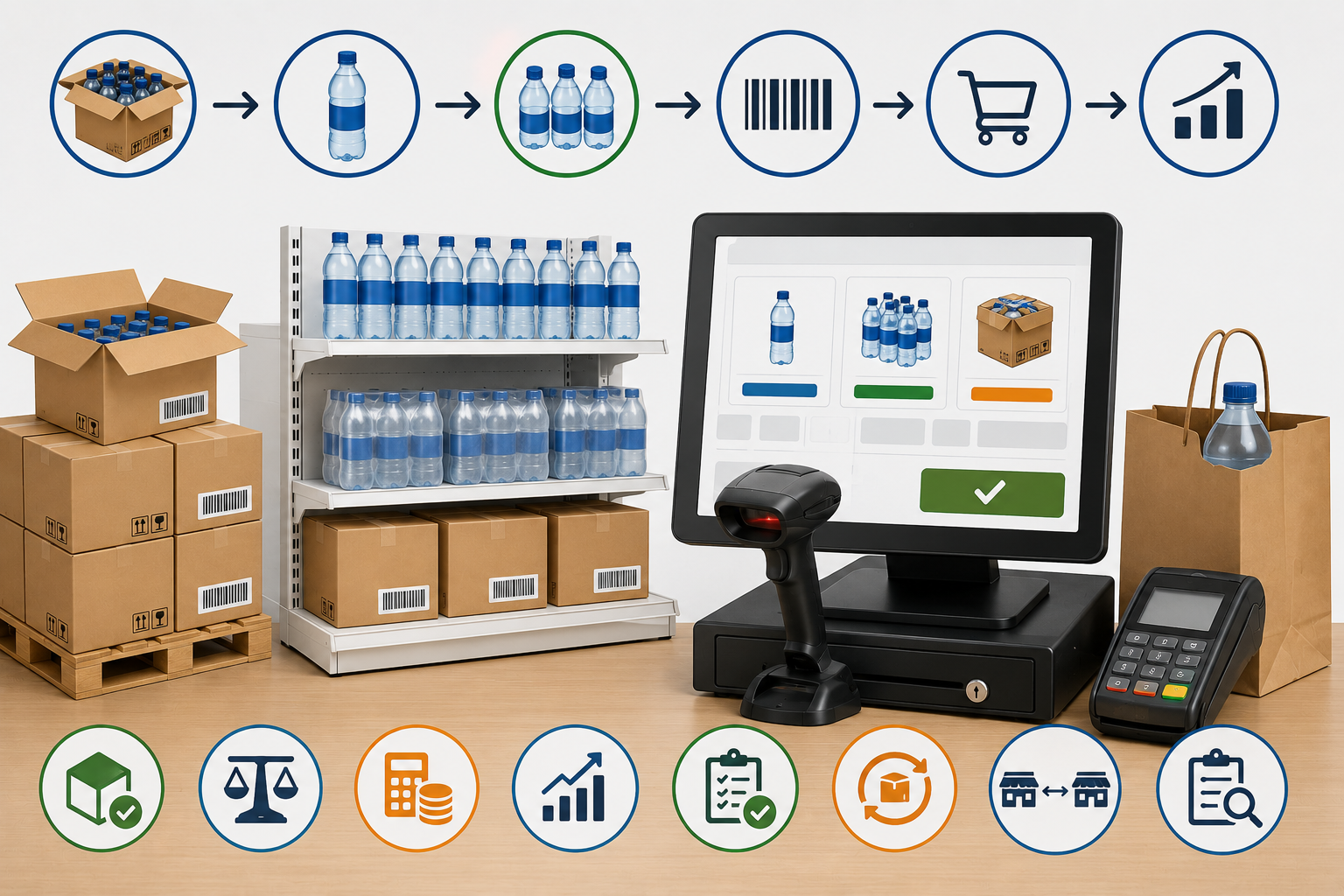
24本入りケースを仕入れ、1本ずつ販売:POSの単位管理で在庫と価格ミスを防ぐ
小売はケースで仕入れ、パックで入荷し、単品で販売することがあります。単位換算、バーコード、原価、棚卸、返品、仕入れを解説します。
記事を読む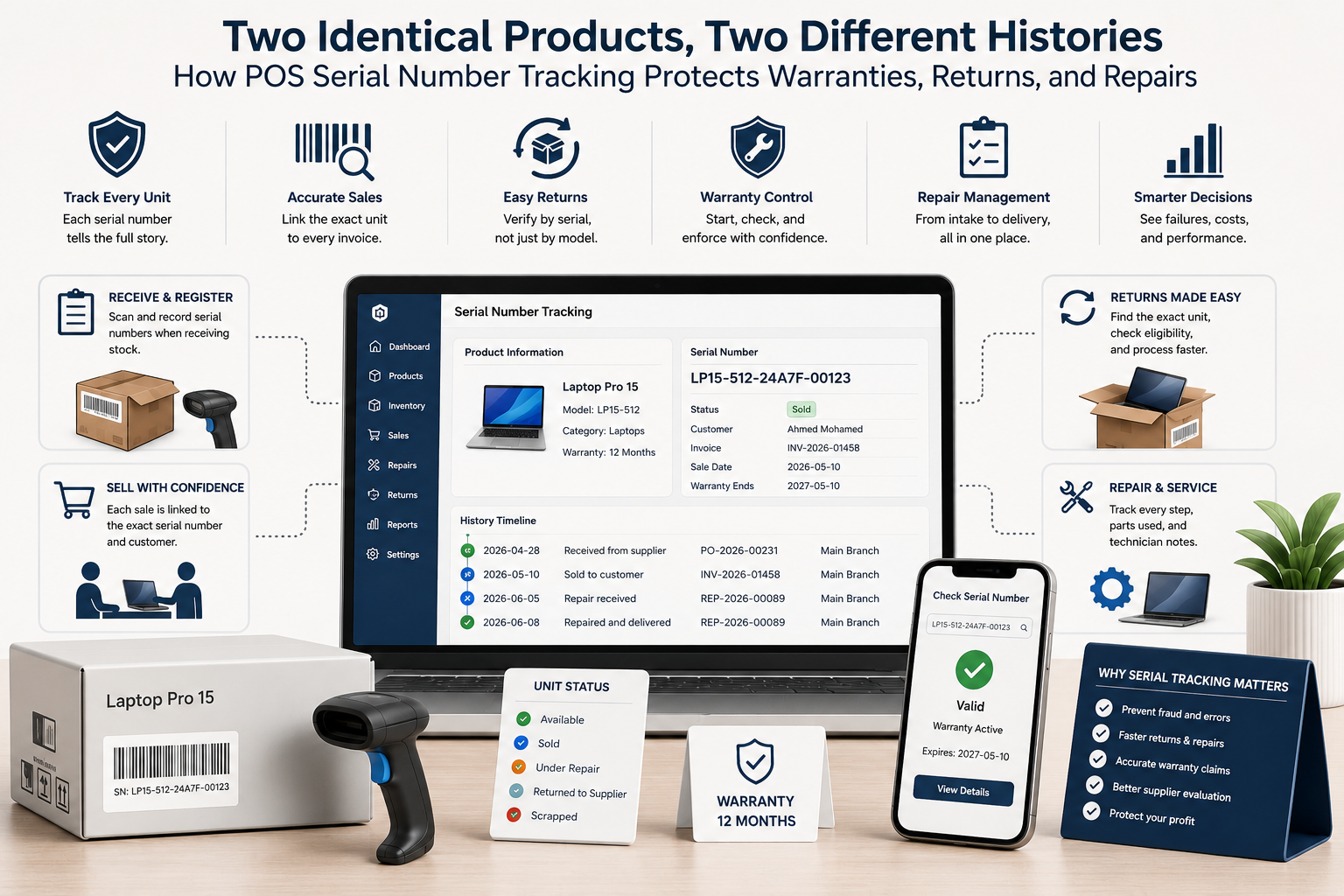
同じ商品でも履歴は別:POSのシリアル番号管理で保証、返品、修理を守る
数量管理は何台あるかを示し、シリアル管理はどの個体が入荷、販売、返品、修理、交換されたかを示します。
記事を読む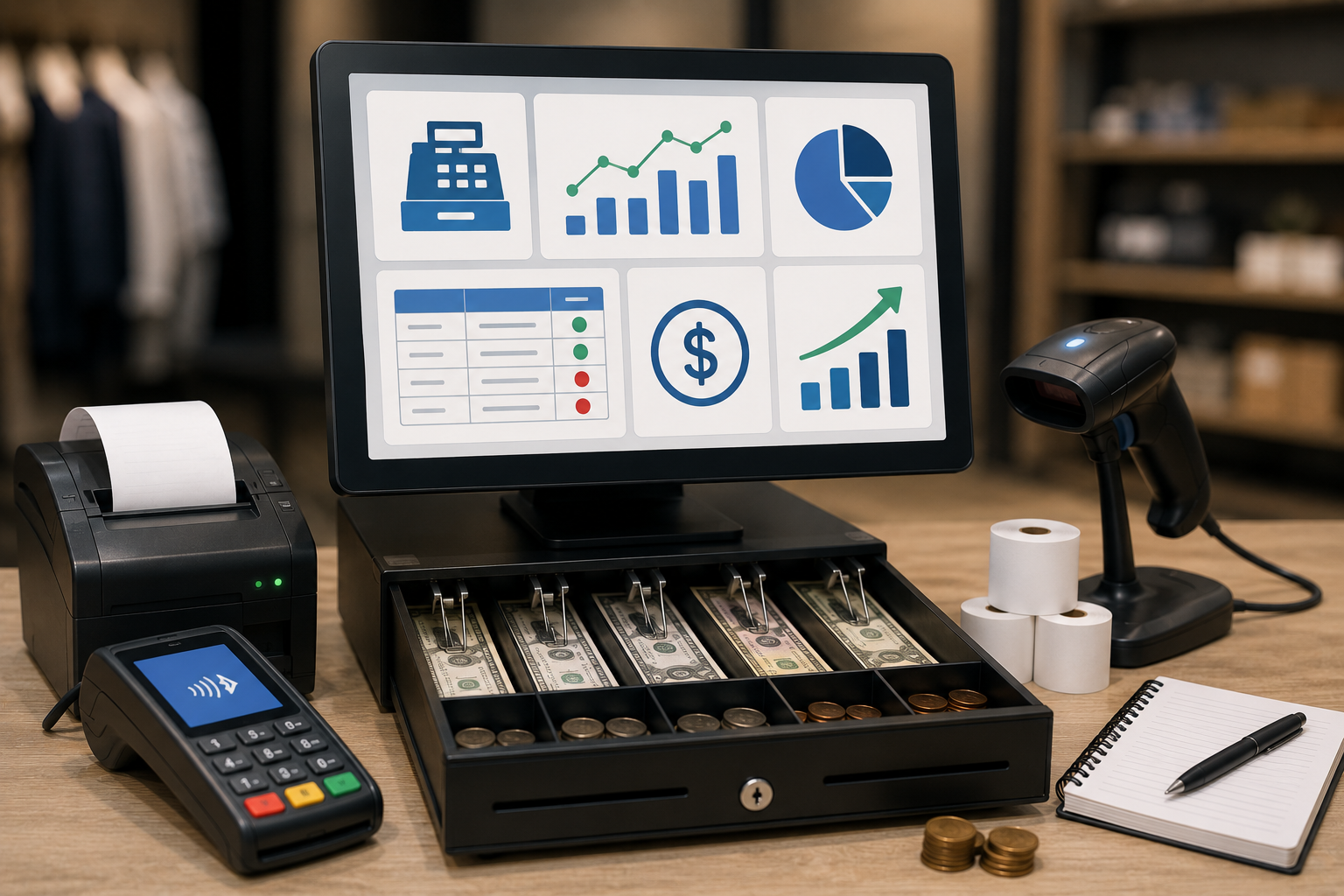
レジの現金が足りない。お金はどこへ?POSの現金ドロワーと決済照合ガイド
締め時の差額が必ずしも不正を意味するわけではありません。レジセッション、釣銭、入出金、返金、カード入金を照合する方法です。
記事を読む