
Il magazzino sta bloccando la tua liquidità: come il POS migliora acquisti e cash flow nel 2026
Guida pratica per usare vendite, inventario, fornitori e margini del POS per acquistare meglio, ridurre eccessi, evitare rotture e liberare liquidità.

Il magazzino sta bloccando la tua liquidità: come il POS migliora acquisti e cash flow nel 2026
Guida pratica per usare vendite, inventario, fornitori e margini del POS per acquistare meglio, ridurre eccessi, evitare rotture e liberare liquidità.
Il problema non è sempre vendere poco, ma avere troppo stock
A busy store can still be short of cash because money is trapped in slow stock, excessive variants, expired seasonal buying, or supplier deals that required too much inventory.
Every box represents cash unavailable for payroll, rent, marketing, tax, or the next fast-moving order. The POS should show what converts cash quickly and what keeps it frozen.
Un buon riordino richiede più delle vendite di ieri
Yesterday’s sales are only one signal. Reordering should include stock on hand, velocity, seasonality, promotions, lead time, minimum order, incoming orders, returns, damage, branch demand, and margin.
Two items may sell the same quantity, but different lead times and stock levels require completely different purchases.
La performance del fornitore entra nella decisione
The lowest supplier price is not always the lowest total cost. Late delivery, incomplete orders, unstable prices, and quality problems reduce margin.
Purchasing records should compare expected and received quantity, actual lead time, supplier returns, cost changes, and stockouts caused by delay.
La previsione guida il buyer, non lo sostituisce
Forecasting should automate repetitive decisions and leave context to people. Stable core items can generate suggestions, while new, local, seasonal, and trend products need judgment.
The buyer should understand why the forecast changed before approving it.
La prospettiva di cassa cambia cosa acquisti
Buyers often think in units while owners think in cash. A cash-aware view shows committed purchase orders, expected sales cash, upcoming bills, and safe buying capacity.
A high-margin slow product may be weaker than a lower-margin staple that turns into cash several times each month.
Una routine settimanale per crescere sotto controllo
Hold a weekly purchasing review around exceptions: future stockouts, excessive weeks of cover, late suppliers, promotions without stock, and orders that should be reduced or delayed.
Let the POS draft recommendations and a responsible buyer approve them.
Evaluate Dashierly or any POS by how well it connects sales, stock, suppliers, receiving, returns, branches, expenses, reports, and permissions.
A purchasing report should separate on-hand, available, reserved, in-transit, damaged, and on-order stock. Mixing these quantities creates false confidence.
Supplier payment terms affect cash flow. A slightly higher price with longer terms may be healthier than a cheaper order paid immediately.
A promotion should not launch until stock, supplier commitment, margin, and branch allocation are confirmed.
Measure purchasing quality with stockouts, weeks of cover, aged inventory, turnover, supplier fill rate, lead-time accuracy, markdowns, and cash tied in stock.
Do not automate poor product data. Duplicate SKUs, wrong pack sizes, missing barcodes, and inconsistent units create wrong purchase orders.
Forecasting does not need perfect prediction. It needs fewer avoidable surprises and more time for the buyer to react.
A purchasing report should separate on-hand, available, reserved, in-transit, damaged, and on-order stock. Mixing these quantities creates false confidence.
Supplier payment terms affect cash flow. A slightly higher price with longer terms may be healthier than a cheaper order paid immediately.
A promotion should not launch until stock, supplier commitment, margin, and branch allocation are confirmed.
Measure purchasing quality with stockouts, weeks of cover, aged inventory, turnover, supplier fill rate, lead-time accuracy, markdowns, and cash tied in stock.
Do not automate poor product data. Duplicate SKUs, wrong pack sizes, missing barcodes, and inconsistent units create wrong purchase orders.
Forecasting does not need perfect prediction. It needs fewer avoidable surprises and more time for the buyer to react.
A purchasing report should separate on-hand, available, reserved, in-transit, damaged, and on-order stock. Mixing these quantities creates false confidence.
Supplier payment terms affect cash flow. A slightly higher price with longer terms may be healthier than a cheaper order paid immediately.
A promotion should not launch until stock, supplier commitment, margin, and branch allocation are confirmed.
Measure purchasing quality with stockouts, weeks of cover, aged inventory, turnover, supplier fill rate, lead-time accuracy, markdowns, and cash tied in stock.
Do not automate poor product data. Duplicate SKUs, wrong pack sizes, missing barcodes, and inconsistent units create wrong purchase orders.
Forecasting does not need perfect prediction. It needs fewer avoidable surprises and more time for the buyer to react.
A purchasing report should separate on-hand, available, reserved, in-transit, damaged, and on-order stock. Mixing these quantities creates false confidence.
Supplier payment terms affect cash flow. A slightly higher price with longer terms may be healthier than a cheaper order paid immediately.
A promotion should not launch until stock, supplier commitment, margin, and branch allocation are confirmed.
Measure purchasing quality with stockouts, weeks of cover, aged inventory, turnover, supplier fill rate, lead-time accuracy, markdowns, and cash tied in stock.
Do not automate poor product data. Duplicate SKUs, wrong pack sizes, missing barcodes, and inconsistent units create wrong purchase orders.
Forecasting does not need perfect prediction. It needs fewer avoidable surprises and more time for the buyer to react.
A purchasing report should separate on-hand, available, reserved, in-transit, damaged, and on-order stock. Mixing these quantities creates false confidence.
Supplier payment terms affect cash flow. A slightly higher price with longer terms may be healthier than a cheaper order paid immediately.
A promotion should not launch until stock, supplier commitment, margin, and branch allocation are confirmed.
Measure purchasing quality with stockouts, weeks of cover, aged inventory, turnover, supplier fill rate, lead-time accuracy, markdowns, and cash tied in stock.
Do not automate poor product data. Duplicate SKUs, wrong pack sizes, missing barcodes, and inconsistent units create wrong purchase orders.
Forecasting does not need perfect prediction. It needs fewer avoidable surprises and more time for the buyer to react.
Keep reading
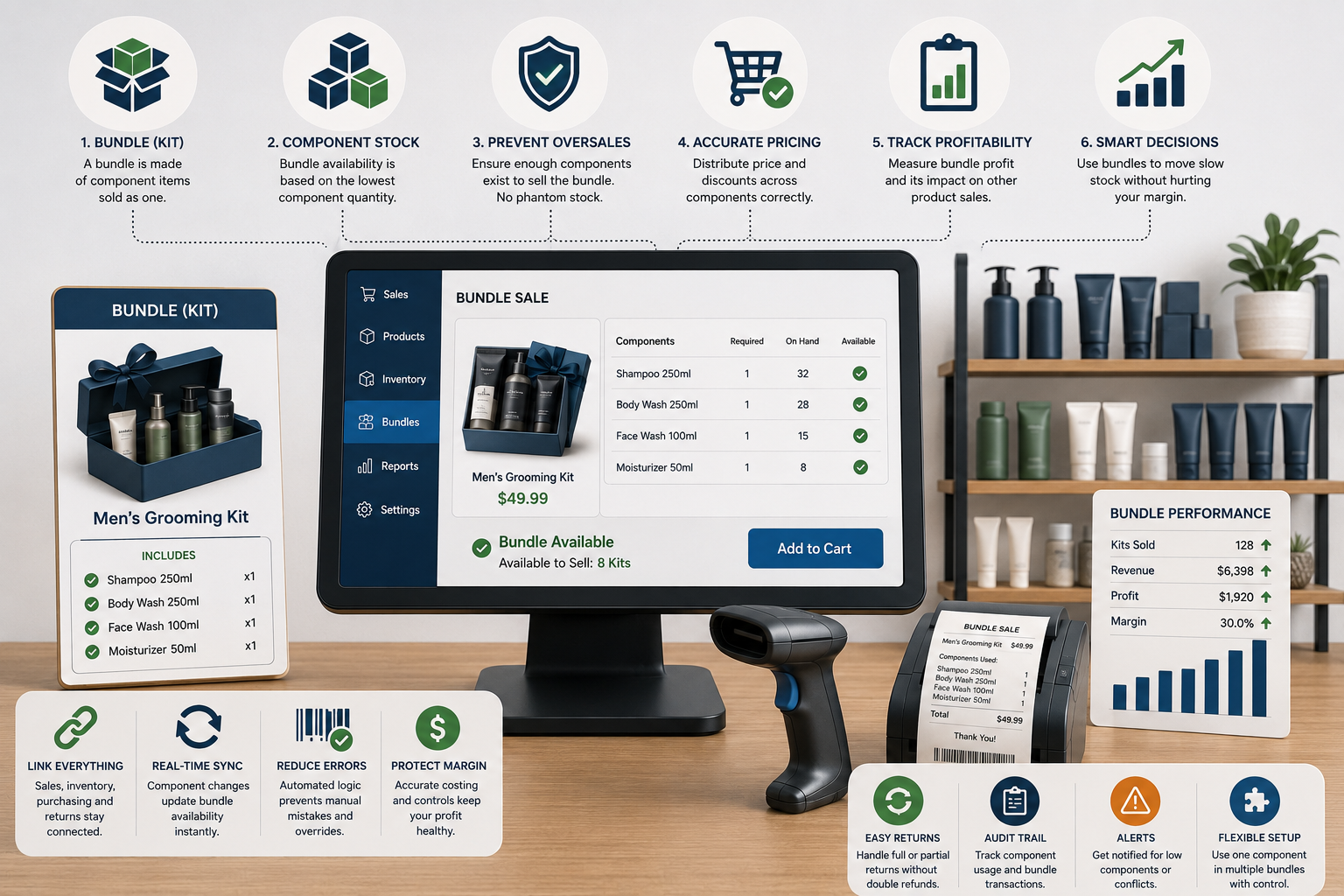
Il bundle è esaurito, ma i componenti sono ancora sullo scaffale: gestire kit e multipack nel POS
I bundle aumentano lo scontrino e muovono stock lento, ma un setup errato crea disponibilità fantasma, overselling, costi sbagliati e resi complessi.
Leggi l'articolo
Il cliente ha versato un acconto, ma la vendita non è conclusa: preordini, layaway e pagamenti parziali nel POS
Acconti, preordini e ordini speciali possono garantire domanda e cassa, ma richiedono stock, saldo cliente, scadenze, rimborsi e contabilità collegati.
Leggi l'articolo
La gift card è stata venduta mesi fa: perché è ancora un debito? Gestire il valore memorizzato nel POS
Le gift card portano liquidità anticipata, ma creano saldi, obblighi, frodi, scadenze, pagamenti misti, rimborsi e lavoro contabile.
Leggi l'articolo