
El sistema muestra 18 unidades y la estantería tiene 11: cómo el conteo cíclico POS detecta pérdidas
Una diferencia no siempre significa robo. Puede venir de recepción, unidades, daños, transferencias, devoluciones, códigos o retrasos. Aprende a contar, aprobar y analizar.

El sistema muestra 18 unidades y la estantería tiene 11: cómo el conteo cíclico POS detecta pérdidas
Una diferencia no siempre significa robo. Puede venir de recepción, unidades, daños, transferencias, devoluciones, códigos o retrasos. Aprende a contar, aprobar y analizar.
La diferencia es un síntoma
An inventory variance shows disagreement between recorded and physical quantity but does not identify the cause.
Possible causes include receiving errors, unit conversion, damage, transfers, returns, barcode mapping, delayed transactions, and theft.
Pensemos en un conteo real: An inventory variance shows disagreement between recorded and physical quantity but does not identify the cause. Cycle counting checks smaller groups frequently and finds problems while evidence is still available. A count should define location, zone, items, start time, counters, and rules for inventory movement during the count. Prueba conteo ciego, ventas durante el conteo, gran diferencia, segundo contador, error de unidad, transferencia pendiente, daño y ajuste aprobado.
Pensemos en un conteo real: Large or repeated adjustments may require manager review based on value and frequency. Adjustments should record previous quantity, counted quantity, variance, value, reason, evidence, counter, reviewer, and approval. Possible causes include receiving errors, unit conversion, damage, transfers, returns, barcode mapping, delayed transactions, and theft. Prueba conteo ciego, ventas durante el conteo, gran diferencia, segundo contador, error de unidad, transferencia pendiente, daño y ajuste aprobado.
Pensemos en un conteo real: High-value, fast-moving, theft-prone, negative-stock, and frequently adjusted products should be counted more often. A strong POS uses counting to improve the process rather than simply overwrite the system quantity. Root-cause analysis should compare receiving, supplier differences, sales, returns, damage, transfers, barcodes, units, users, and timing. Prueba conteo ciego, ventas durante el conteo, gran diferencia, segundo contador, error de unidad, transferencia pendiente, daño y ajuste aprobado.
Pensemos en un conteo real: An inventory variance shows disagreement between recorded and physical quantity but does not identify the cause. Cycle counting checks smaller groups frequently and finds problems while evidence is still available. A count should define location, zone, items, start time, counters, and rules for inventory movement during the count. Prueba conteo ciego, ventas durante el conteo, gran diferencia, segundo contador, error de unidad, transferencia pendiente, daño y ajuste aprobado.
El conteo sigue riesgo y movimiento
Every stock movement should create a dated event with location, user, device, quantity, and reason.
Cycle counting checks smaller groups frequently and finds problems while evidence is still available.
Pensemos en un conteo real: Cycle counting checks smaller groups frequently and finds problems while evidence is still available. Blind counts reduce bias, and material differences should be recounted by another person. Every stock movement should create a dated event with location, user, device, quantity, and reason. Prueba conteo ciego, ventas durante el conteo, gran diferencia, segundo contador, error de unidad, transferencia pendiente, daño y ajuste aprobado.
Pensemos en un conteo real: A strong POS uses counting to improve the process rather than simply overwrite the system quantity. Track inventory accuracy, variance value, repeated SKUs, repeated locations, count age, approval delay, and confirmed causes. Track inventory accuracy, variance value, repeated SKUs, repeated locations, count age, approval delay, and confirmed causes. Prueba conteo ciego, ventas durante el conteo, gran diferencia, segundo contador, error de unidad, transferencia pendiente, daño y ajuste aprobado.
Pensemos en un conteo real: Adjustments should record previous quantity, counted quantity, variance, value, reason, evidence, counter, reviewer, and approval. Every stock movement should create a dated event with location, user, device, quantity, and reason. Blind counts reduce bias, and material differences should be recounted by another person. Prueba conteo ciego, ventas durante el conteo, gran diferencia, segundo contador, error de unidad, transferencia pendiente, daño y ajuste aprobado.
El conteo debe proteger evidencia
High-value, fast-moving, theft-prone, negative-stock, and frequently adjusted products should be counted more often.
A count should define location, zone, items, start time, counters, and rules for inventory movement during the count.
Pensemos en un conteo real: Possible causes include receiving errors, unit conversion, damage, transfers, returns, barcode mapping, delayed transactions, and theft. Large or repeated adjustments may require manager review based on value and frequency. An inventory variance shows disagreement between recorded and physical quantity but does not identify the cause. Prueba conteo ciego, ventas durante el conteo, gran diferencia, segundo contador, error de unidad, transferencia pendiente, daño y ajuste aprobado.
Pensemos en un conteo real: Adjustments should record previous quantity, counted quantity, variance, value, reason, evidence, counter, reviewer, and approval. Every stock movement should create a dated event with location, user, device, quantity, and reason. Blind counts reduce bias, and material differences should be recounted by another person. Prueba conteo ciego, ventas durante el conteo, gran diferencia, segundo contador, error de unidad, transferencia pendiente, daño y ajuste aprobado.
Pensemos en un conteo real: Root-cause analysis should compare receiving, supplier differences, sales, returns, damage, transfers, barcodes, units, users, and timing. An inventory variance shows disagreement between recorded and physical quantity but does not identify the cause. Large or repeated adjustments may require manager review based on value and frequency. Prueba conteo ciego, ventas durante el conteo, gran diferencia, segundo contador, error de unidad, transferencia pendiente, daño y ajuste aprobado.
Pensemos en un conteo real: Cycle counting checks smaller groups frequently and finds problems while evidence is still available. Blind counts reduce bias, and material differences should be recounted by another person. Every stock movement should create a dated event with location, user, device, quantity, and reason. Prueba conteo ciego, ventas durante el conteo, gran diferencia, segundo contador, error de unidad, transferencia pendiente, daño y ajuste aprobado.
Pensemos en un conteo real: A count should define location, zone, items, start time, counters, and rules for inventory movement during the count. High-value, fast-moving, theft-prone, negative-stock, and frequently adjusted products should be counted more often. High-value, fast-moving, theft-prone, negative-stock, and frequently adjusted products should be counted more often. Prueba conteo ciego, ventas durante el conteo, gran diferencia, segundo contador, error de unidad, transferencia pendiente, daño y ajuste aprobado.
Pensemos en un conteo real: A strong POS uses counting to improve the process rather than simply overwrite the system quantity. Track inventory accuracy, variance value, repeated SKUs, repeated locations, count age, approval delay, and confirmed causes. Track inventory accuracy, variance value, repeated SKUs, repeated locations, count age, approval delay, and confirmed causes. Prueba conteo ciego, ventas durante el conteo, gran diferencia, segundo contador, error de unidad, transferencia pendiente, daño y ajuste aprobado.
Pensemos en un conteo real: Possible causes include receiving errors, unit conversion, damage, transfers, returns, barcode mapping, delayed transactions, and theft. Large or repeated adjustments may require manager review based on value and frequency. An inventory variance shows disagreement between recorded and physical quantity but does not identify the cause. Prueba conteo ciego, ventas durante el conteo, gran diferencia, segundo contador, error de unidad, transferencia pendiente, daño y ajuste aprobado.
Los ajustes necesitan motivo y aprobación
Blind counts reduce bias, and material differences should be recounted by another person.
Adjustments should record previous quantity, counted quantity, variance, value, reason, evidence, counter, reviewer, and approval.
Pensemos en un conteo real: High-value, fast-moving, theft-prone, negative-stock, and frequently adjusted products should be counted more often. A strong POS uses counting to improve the process rather than simply overwrite the system quantity. Root-cause analysis should compare receiving, supplier differences, sales, returns, damage, transfers, barcodes, units, users, and timing. Prueba conteo ciego, ventas durante el conteo, gran diferencia, segundo contador, error de unidad, transferencia pendiente, daño y ajuste aprobado.
Pensemos en un conteo real: An inventory variance shows disagreement between recorded and physical quantity but does not identify the cause. Cycle counting checks smaller groups frequently and finds problems while evidence is still available. A count should define location, zone, items, start time, counters, and rules for inventory movement during the count. Prueba conteo ciego, ventas durante el conteo, gran diferencia, segundo contador, error de unidad, transferencia pendiente, daño y ajuste aprobado.
Pensemos en un conteo real: Large or repeated adjustments may require manager review based on value and frequency. Adjustments should record previous quantity, counted quantity, variance, value, reason, evidence, counter, reviewer, and approval. Possible causes include receiving errors, unit conversion, damage, transfers, returns, barcode mapping, delayed transactions, and theft. Prueba conteo ciego, ventas durante el conteo, gran diferencia, segundo contador, error de unidad, transferencia pendiente, daño y ajuste aprobado.
Las diferencias repetidas requieren causa raíz
Large or repeated adjustments may require manager review based on value and frequency.
Root-cause analysis should compare receiving, supplier differences, sales, returns, damage, transfers, barcodes, units, users, and timing.
Pensemos en un conteo real: Every stock movement should create a dated event with location, user, device, quantity, and reason. Possible causes include receiving errors, unit conversion, damage, transfers, returns, barcode mapping, delayed transactions, and theft. Adjustments should record previous quantity, counted quantity, variance, value, reason, evidence, counter, reviewer, and approval. Prueba conteo ciego, ventas durante el conteo, gran diferencia, segundo contador, error de unidad, transferencia pendiente, daño y ajuste aprobado.
Pensemos en un conteo real: Blind counts reduce bias, and material differences should be recounted by another person. Root-cause analysis should compare receiving, supplier differences, sales, returns, damage, transfers, barcodes, units, users, and timing. A strong POS uses counting to improve the process rather than simply overwrite the system quantity. Prueba conteo ciego, ventas durante el conteo, gran diferencia, segundo contador, error de unidad, transferencia pendiente, daño y ajuste aprobado.
Pensemos en un conteo real: Track inventory accuracy, variance value, repeated SKUs, repeated locations, count age, approval delay, and confirmed causes. A count should define location, zone, items, start time, counters, and rules for inventory movement during the count. Cycle counting checks smaller groups frequently and finds problems while evidence is still available. Prueba conteo ciego, ventas durante el conteo, gran diferencia, segundo contador, error de unidad, transferencia pendiente, daño y ajuste aprobado.
Pensemos en un conteo real: Every stock movement should create a dated event with location, user, device, quantity, and reason. Possible causes include receiving errors, unit conversion, damage, transfers, returns, barcode mapping, delayed transactions, and theft. Adjustments should record previous quantity, counted quantity, variance, value, reason, evidence, counter, reviewer, and approval. Prueba conteo ciego, ventas durante el conteo, gran diferencia, segundo contador, error de unidad, transferencia pendiente, daño y ajuste aprobado.
Pensemos en un conteo real: Blind counts reduce bias, and material differences should be recounted by another person. Root-cause analysis should compare receiving, supplier differences, sales, returns, damage, transfers, barcodes, units, users, and timing. A strong POS uses counting to improve the process rather than simply overwrite the system quantity. Prueba conteo ciego, ventas durante el conteo, gran diferencia, segundo contador, error de unidad, transferencia pendiente, daño y ajuste aprobado.
Pensemos en un conteo real: Track inventory accuracy, variance value, repeated SKUs, repeated locations, count age, approval delay, and confirmed causes. A count should define location, zone, items, start time, counters, and rules for inventory movement during the count. Cycle counting checks smaller groups frequently and finds problems while evidence is still available. Prueba conteo ciego, ventas durante el conteo, gran diferencia, segundo contador, error de unidad, transferencia pendiente, daño y ajuste aprobado.
Mide precisión antes de normalizar la merma
Track inventory accuracy, variance value, repeated SKUs, repeated locations, count age, approval delay, and confirmed causes.
A strong POS uses counting to improve the process rather than simply overwrite the system quantity.
Pensemos en un conteo real: A count should define location, zone, items, start time, counters, and rules for inventory movement during the count. High-value, fast-moving, theft-prone, negative-stock, and frequently adjusted products should be counted more often. High-value, fast-moving, theft-prone, negative-stock, and frequently adjusted products should be counted more often. Prueba conteo ciego, ventas durante el conteo, gran diferencia, segundo contador, error de unidad, transferencia pendiente, daño y ajuste aprobado.
Pensemos en un conteo real: Possible causes include receiving errors, unit conversion, damage, transfers, returns, barcode mapping, delayed transactions, and theft. Large or repeated adjustments may require manager review based on value and frequency. An inventory variance shows disagreement between recorded and physical quantity but does not identify the cause. Prueba conteo ciego, ventas durante el conteo, gran diferencia, segundo contador, error de unidad, transferencia pendiente, daño y ajuste aprobado.
Pensemos en un conteo real: Root-cause analysis should compare receiving, supplier differences, sales, returns, damage, transfers, barcodes, units, users, and timing. An inventory variance shows disagreement between recorded and physical quantity but does not identify the cause. Large or repeated adjustments may require manager review based on value and frequency. Prueba conteo ciego, ventas durante el conteo, gran diferencia, segundo contador, error de unidad, transferencia pendiente, daño y ajuste aprobado.
Keep reading
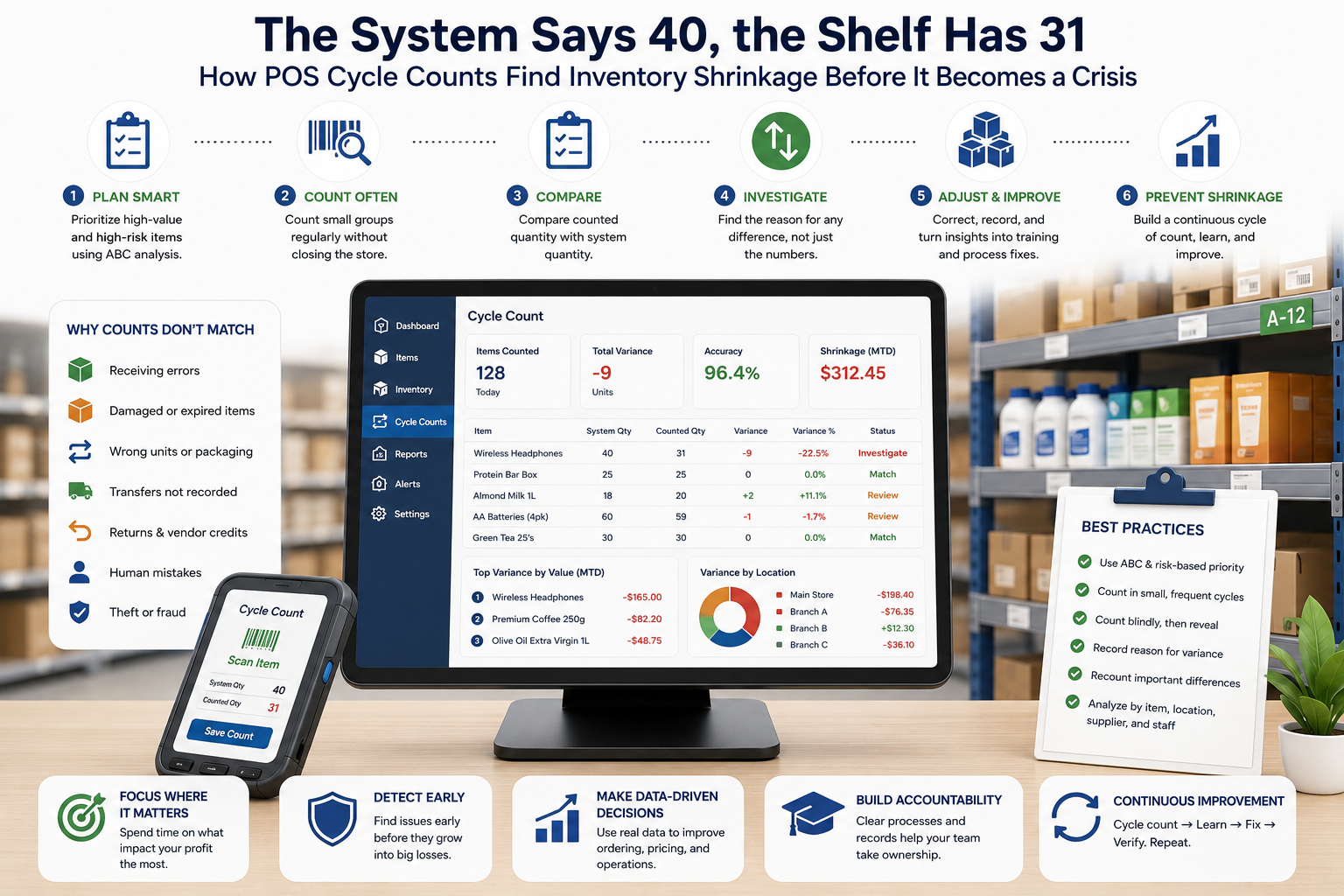
El sistema dice 40 y la estantería tiene 31: detectar merma con conteos cíclicos POS
Las diferencias se acumulan por recepción, daños no registrados, unidades erróneas, robo, traslados, devoluciones y ajustes. Aprende conteos cíclicos y análisis de causas.
Leer artículo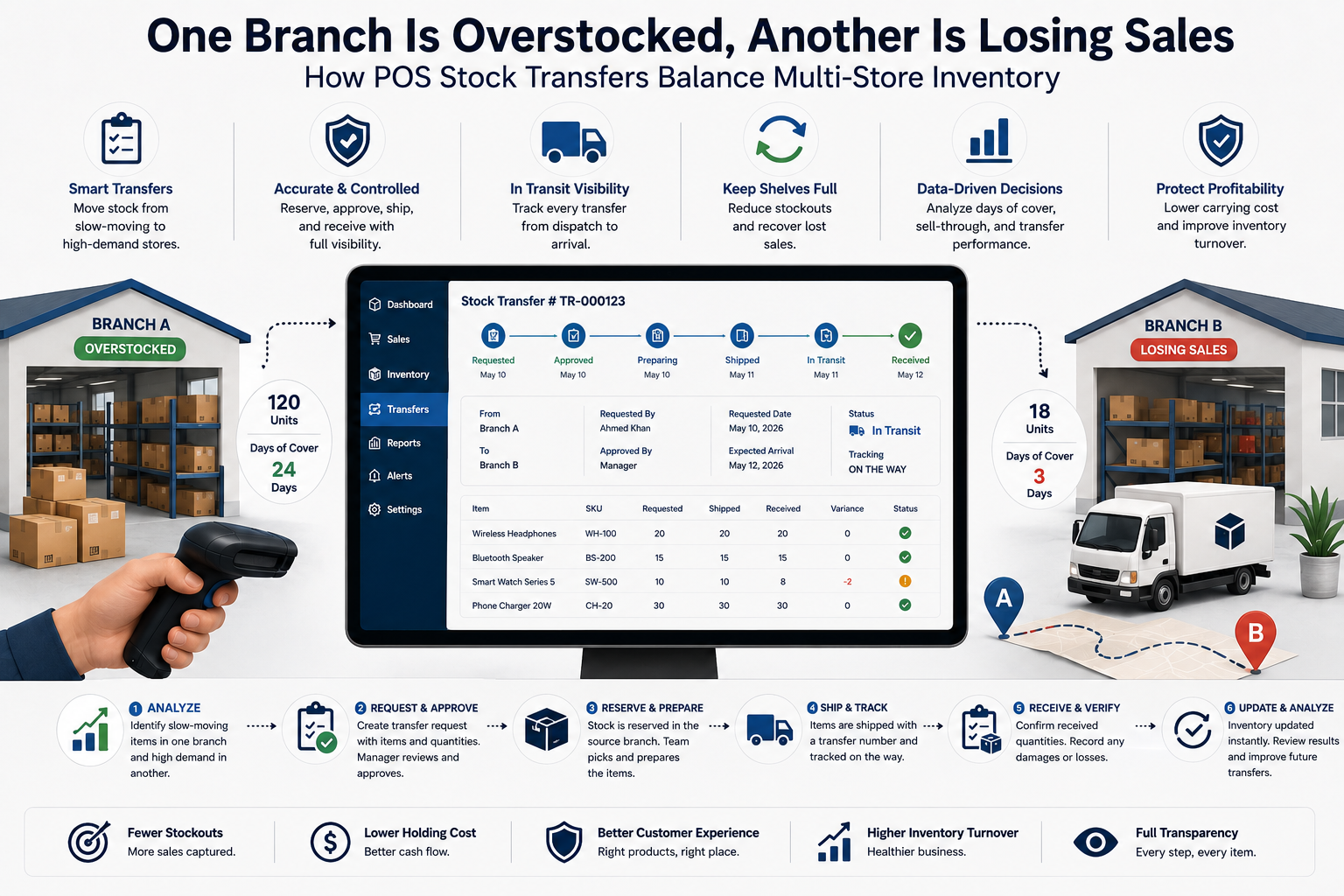
Una tienda tiene exceso y otra pierde ventas: equilibrar inventario con transferencias POS
Una transferencia mal controlada crea inventario fantasma, disponibilidad duplicada, cajas perdidas, recepción tardía e informes poco fiables.
Leer artículo
¿Quién cambió el precio? Cómo los permisos POS y el registro de auditoría protegen la tienda
Las pérdidas y errores suelen empezar con cuentas compartidas, permisos excesivos y acciones sin trazabilidad. Aprende a usar roles, cuentas personales y aprobaciones.
Leer artículo